Boba Tea Recipe: Sticky 45 Minute Brown Sugar Boba Milk Tea
The first batch of pearls I made had a hard white dot right in the center, the kind of thing you only notice after you’ve already bitten down in front of someone. That’s the part most recipes skip over: tapioca pearls don’t go from raw to chewy in one straight boil, they pass through a gummy outer shell with a chalky core first, and only get chewy all the way through with a second, gentler stage. This boba tea recipe splits the cooking into two steps instead of one long boil, using plain dried tapioca pearls from the Asian aisle or an online order, not a syrup kit.
Most home versions either drown the pearls in bottled syrup or skip the brown sugar and end up with milk tea that tastes like almost nothing. Here the sugar goes onto the pearls while still hot, straight out of the pot, so it melts into dark streaks along the outside instead of pooling underneath. Paired with a properly strong steeped black tea, the result lands close to what a shop charges six dollars for, for about a dollar in ingredients.
Why You’ll Love This
- Costs about a dollar a glass. Dried tapioca pearls run under three dollars a bag and make four to six drinks, against five or six each at a shop.
- The pearls actually taste like something. Coating them in hot brown sugar leaves a faint molasses edge bottled syrup never has.
- Ready in under an hour. Most of it is hands off, since the pearls need stirring for only five minutes.
- Works with whatever milk is in the fridge. Whole milk gives the classic body, though oat and coconut milk work too.
- No boba shop equipment required. A saucepan, a strainer, and a jar with a lid stand in for the shaker most shops use.
Quick Information
Prep time: 10 minutes. Cook time: 30 minutes. Total time: 45 minutes. Servings: 2. Difficulty: Medium. Calories: about 340 per glass. The ingredient that decides the outcome is the dark brown sugar, since light brown or white sugar won’t give the syrup its color. Best for a hot afternoon or any time the boba tea craving hits.
Nutrition Information
| Nutrient | Amount Per Serving |
| Serving Size | 1 glass (473 ml) |
| Servings Per Recipe | 2 |
| Calories | 340 |
| Protein | 4 g |
| Carbohydrates | 78 g |
| Fat | 6 g |
| Fiber | 1 g |
| Sugar | 52 g |
| Sodium | 55 mg |
Most of the calories in this boba tea come from the tapioca pearls and the syrup, both close to pure carbohydrate. The small amount of fat and protein comes from the whole milk. Cutting the pearl portion by a third trims more sugar than any other single change.
Values are estimates and will vary with the brands and amounts you use.
Ingredients
This boba tea recipe splits into three groups: the pearls, the syrup, and the milk tea itself.
For the Tapioca Pearls
- 1 cup (190 g) dried black tapioca pearls, sometimes labeled boba
- 8 cups (2 L) water, for boiling
For the Brown Sugar Syrup
- 1/2 cup (110 g) dark brown sugar, packed. Light brown works in a pinch but gives less color.
- 3 tablespoons (45 ml) water
For the Milk Tea
- 2 black tea bags, or 2 tablespoons (10 g) loose leaf tea, Assam or Ceylon for the strongest base
- 1 cup (240 ml) hot water, just off the boil
- 1 cup (240 ml) whole milk, or oat milk for dairy free
- 1 to 2 cups ice
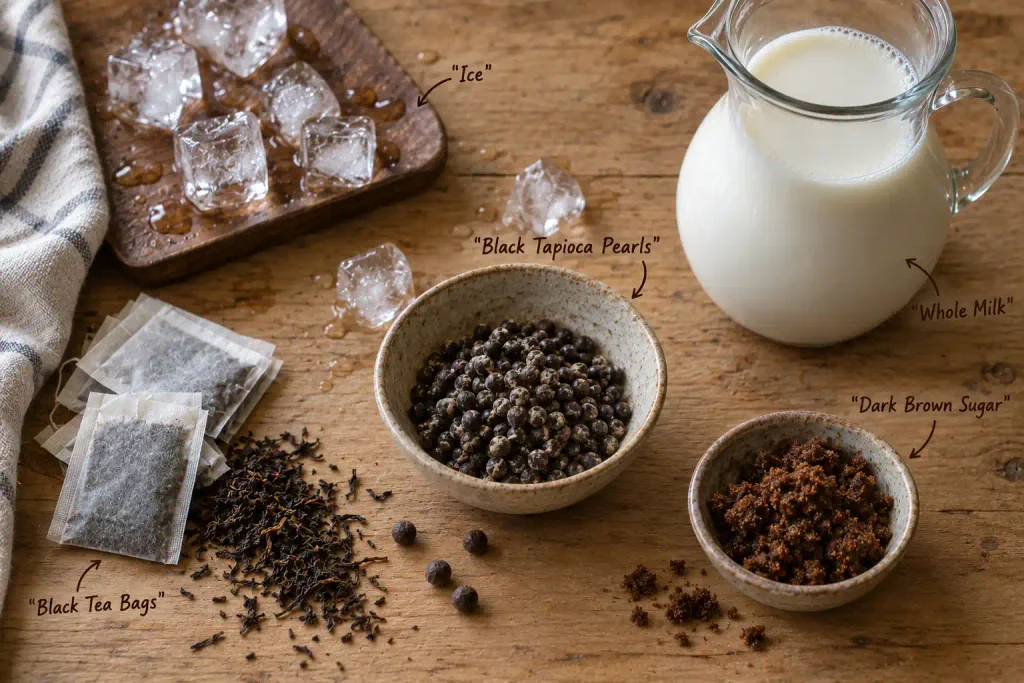
A kitchen scale beats a measuring cup here. 190 grams of tapioca pearls cooks evenly in this amount of water. Measured by cup instead, the pearls can pack 20 grams heavier or lighter depending on how firmly they’re pressed in, and that’s enough to throw the boil time off.
Allergen and Dietary Disclosure
As written, this boba tea recipe carries milk, from the whole milk in the tea base. Black tea and tapioca starch are naturally free of the other major allergens.
Dietary status as written: halal, vegetarian, gluten free, nut free, egg free, soy free. Not dairy free unless you make the swap below.
Swap oat milk in at the same one cup measurement for dairy free. The tea runs a shade thinner and lighter in color, since oat milk doesn’t carry the fat whole milk does.
One thing worth checking before you buy: flavored or quick cook tapioca pearls sometimes list wheat flour as a coating agent. Plain black pearls don’t, but read the label if gluten matters in your kitchen.
Equipment Needed
Nothing exotic here, just what turns dried pearls and tea into boba tea.
- Medium saucepan, at least 3 quarts. The pearls triple in size as they cook, and a small pot means they clump at the bottom.
- Fine mesh strainer. Pulls cooked pearls out without scattering the syrup you’re about to coat them in.
- Wide boba straws, about 3/4 inch across. Standard straws won’t let a pearl through, the one item here genuinely hard to improvise.
- Glass jar with a tight lid, or a cocktail shaker. Ten seconds of shaking with ice gets the tea cold with a bit of froth, which stirring never manages.
- Kitchen scale. Dried pearls measured by volume can vary by twenty grams depending how tightly they’re packed.
Before You Start
Measure the tapioca pearls before anything touches the stove. Once the water boils, there’s no time left to weigh things.
Set the tea bags and milk within reach, since the tea steeps while the pearls rest. Keep the strainer and a bowl for the syrup next to the pot. The two minutes between draining and syrup is where the flavor either sticks or gets lost, and that’s the difference between forgettable and good boba tea.
How to Make Boba Tea, Step by Step
Step 1. Boil the pearls hard
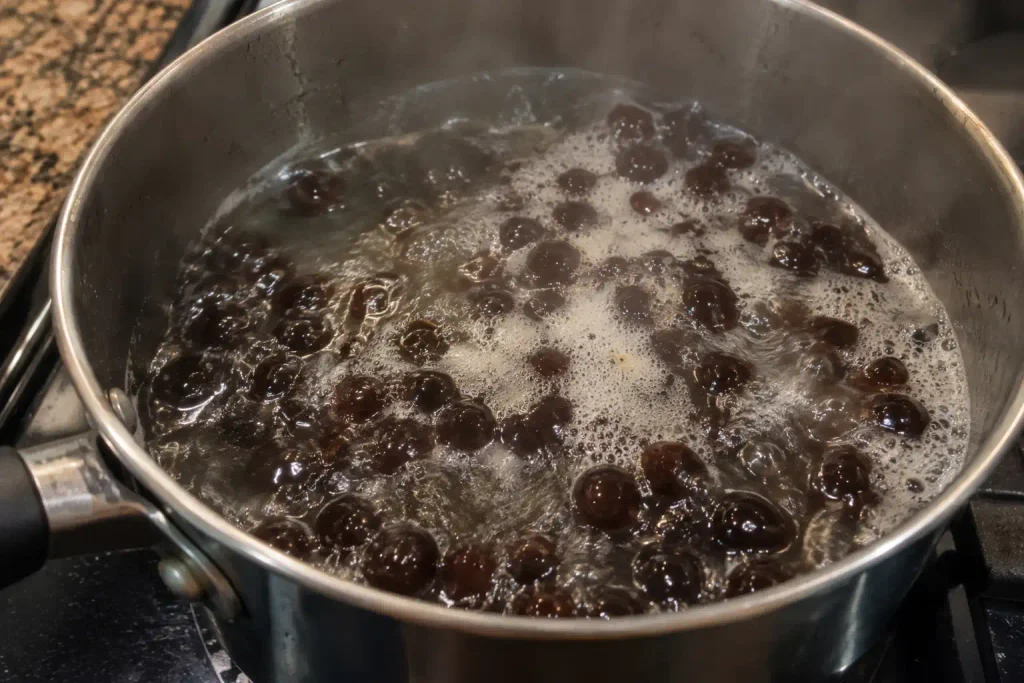
Bring the 8 cups of water to a full rolling boil before the pearls go in. Stir once so they don’t clump, then boil uncovered 15 minutes. They float within two minutes and shift from chalky white to a dark, translucent color as the starch gelatinizes.
Chef’s Note: Bag says “quick cook”? Cut this to 8 minutes and check early, or a full 15 turns them to mush.
Step 2. Kill the heat and let them steam
Turn off the burner, cover the pot, and leave it 15 minutes. This finishes the pearl’s center without blowing out the chewy shell, since residual heat works more gently than an active boil.
Chef’s Note: Don’t lift the lid partway through. Steam escapes and pearls near the surface cool faster than the ones underneath, so the batch ends up part done, part chalky.
Step 3. Build the syrup while the pearls rest
Combine the brown sugar and 3 tablespoons water in a small saucepan over medium heat. Stir until dissolved, about 2 minutes, then pull it off once glossy and coating the back of a spoon. It thickens more as it cools.
Step 4. Drain and coat the hot pearls
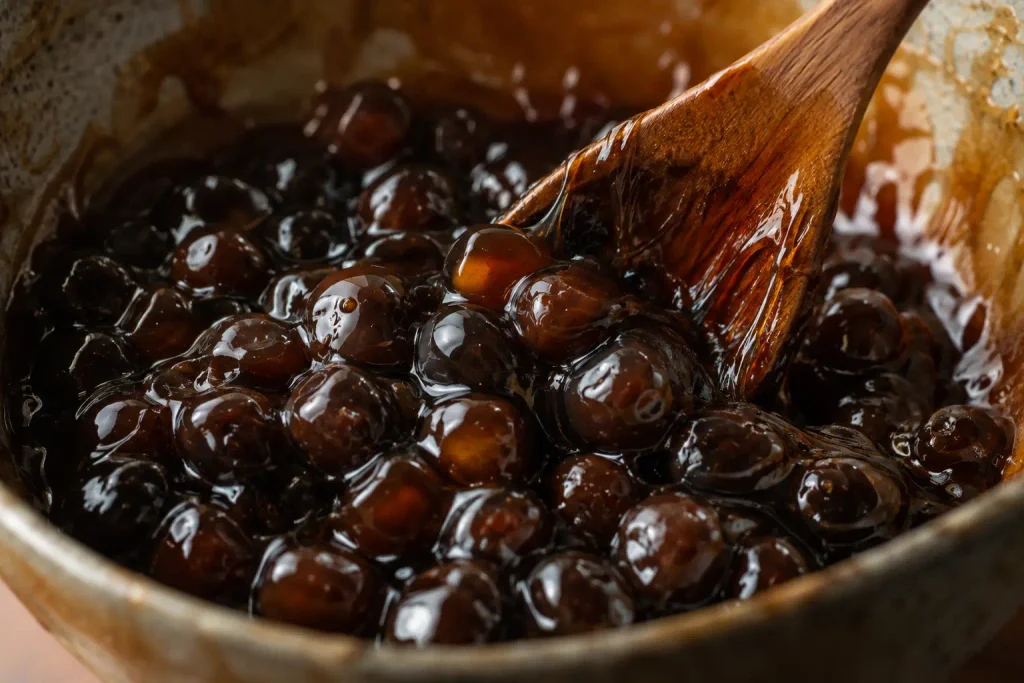
Strain the pearls the moment the rest ends, while still steaming. Tip them into the warm syrup and stir until glazed rather than wet. Heat from the pearls thins the syrup enough to cling in streaks, which is where the tiger stripe comes from later.
Chef’s Note: Pearls sitting more than 20 minutes without syrup firm up and turn slightly rubbery. Keep them submerged, not next to it, until assembly.
Step 5. Steep the tea strong
Pour the hot water over the tea bags and steep 5 minutes, longer than a cup meant to drink hot. Boba tea gets diluted by ice and milk later, so a weak steep turns watery by the glass. Pull the bags and cool to room temperature, about 10 minutes.
Step 6. Assemble the glass
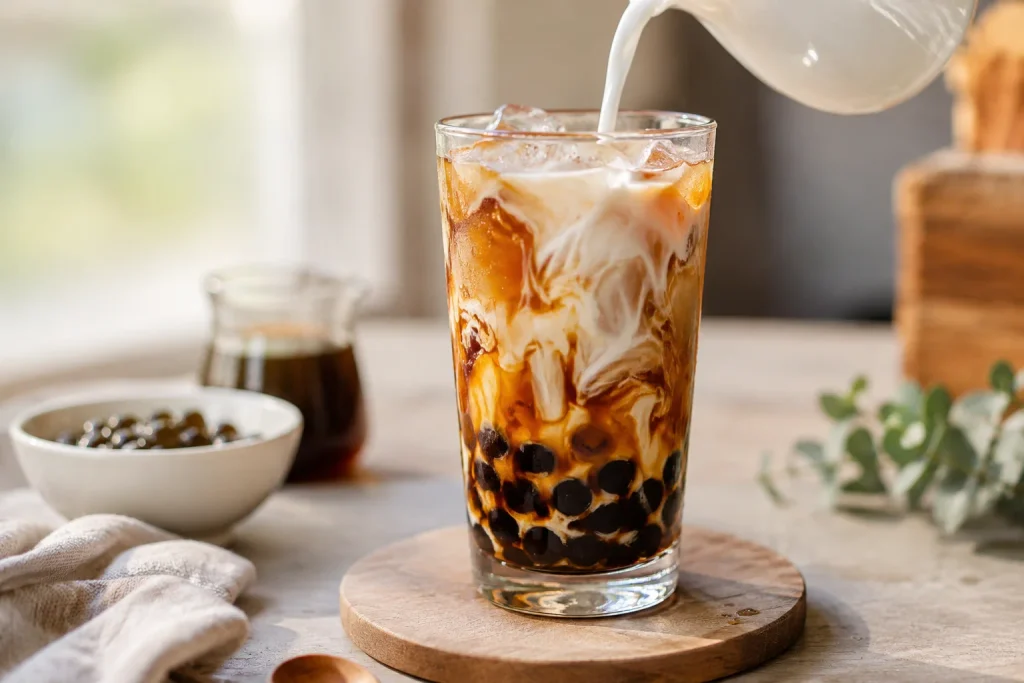
Spoon two to three tablespoons of syrup coated pearls into each glass and let them sit a minute, which streaks syrup up the walls once ice goes on top. Fill with ice, pour tea over it, then top with milk. Stir once right before drinking so the layers hold.
Expert Tips and Tricks
The most common mistake is boiling the water before the pearls are measured. Weigh them first, then drop them in within a minute of a full boil.
Make the syrup a day ahead if serving more than two glasses of boba tea. It keeps about a week sealed in the fridge and reheats in short microwave bursts.
Storage tip: syrup coated pearls hold their texture about 4 hours at room temperature, then firm up.
Technique tip, for the tiger stripe look: coat the pearls while still steaming, not after they’ve cooled, or the color ends up pale and separate.
Texture wise, lean slightly underboiled rather than over. A pearl with faint firmness at the center is still pleasant. Past full translucency, it turns soft and loses its bite.
Time saving tip: boil the pearls and steep the tea at once, so both finish close together instead of back to back.
Common Mistakes and Troubleshooting
These are the boba tea problems that show up most in a home kitchen.
| Problem | Cause | Solution |
| Hard white dot in the center | Heat cut off before starch at the core gelatinized | Reboil 3 to 4 minutes, rest covered 5 more. Bite one before pulling the batch |
| Pearls turned to mush | Boiled too long, or held at a boil during the rest | No fix once overboiled. Start over with a timer, not a guess |
| Syrup seized into a hard clump | Sugar scorched from too much heat, or sat too long before dissolving | Add a tablespoon of hot water, stir over low heat. Grainy means it crystallized |
| Pearls hardened before the drink got built | Sat outside the syrup, uncovered, over 20 minutes | Keep them submerged with the lid on. A brief microwave reheat softens them slightly |
| Tea tastes watered down | Steeped at normal cup strength instead of extra strong | Steep double the usual amount, or hold the full 5 minutes instead of 2 to 3 |
The white dot problem catches almost everyone the first time, and it’s rarely a bad batch. It’s a rest cut short, because 15 minutes of doing nothing feels long. Lift the lid too early and the center never gets past chalky. The fix works because the shell is already cooked and won’t overcook further in a short second boil.
Storage Instructions
Room Temperature
Syrup coated pearls hold up about 4 hours before they firm up. Don’t leave an assembled glass sitting out, since the ice melts and separates the layers within 30 minutes.
Refrigerator
Cooked pearls keep in their syrup, sealed, up to 2 days. The syrup thickens in the cold, so warm the container briefly before serving. Brewed tea keeps 3 days sealed.
Freezer
Cooked pearls don’t freeze well. The starch that gives them their chew breaks down when thawed, and they come out mealy. Skip freezing this part and make a fresh batch, which takes 30 minutes.
Reheating
Warm refrigerated pearls in their syrup over low heat 2 to 3 minutes, or microwave in 20 second bursts. Add a splash of water if the syrup thickened too much to coat evenly.
Make Ahead
The syrup and brewed tea both hold a day or two ahead, stored separately and chilled, so assembling boba tea for guests takes minutes.
Leftover syrup doesn’t go to waste. Stir it into plain iced tea, drizzle it over vanilla ice cream, or whisk it into oatmeal the next morning, since at that point it’s just a spiced simple syrup.
Variations and Substitutions
This boba tea recipe flexes in a few directions.
- A version with real warmth: steep a few coins of fresh ginger with the tea bags. It won’t read as spicy the way chili would, but adds a peppery edge against the sugar. Skip it for kids.
- Mild and kid friendly: cut the steep to 3 minutes, and swap half the black tea for rooibos, no caffeine and a milder flavor.
- Vegetarian: already vegetarian as written, since nothing here uses animal products beyond the milk.
- Gluten free: already gluten free, provided the pearls aren’t a flavored variety listing wheat starch as a binder.
- Dairy free with coconut milk: full fat coconut milk swaps in at the same amount and brings its own sweetness, so cut any extra sugar by half.
- No black tea on hand: strong brewed oolong works as a direct swap, shifting the flavor more floral than malty.
Serving Suggestions
Pair this boba tea with something salty and fried to cut the sweetness. Taiwanese popcorn chicken works well, since the crisp coating sits at the opposite end of the texture scale from the soft pearls.
For a full spread, set it next to scallion pancakes. Their savory, oily bite balances a drink that leans sweet.
If two drinks feel better than one, a plain jasmine milk tea without the pearls makes a lighter counterpoint for less sugar.
Frequently Asked Questions
How long do you boil tapioca pearls for boba tea?
Fifteen minutes at a full boil, followed by fifteen minutes off heat with the lid on, cooks dried tapioca pearls through for boba tea without turning them mushy. Quick cook pearls, labeled that way on the bag, need about half that time at each stage. The real test isn’t the clock though. Bite one pearl in half, and a hard white fleck at the center means more time back in hot water.
Why did my boba turn out hard instead of chewy?
Hard pearls almost always mean the cooking got cut short, either the boil or the rest, before the starch at the center fully gelatinized. The other common cause is letting cooked pearls sit outside their syrup too long, since the surface firms and dries as it cools. Once hardened this way, a short microwave reheat softens them slightly but won’t fully restore the texture.
Can I make boba tea without tapioca pearls?
Popping boba, the kind filled with juice that bursts on the bite, is the closest swap and needs no cooking, just a rinse. Chia seeds soaked in water for twenty minutes give a different texture, closer to small soft beads than a chew, but work in a pinch if tapioca isn’t sold nearby. Instant tapioca pudding pearls are not the same product and turn gluey here.
How far ahead can I make boba tea?
Boba tea keeps better split into its parts than fully assembled. The syrup and brewed tea both hold a couple of days in the fridge, stored separately and sealed. The pearls are the one part worth making close to serving time, since they firm up within about four hours even in syrup. For guests, make the tea and syrup a day ahead and boil pearls fresh.
Is boba tea supposed to have a weird jiggly texture, or is mine undercooked?
A properly cooked tapioca pearl has a soft, slightly springy chew all the way through, closer to a gummy candy than anything jiggly. If yours feels jiggly, or the outside slides off in a slimy layer when you bite it, that usually means the syrup coating went on too thin or the batch sat in water too long after draining. It shouldn’t feel unstable in the mouth, just chewy.
Conclusion
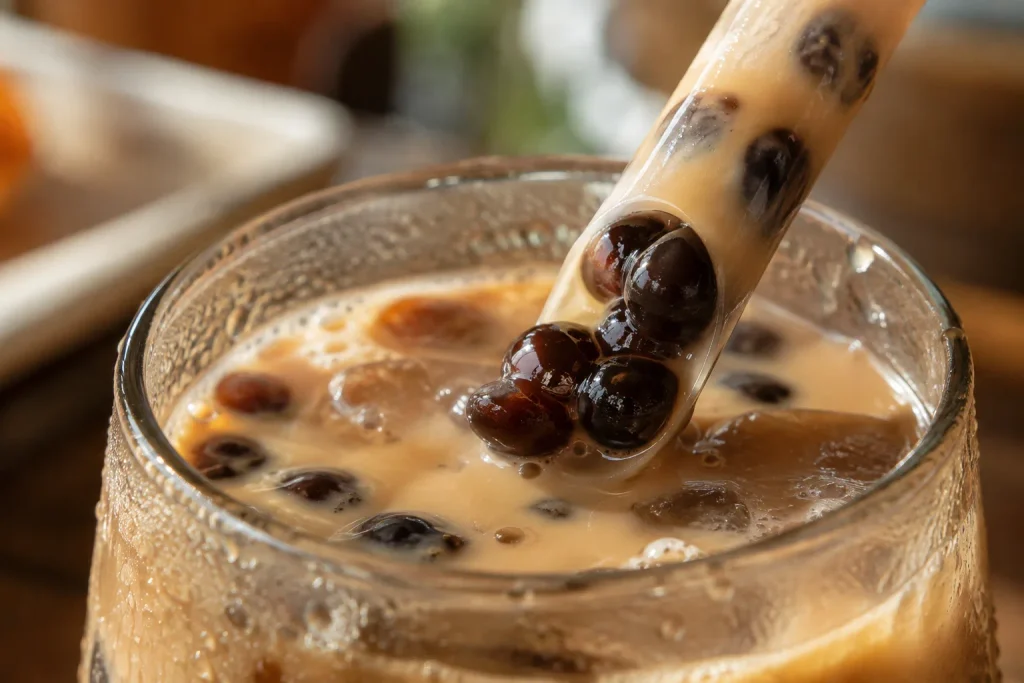
Pin the timing to what’s happening in the pot, not the clock, since altitude and how hard your stove runs can shift things a couple of minutes either way. The bite test beats any timer: pull one pearl, let it cool ten seconds, and bite it in half. If the center matches the edge, the batch is done, and that habit saves more glasses than any exact number in this post. I’ve gotten this wrong enough times myself, mostly by rushing the rest stage, to trust the bite over the clock now. Save this boba tea recipe if you want the timing in front of you next time the craving hits.
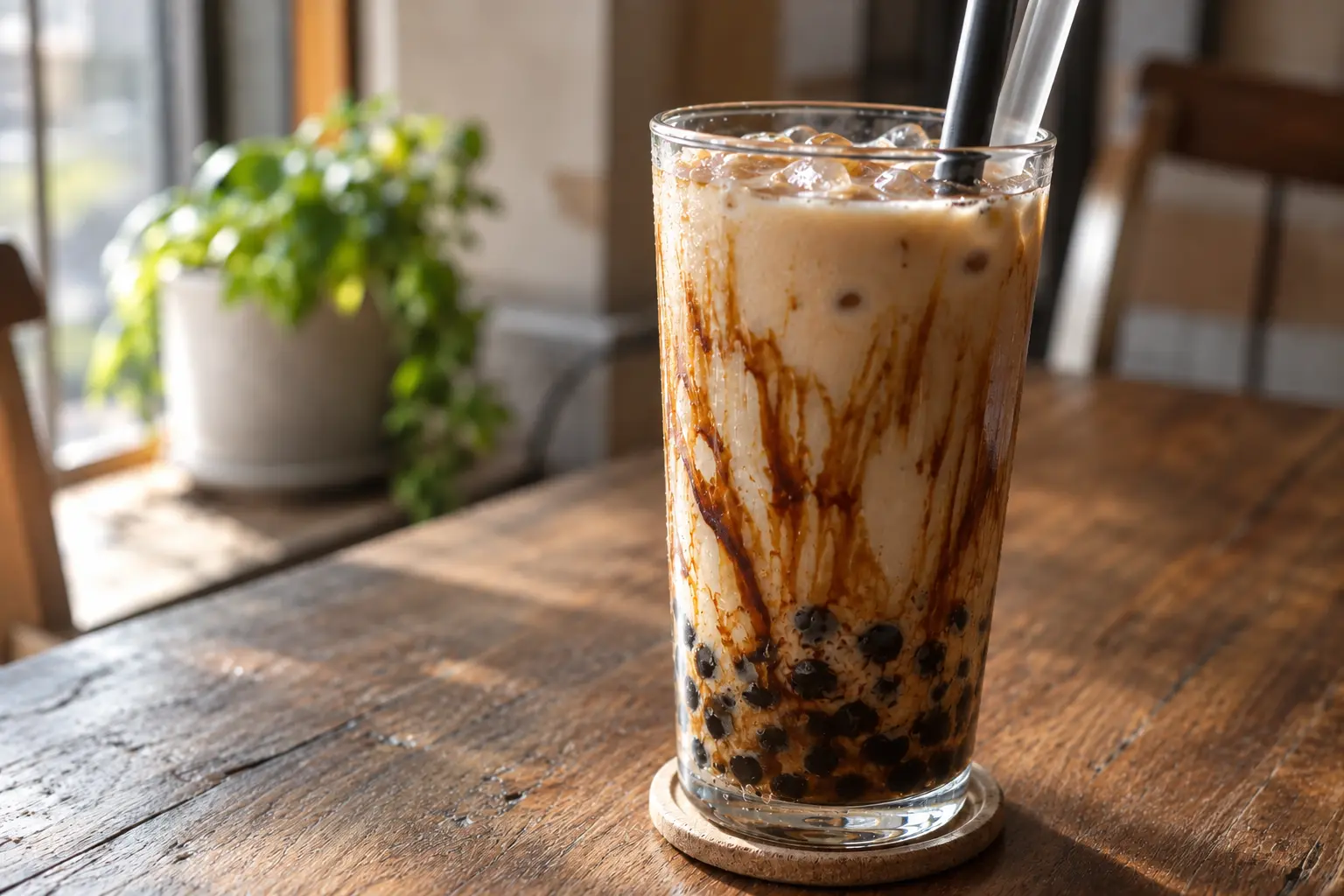
Brown Sugar Boba Milk Tea
Ingredients
Method
- Boil the tapioca pearls in 8 cups water, uncovered, for 15 minutes.
- Turn off the heat, cover, and rest for 15 minutes.
- Dissolve the brown sugar in 3 tablespoons water over medium heat, about 2 minutes.
- Drain the hot pearls and stir them into the warm syrup until glazed.
- Steep the tea bags in 1 cup hot water for 5 minutes, then cool.
- Layer syrup coated pearls, ice, tea, and milk in each glass. Stir and serve.
2 Comments
Comments are closed.