Chicken Salad Recipe: A Creamy Classic Made with 7 Ingredients
The chicken goes into the bowl too warm, and that’s the whole problem. Mix mayo into chicken still warm from the pot, and by the next afternoon you’ve got a puddle at the bottom of the container instead of a scoop you can pick up with a fork. This chicken salad recipe fixes that one step: chill the chicken fully, to about 40°F, before it meets the mayo.
Everything else stays close to what your grandmother probably made. Poached chicken breast, real mayonnaise, celery for crunch, a spoon of Dijon and lemon juice so it doesn’t taste flat, fresh dill if you have it. Seven ingredients, not counting salt and pepper, about 35 minutes of hands-on time.
What you’re after is a filling that holds its shape on a sandwich and doesn’t weep onto the bread. Skip the shortcut of skipping the chill, and this batch tastes as good on day three as it did the first afternoon.
Why You’ll Love This Chicken Salad Recipe
- Stays creamy for days, not just the first day. Chilling the chicken before it meets the mayo keeps the dressing thick instead of thin and separated by day three.
- Seven ingredients, most already in your kitchen. Chicken, mayo, celery, onion, mustard, lemon, and dill, nothing that sends you to a specialty grocer.
- One bowl, no oven. Poach the chicken on the stovetop and mix everything by hand.
- Works for lunch, a platter, or a lettuce wrap. Pile this chicken salad on bread, scoop it with crackers, or spoon it over greens depending on the day.
- Tastes better on day two. The flavors need a few hours to settle in, so leftovers are the better version, not just the convenient one.
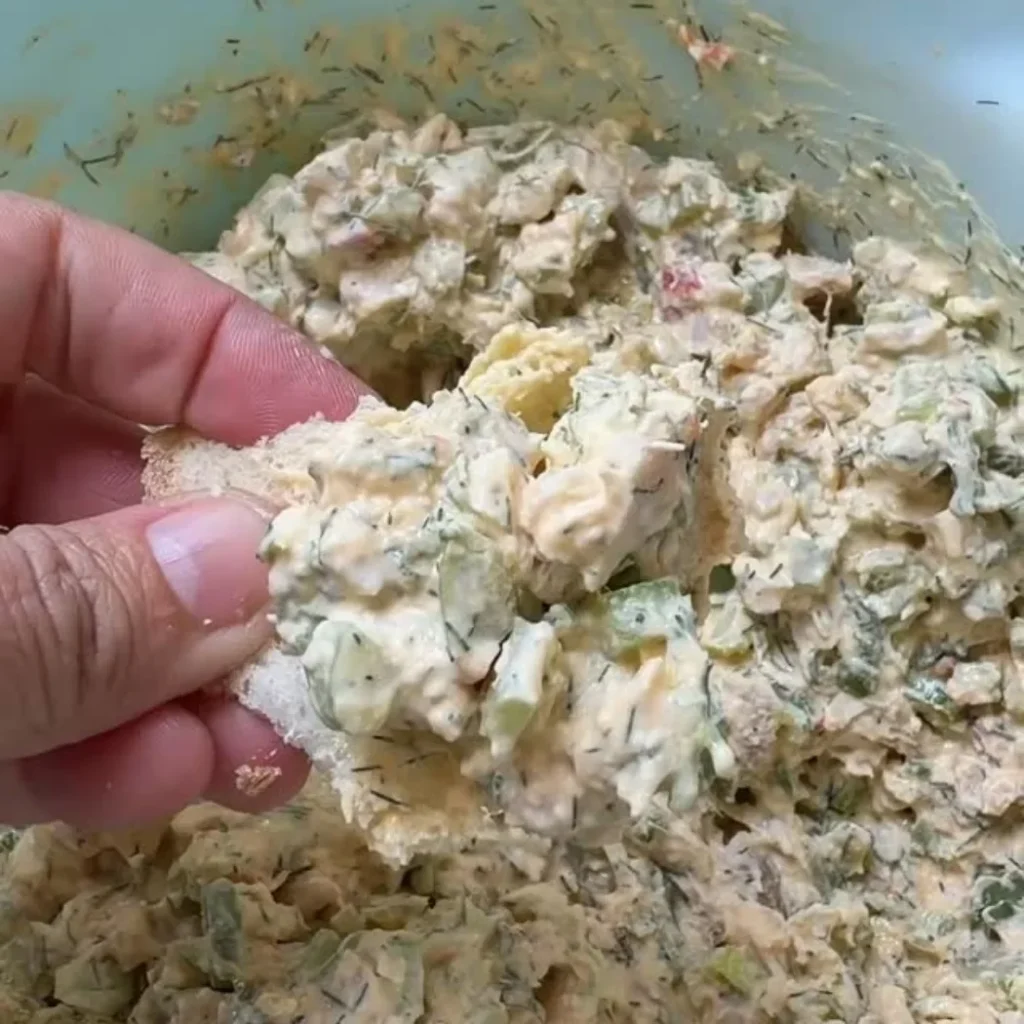
Quick Chicken Salad Recipe Snapshot
- Prep Time: 15 minutes
- Cook Time: 20 minutes
- Chill Time: 1 hour minimum
- Servings: 6, about 3/4 cup each
- Difficulty: Easy
- Calories: 350 per serving
- The ingredient that decides the outcome: how cold the chicken is before you shred it
- Best for: weekday lunches, sandwich prep, or a make-ahead chicken salad for a potluck
Nutrition Information
| Nutrient | Amount Per Serving |
| Serving Size | 1 cup (240 g) |
| Servings Per Recipe | 6 |
| Calories | 350 |
| Protein | 24 g |
| Carbohydrates | 3 g |
| Fat | 27 g |
| Fiber | 1 g |
| Sugar | 1 g |
| Sodium | 380 mg |
Most of the protein comes straight from the breast meat, while the mayonnaise carries almost all of the fat and sodium. Swapping half the mayo for plain Greek yogurt drops both without changing the texture much.
These values are estimates and will shift with the brand of mayo, how much chicken you use, and any add-ins.
Chicken Salad Recipe Ingredients
For the chicken:
- 1.5 lbs (680 g) boneless, skinless chicken breast, similar thickness so it poaches evenly
- 1 teaspoon kosher salt, for the poaching water
- 1 bay leaf, optional
For the dressing:
- 3/4 cup (180 g) mayonnaise, full-fat, so it isn’t the place for a low-fat swap
- 1 tablespoon (15 g) Dijon mustard, sharpens the bowl so it doesn’t taste like plain mayo
- 1 tablespoon (15 ml) fresh lemon juice
- 1/2 teaspoon kosher salt
- 1/4 teaspoon black pepper, more to taste
For the crunch:
- 3/4 cup (90 g) celery, finely diced, the only real crunch in the bowl
A pinch of celery salt in the dressing pushes celery flavor through the whole bowl, not just the bites that happen to land on a piece.
- 1/4 cup (35 g) red onion, finely diced, soaked in cold water 10 minutes first if raw onion usually bites back at you
- 2 tablespoons fresh dill, chopped, or 2 teaspoons dried, or swap in parsley
Allergen and Dietary Disclosure
As written, this chicken salad recipe contains eggs, since mayonnaise is built on an egg yolk emulsion, the mixture that holds oil suspended in liquid instead of letting the two separate. Check the mustard label too: some brands add wheat as a thickener.
Dietary status as written: gluten free, dairy free, nut free, soy free, halal. It is not egg free and not vegan.
For an egg-free version, swap the mayonnaise for a vegan, egg-free mayo. The texture holds up fine, though the flavor turns a touch sweeter and less rich than the real thing.
Serving this to guests? Ask about mustard brands specifically. Plenty of “simple” Dijon labels quietly add wheat flour or wine, and it’s the one ingredient nobody thinks to check.
Equipment Needed
- Large stockpot or Dutch oven. Holds the chicken breasts in a single layer with room for water to move, or the pieces nearest the edge overcook before the center catches up.
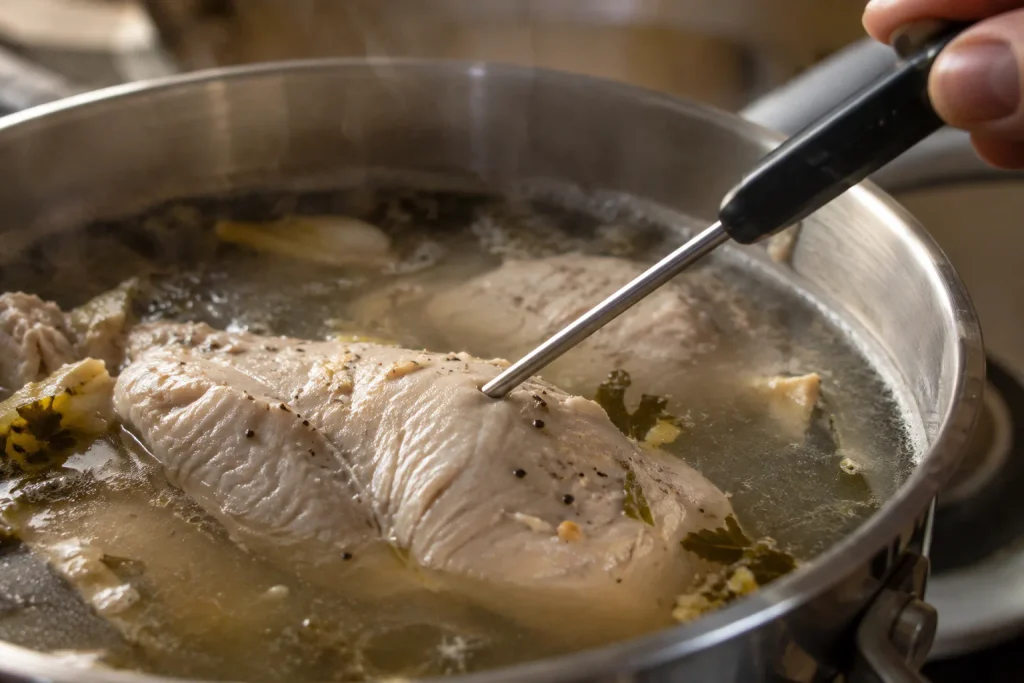
- Instant read thermometer. Chicken breast crosses from juicy to dry across roughly a four degree window, and color alone won’t tell you when it’s ready for chicken salad.
- Two dinner forks, or a stand mixer paddle. Either pulls the chicken into rough, uneven shreds instead of the mush a food processor leaves behind.
- Fine mesh colander. Drains the chicken right after poaching so it isn’t sitting in its own cooking liquid while it cools.
- Airtight container with a tight lid. Keeps the finished salad from drying out or picking up whatever else is in the fridge.
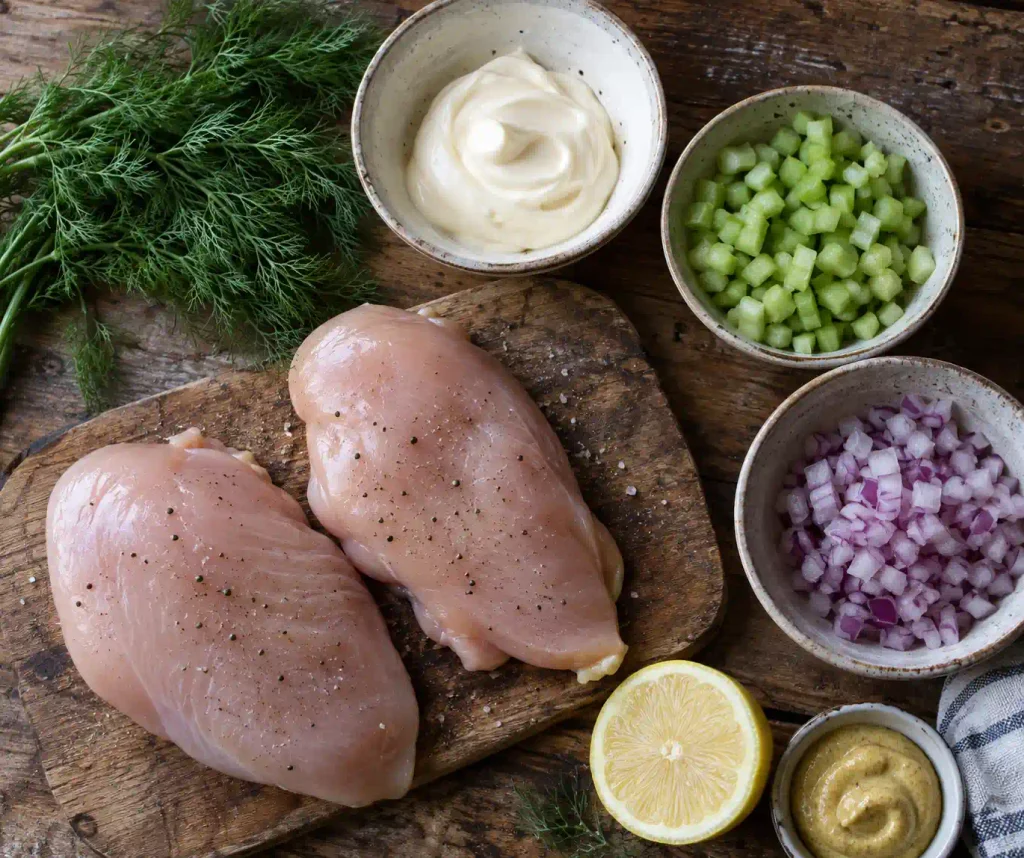
Preparation
Trim any visible fat off the chicken breasts and pat them dry, so the poaching water stays clear and the finished chicken salad tastes clean rather than greasy. Dice the celery and onion now too, since both need to be ready the moment the chicken comes out of the pot.
Fill the stockpot with cold water to cover the chicken by about an inch, then stir in the salt and bay leaf before the heat goes on. Salting the water now, not after, seasons the meat all the way through.
Set a bowl of ice water near the stove. You’ll need it the moment the chicken hits temperature, and having it ready saves the ten seconds that matter.
Step by Step Directions
Step 1. Start the chicken cold
The water needs to be cold when the chicken breasts go in, not already simmering. Submerge them fully, then set the pot over medium heat. Starting cold keeps the outside from going tough and stringy before the center catches up.
Step 2. Bring it to a bare simmer
Once small bubbles break the surface, drop the heat to low. A rolling boil toughens chicken breast fast, so you want water barely moving, more of a shiver than a boil, the gentle technique that defines poaching.
Chef’s Note: If the water starts hammering, pull the pot half off the burner rather than fighting with the dial.
Step 3. Poach to 165°F (74°C)
Depending on thickness, this takes 12 to 18 minutes. Check the thickest breast with a thermometer rather than cutting into it, since a cut lets the juice run into the pot.
Step 4. Chill the chicken completely
Lift the chicken into the ice water bath and hold it there for 10 minutes, then move it to the fridge, uncovered, for at least an hour before you shred it.
Chef’s Note: This is the step people skip, and it decides whether your chicken salad is still creamy on day three. Warm chicken keeps releasing moisture into the mayo for hours after mixing, which is what turns a batch watery by the next afternoon.
In a hurry? Spread the poached chicken in a single layer on a sheet pan and slide it into the freezer for 20 minutes. It chills almost as fully as the fridge method, just faster.
Step 5. Shred by hand
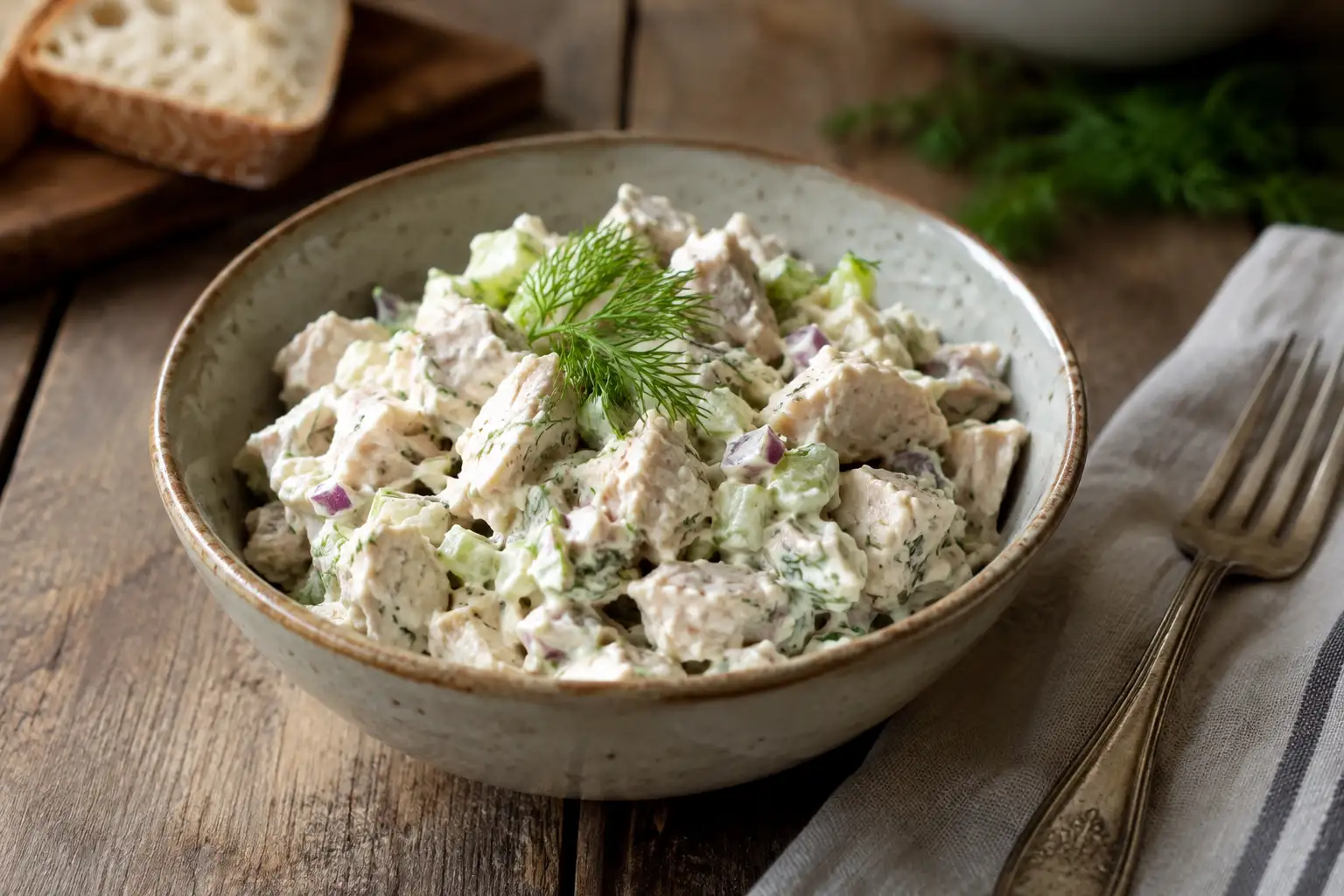
Pull the cooled chicken apart with your fingers or two forks into pieces about the size of a thumbnail. That unevenness gives the finished chicken salad texture instead of a uniform paste.
Step 6. Build the dressing and fold it in
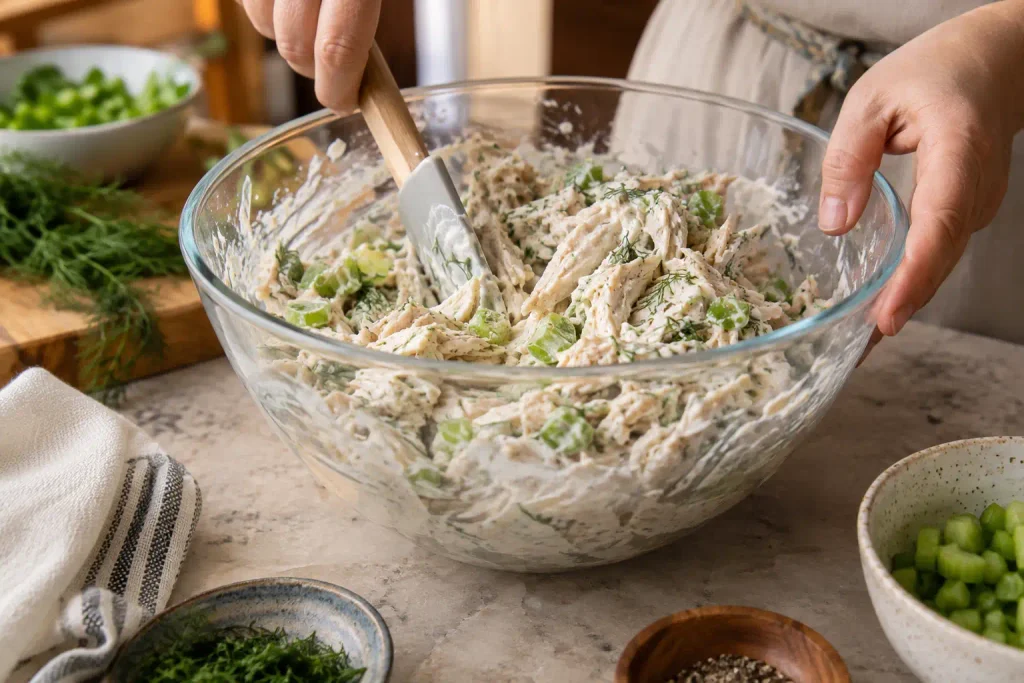
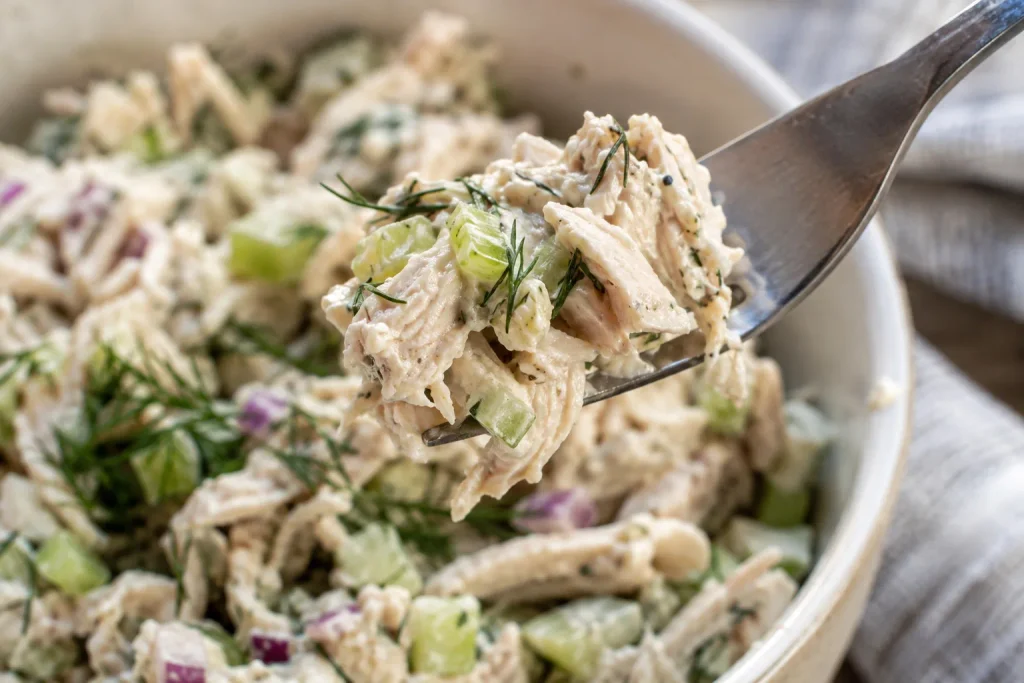
Whisk the mayo, Dijon, lemon juice, salt, and pepper together until smooth, then add the chicken, celery, onion, and dill. Fold from the bottom up until every piece is coated.
Chef’s Note: Start with three quarters of the mayo and add the rest only if the chicken still looks dry. Lean breast meat sometimes needs less dressing than the recipe calls for.
Step 7. Rest before serving
Cover the bowl and let it sit in the fridge for at least 30 minutes. The onion mellows, and the whole thing starts to taste like one dish instead of a list of ingredients.
Expert Tips and Tricks
Don’t skip the ice bath. Straight from a 165°F pot into ice water gets the chicken to a safe handling temperature fast, and it’s the first leg of the hour of chilling this recipe needs.
Buy chicken breasts close to the same size. One thick breast and one thin one means pulling the thin one out early or overcooking the thick one.
Make the chicken up to three days ahead. Poach and shred it, store it plain, and mix the dressing day-of. It cuts morning-of prep to five minutes.
Press plastic wrap right onto the surface before the lid goes on. Chicken salad picks up a skin and a fridge smell fast once air reaches the top layer.
Rotisserie chicken works in a pinch, but chill it too. Skip the poaching step and shred about 3 cups of rotisserie meat instead. The same rule still applies, or you’ll land at the same watery chicken salad.
Soak sliced onion if it fights back. Ten minutes in cold water, patted dry, pulls out most of the sharp edge without losing the crunch.
Common Mistakes and Troubleshooting
These are the failures that show up most often in a homemade chicken salad recipe, and most of them trace back to one habit or another around temperature.
| Problem | Cause | Solution |
| Watery pool at the bottom of the container by day two | Chicken was still warm when it got mixed with the mayo, so it kept releasing moisture into the dressing | Chill the chicken fully, close to 40°F, before shredding. If a batch is already watery, drain it and stir in fresh mayo |
| Dressing tastes like plain mayo and nothing else | Salt only went into the mayo, never the chicken, while it poached | Salt the poaching water generously, and taste the chicken plain before you dress it |
| Dressing looks oily and separated on top | Cold mayo hit warm chicken, and the temperature shock broke the emulsion | Let the chicken finish chilling before mixing, and stir gently rather than beating |
| Chicken shredded into mush instead of pieces | A food processor pulsed it too far, or the chicken overcooked and dried out | Pull it apart by hand or two forks, and check for 165°F with a thermometer instead of guessing |
| Raw onion overpowers every bite | Onion went in at full strength right before serving, with no time to mellow | Soak diced onion in cold water 10 minutes and pat dry, or mix it in a few hours ahead |
The watery version is the one almost everyone hits at least once. Warm chicken looks fine going into the bowl, but it keeps shedding moisture for the next hour, straight into the mayo around it. By the time the container’s cold, that moisture has nowhere to go but down, and you’re spooning liquid off the top the next morning. Fix it before it happens. Chill the chicken in the fridge, not just to room temperature, before it ever meets the dressing.
Storage Instructions
Room Temperature
Chicken salad is a mayo-based dish, so it shouldn’t sit out longer than 2 hours, less on a hot day. Keep it in a bowl set over ice if it’s part of a spread that’s out for a while.
Refrigerator
Store it in an airtight container for up to 4 days, with a layer of plastic wrap pressed directly onto the surface before the lid goes on. That single step stops it drying out more than the lid alone ever will.
Freezer
Skip freezing the dressed salad. Mayo doesn’t come back together after it thaws, and you’ll end up with a grainy, separated mess. Freeze the poached, undressed chicken instead, up to 2 months, and mix the dressing fresh once it thaws.
Make Ahead
Poach and shred the chicken up to 3 days ahead, and keep it plain in the fridge. Mix the dressing the same day you’re serving, since celery and onion lose their snap after a day sitting in mayo.
Variations and Substitutions
Spicy version. Stir in a diced jalapeño and a dash of hot sauce. It adds real heat, so cut back on the black pepper to keep the bowl from tasting muddled.
Mild, kid-friendly version. Leave out the onion and mustard, and add an extra tablespoon of mayo. You lose some tang, but it’s an easier sell for picky eaters.
Vegetarian version. Swap the chicken for two cans of drained, mashed chickpeas. The texture turns softer and won’t hold together on a sandwich quite as well, but the dressing works the same way.
Gluten free. The recipe is gluten free as written, aside from what you serve it on. Double check the Dijon label, since a few brands thicken with wheat flour.
A few other swaps worth knowing for this chicken salad: half the mayo can become plain Greek yogurt for a lighter, tangier version. Grapes, halved and stirred in, add sweetness against the celery. Pecans add crunch, though they soften after a day in the fridge, so add them right before serving.
Serving Suggestions
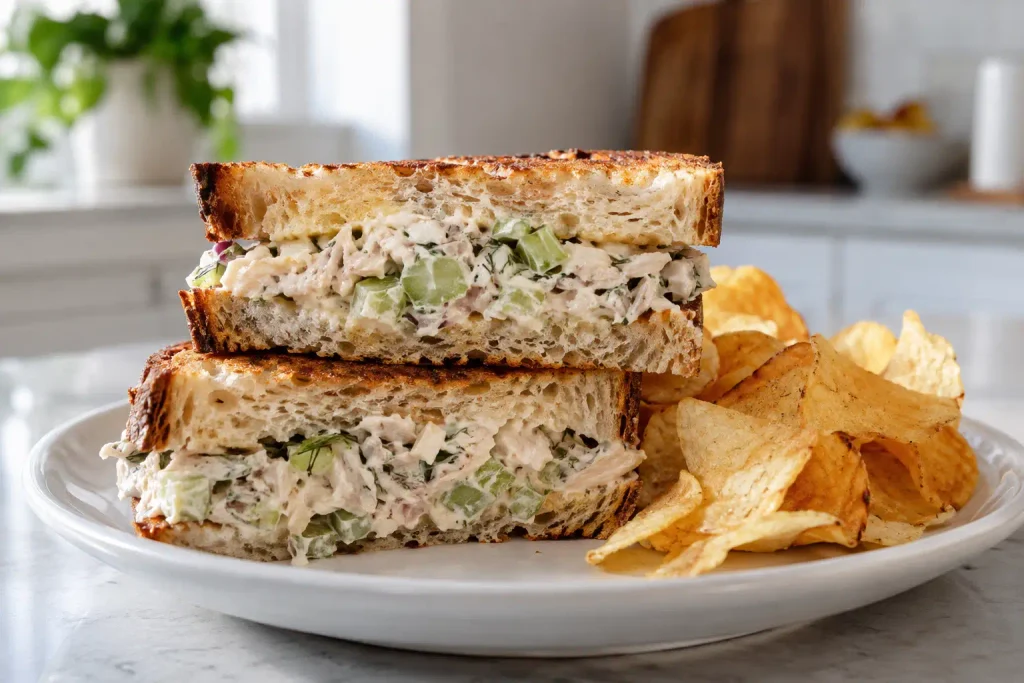
Pile this chicken salad onto thick slices of toasted sourdough or a buttery croissant. The bread matters here: anything too soft turns to paste under a scoop this creamy. For a lighter plate, spoon it over butter lettuce, where the cold, crisp leaves play against the richness of the mayo.
Serve it as a scoop with buttery crackers for a platter, or wrapped in lettuce leaves for a low-carb lunch. A cup of tomato soup on the side works well in cooler months, since the warm, acidic soup is a sharp contrast to the cold, rich salad.
Frequently Asked Questions
Can I make chicken salad the day before I need it?
You can, and it often tastes even better the next day, once the onion and mustard settle into the meat. Keep it in an airtight container with plastic wrap pressed against the surface, and stir before serving since the dressing can separate slightly overnight. It holds for up to 4 days.
Why did my chicken salad turn watery?
The chicken was too warm when it went into the mayo. Warm meat keeps shedding moisture for an hour or more after mixing, and that moisture ends up pooled at the bottom of the container by the next day. Chill the chicken fully, close to 40°F, before you shred and dress it, and the texture holds through day three.
Can I use rotisserie chicken instead of poaching my own?
Rotisserie chicken works fine and saves the poaching time. Pull off the skin and bones, shred about 3 cups, and chill it fully before mixing, same rule as poached chicken. The trade-off is flavor control: rotisserie chicken usually comes seasoned already, so taste before adding more salt.
How do I know the chicken is fully cooked without cutting into it?
An instant read thermometer is the only reliable way. Push it into the thickest part of the breast and look for 165°F (74°C). Cutting into the meat to check lets the juices run out, leaving you with drier, less flavorful chicken salad than if you’d left the breast whole.
Do I need the raw onion in chicken salad?
No, and plenty of good versions skip it. If raw onion bites back at you, dice it fine and soak it in cold water for 10 minutes first, which pulls out most of the sharpness. Or leave it out and stir in a pinch of onion powder for the flavor without the bite.
Conclusion
Forty minutes of hands-on work gets you a batch that lasts the better part of a week if you handle the chilling step right. I’ve ruined more than one batch by rushing that hour in the fridge because lunch was already late, and every time, the shortcut cost me a watery bowl by the next day. It isn’t a step you can skip and fix later.
Keep a container of this in the fridge and you’ve got lunch solved for four days straight, on bread, in a wrap, or straight off a spoon standing at the counter. This chicken salad recipe rewards the person who waits the extra hour more than almost any other dish I make regularly.
Pin this one now so it’s easy to find the next time you’ve got leftover chicken and twenty minutes to spare.
Classic Creamy Chicken Salad
Ingredients
Method
- Submerge chicken breasts in cold, salted water with the bay leaf.
- Bring to a bare simmer over medium heat, then lower to low.
- Poach 12 to 18 minutes, until the center reads 165°F (74°C).
- Chill in ice water 10 minutes, then refrigerate uncovered at least 1 hour.
- Shred the cold chicken by hand into uneven pieces.
- Whisk mayo, mustard, lemon juice, salt, and pepper together.
- Fold in chicken, celery, onion, and dill until coated.
- Rest in the fridge at least 30 minutes before serving.
![of field, food photography, natural textures, high detail, no text, no watermark] [ALT TEXT: Bowl of French onion soup with melted Gruyere crust and toasted baguette](https://www.flavoreal.com/wp-content/uploads/2026/09/french-onion-soup-hero-shot-768x512.webp "French Onion Soup Recipe: A Golden, Deeply Caramelized French Classic in 6 Steps 13")
2 Comments
Comments are closed.