Pesto Pasta Recipe: A Silky Basil Sauce Ready in 20 Minutes
The first time I made pesto pasta for real, not from a jar, I dumped the sauce onto pasta straight from the colander, still steaming, and watched the oil separate and pool at the bottom of the bowl within a minute. The basil looked dull by the time I sat down to eat. Nothing about the ingredient list was wrong. The problem was I tossed it hot and fast, the way you’d toss a jarred sauce, when a fresh basil emulsion needs the opposite.
Pesto is not cooked. It’s raw basil, garlic, nuts, cheese, and oil blended into a suspension that holds together only as long as nothing shocks it apart, and hot pasta off the boil is exactly that shock. Pesto pasta stops being a recipe you follow and becomes a sequence you control once you know that: cool the pasta a minute, add the sauce off heat, and loosen it in stages with the starchy water clinging to the noodles. That’s the difference between a bowl that looks restaurant made and one with a slick of oil on top.
Why You’ll Love This
- Ready before the garlic bread finishes toasting. Pasta and sauce happen at once, so dinner’s on the table in 20 minutes.
- Bright green, not army green. Blending the basil cold and briefly keeps chlorophyll from browning.
- One food processor, one pot. Cleanup is a blade and a colander.
- Freezes in portions. Pesto alone holds in the freezer far better than the finished pasta does.
- Kids tend to like pesto pasta more than a red sauce, since there’s no acidity to fight with.
Quick Information
Prep time: 10 minutes. Cook time: 12 minutes. Total time: 20 minutes. Servings: 4. Difficulty: Easy. Calories: about 520. The ingredient that decides the outcome is the olive oil, since a thin or bitter one flattens the sauce. Best for a pesto pasta dinner or a room temperature pasta salad the next day.
Nutrition Information
| Nutrient | Amount Per Serving |
| Serving Size | 1 1/2 cups (300 g) |
| Servings Per Recipe | 4 |
| Calories | 520 |
| Protein | 15 g |
| Carbohydrates | 52 g |
| Fat | 30 g |
| Fiber | 3 g |
| Sugar | 2 g |
| Sodium | 480 mg |
Most of the fat comes from the olive oil and pine nuts rather than the cheese, which is why pesto pasta stays satisfying without leaning on cream. Protein splits between the noodles and the Parmesan, and sodium climbs mainly from the salted pasta water. These values are estimates that vary with brands and substitutions.
Ingredients
For the pesto
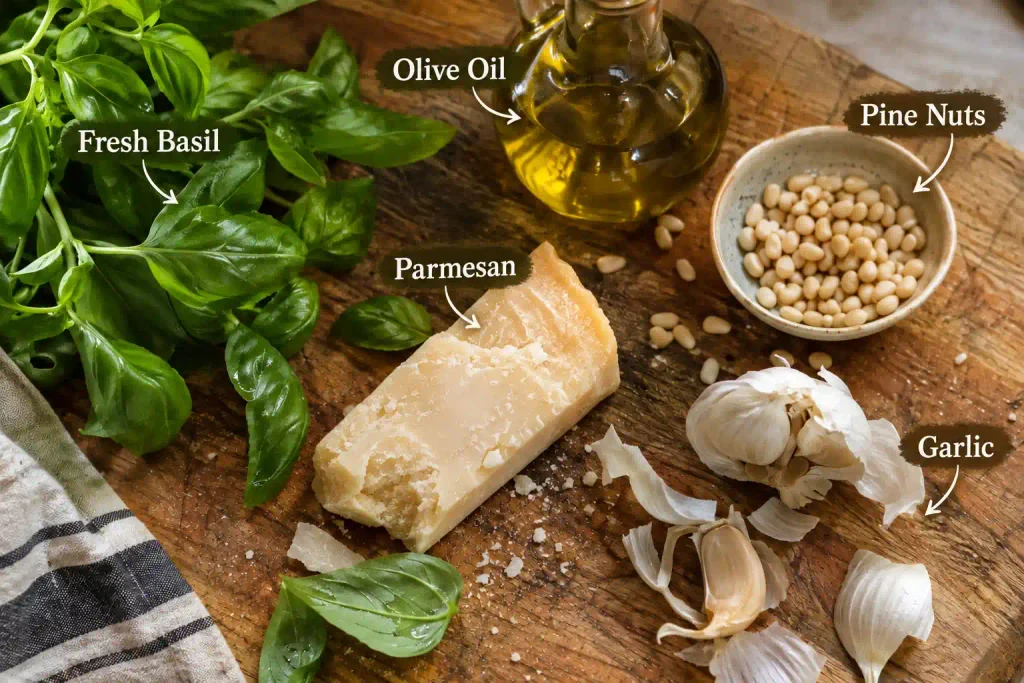
- 2 cups (60 g) packed fresh basil leaves, stems removed, since stems turn the sauce bitter
- 1/3 cup (45 g) pine nuts, toasted, for the nutty backbone raw nuts don’t deliver
- 2 medium garlic cloves, peeled
- 1/2 cup (50 g) finely grated Parmesan cheese, plus extra for serving
- 1/2 cup (120 ml) extra virgin olive oil, so use one you’d taste on its own
- 1/2 teaspoon fine sea salt
- 1/4 teaspoon black pepper, freshly ground
For the pasta
- 1 pound (450 g) spaghetti, fusilli, or another shape with ridges that hold the sauce
- 1 tablespoon fine sea salt, for the pasta water
- Reserved pasta water, up to 1 cup (240 ml), the third ingredient in the sauce
If pine nuts aren’t in the pantry, toasted walnuts work at the same quantity and shift pesto pasta slightly earthier. Pecorino stands in for the Parmesan for more bite, though it brings more salt too.
Allergen and Dietary Disclosure
This pesto pasta contains dairy from the Parmesan, tree nuts from the pine nuts, and gluten from the wheat pasta. It’s vegetarian if the cheese uses microbial rather than animal rennet, since many wedges do not. It is not currently gluten free, dairy free, or nut free.
For nut free, swap the pine nuts for toasted sunflower seeds in the same amount; the sauce turns milder. For gluten free, use a rice or corn based pasta, which cooks slightly gummier since it sheds more starch into the water. The hidden risk is pre grated Parmesan, since some brands are cut with cellulose that can carry trace gluten depending on the mill.
A food processor works faster, but a sturdy blender does the job too. Just scrape the sides down twice, since basil tends to climb the walls instead of falling into the blade.
Equipment Needed
- Food processor or blender. Turns whole basil into a smooth pesto pasta sauce in under a minute, far faster than chopping by hand.
- Large stockpot. Pasta needs room to move, and a crowded pot cooks it unevenly.
- Spider strainer or tongs. Lifting pasta straight out of the water, instead of dumping into a colander, means you control how much starchy water travels with it.
- Liquid measuring cup. For scooping out pasta water before draining.
- Box grater. Pre shredded cheese carries anti caking starch that keeps it from melting in the way freshly grated cheese does.
Preparation
Pull the basil off its stems and rinse, then pat dry. Wet basil dilutes the sauce and makes it harder for the oil to bind. Peel the garlic and measure the pine nuts, oil, and cheese so they’re ready the moment the processor runs.
Fill the stockpot with water, salt it generously, and set it over high heat before anything else. Pesto pasta lives or dies on timing, and the water needs a full boil by the time the pesto is done.
Step by Step Directions
Step 1. Toast the nuts
Add the pine nuts to a dry skillet over medium heat, no oil. Shake every 30 seconds. They’re done around 3 minutes, when they shift from pale ivory to light gold and you can smell them across the kitchen.
Chef’s Note: Pine nuts go from toasted to burnt in under a minute. Pull them the second the color shifts, since the pan’s residual heat keeps cooking them.
Step 2. Blend the base
Pulse the basil, pine nuts, garlic, cheese, salt, and pepper in the processor 8 to 10 times, until it breaks into coarse, even crumbs. Scrape the sides once, since basil climbs the walls instead of falling toward the blade.
Step 3. Stream in the oil
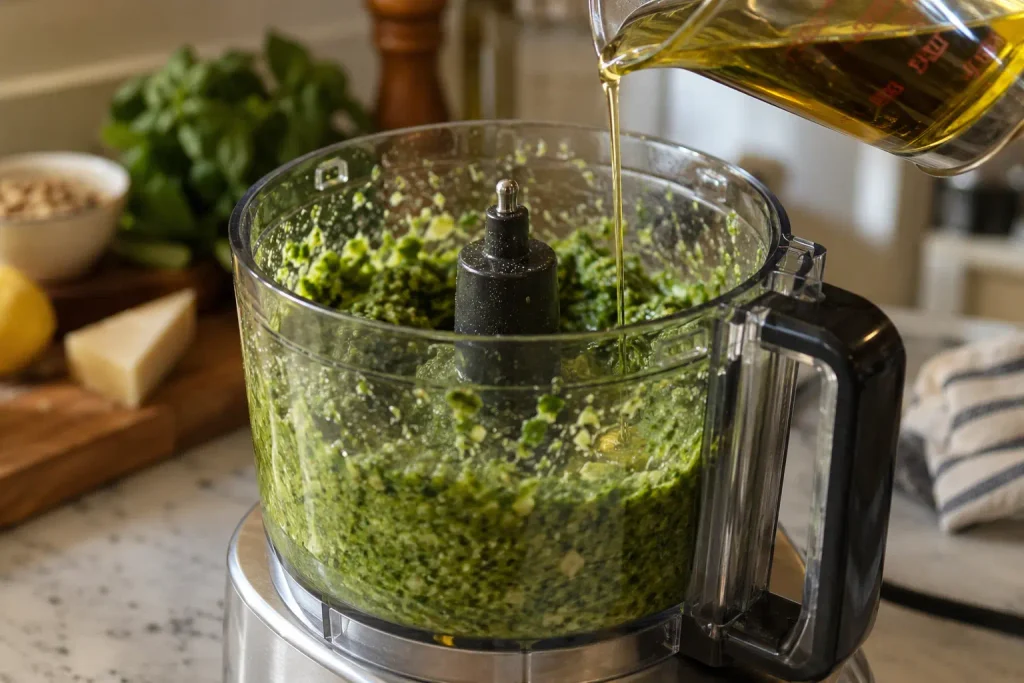
With the processor running, pour the oil in slowly, over about 20 seconds. The sauce turns from crumbly to smooth and glossy: that shift is the emulsion forming, the oil suspending evenly through the basil and cheese instead of floating on top.
Chef’s Note: Pouring the oil in fast is the top reason homemade pesto splits later. A slow stream gives the basil and cheese time to trap it in tiny droplets; dumped in fast, some never gets caught, and that’s the oil you’ll see pooling on the pasta.
Step 4. Cook the pasta
Once the water’s at a rolling boil, add the pasta and stir so strands don’t clump. Cook 9 to 11 minutes, tasting a strand early. It’s ready with a firm, resistant bite at the center, not a soft texture straight through.
Step 5. Reserve the water
Right before draining, scoop out a full cup of the cooking water, cloudy with starch that lets the sauce loosen without going watery. Drain the pasta and give it a light shake.
Step 6. Let the pasta cool
Tip the drained pasta back into the empty pot, off heat, and let it sit one to two minutes before the pesto touches it. The pot stays warm enough to keep the pasta from going cold, but not hot enough to shock the sauce.
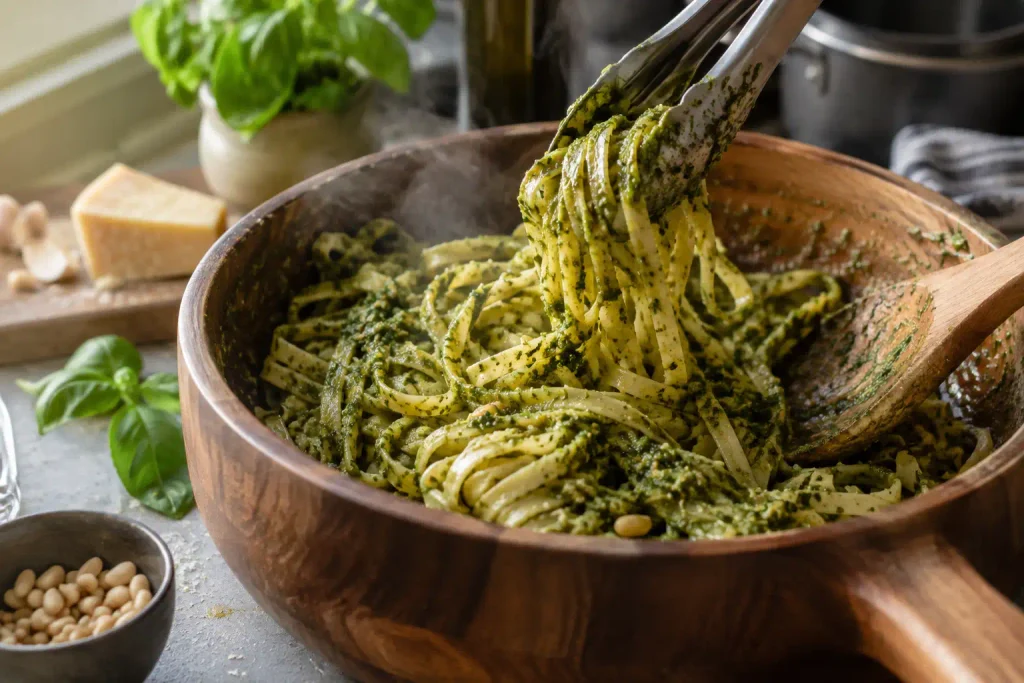
Step 7. Toss in stages
Add half the pesto and toss with tongs until coated. Add a splash, about 2 tablespoons, of reserved water and toss again. Add the rest of the pesto, then keep adding water a splash at a time until the sauce clings to every strand instead of pooling.
Chef’s Note: This staged toss is the whole trick to pesto pasta that doesn’t separate. Adding all the water at once thins the sauce faster than the noodles can absorb it, leaving it soupy instead of coated. Splash by splash lets you stop right where it works, usually 3 to 5 tablespoons.
Expert Tips and Tricks
Salt the water like the sea. It should taste noticeably salty on its own, since that’s the only chance the noodles get seasoned from the inside.
Make the pesto up to three days ahead. Store it with a thin layer of oil over the top to block air, which actually causes the browning most people blame on the basil.
Don’t skip toasting the nuts. Raw pine nuts taste flat and waxy next to toasted ones, and it only takes three minutes.
A splash of pasta water saves leftovers. Pesto pasta tightens up in the fridge as noodles keep absorbing the oil, so reheat with a spoonful of water rather than microwaving it dry.
Grate the cheese fine. Coarse shreds don’t fully break down in the processor and leave gritty flecks in the sauce.
Toast extra pine nuts while the skillet’s hot. They keep in the freezer for months, cutting a real step out of next time.
Common Mistakes and Troubleshooting
| Problem | Cause | Solution |
| The sauce turns dull or grayish within an hour | Basil oxidizes in air, sped up by an overworked blade | Blend in short pulses, and press plastic wrap onto the surface of leftover pesto |
| Pesto pasta looks oily, with a puddle at the bottom of the bowl | The pasta was too hot when the sauce went in, shocking the oil out of suspension | Let it cool a minute off heat, then toss in stages with reserved water instead of adding it all at once |
| The pasta seizes up and turns gluey after 20 minutes | Starch in the noodles keeps pulling moisture from the sauce even after it’s plated | Hold back a splash of pasta water and stir it in right before serving |
| The pesto is gritty instead of smooth | Cheese was coarsely grated, or the oil went in too fast for the blade to catch it | Grate the cheese fine and stream the oil in slowly |
The most common failure is the oily, separated bowl, tracing back to timing. Hot pasta from the colander sits around 200°F (93°C), hot enough to break the emulsion the moment sauce touches it, the same way scrambled eggs seize in a too hot pan. Give it a minute to cool, and the same pesto that looked broken will coat every strand instead.
Forgot to scoop out pasta water before draining? Plain tap water works as a backup, though it carries none of the starch that helps the sauce grip, so add it a half tablespoon at a time.
Storage Instructions
Room temperature storage is skipped on purpose. Pasta tossed with cheese and oil sits in the bacterial danger zone past about two hours on the counter.
Refrigerator
Store leftover pesto pasta in an airtight container up to 3 days. The color dulls slightly by day two, which is normal.
Freezer
The finished pasta doesn’t freeze well, since noodles turn mushy on thawing. The pesto alone freezes up to 3 months, portioned into an ice cube tray for one serving.
Reheating
Warm leftovers gently in a skillet over low heat with a splash of water or oil, stirring often. A microwave works in 30 second bursts, but skip high power, which separates the sauce.
Make Ahead
The pesto can be made up to 3 days ahead, stored under a thin film of oil. Cook the pasta fresh the day you serve it, since pasta refrigerated whole never takes the sauce the same way off the boil.
Variations and Substitutions
For a spicy pesto pasta, add a quarter teaspoon of red pepper flakes into the processor with the basil, at the cost of a little pure basil flavor.
For a mild, kid friendly version, cut the garlic to one clove and stir a tablespoon of butter into the sauce, which mutes some of the brightness fresh pesto is made for.
For a vegetarian version, confirm the Parmesan uses microbial rather than animal rennet, since most traditional Parmigiano Reggiano does not.
For a gluten free version, use a rice or corn based pasta and trim cooking time by a minute, since it turns mushy faster than wheat.
A few more swaps: walnuts or pistachios replace the pine nuts at the same amount, walnuts earthier and pistachios sweeter. Baby spinach can stand in for half the basil for a milder sauce.
Serving Suggestions
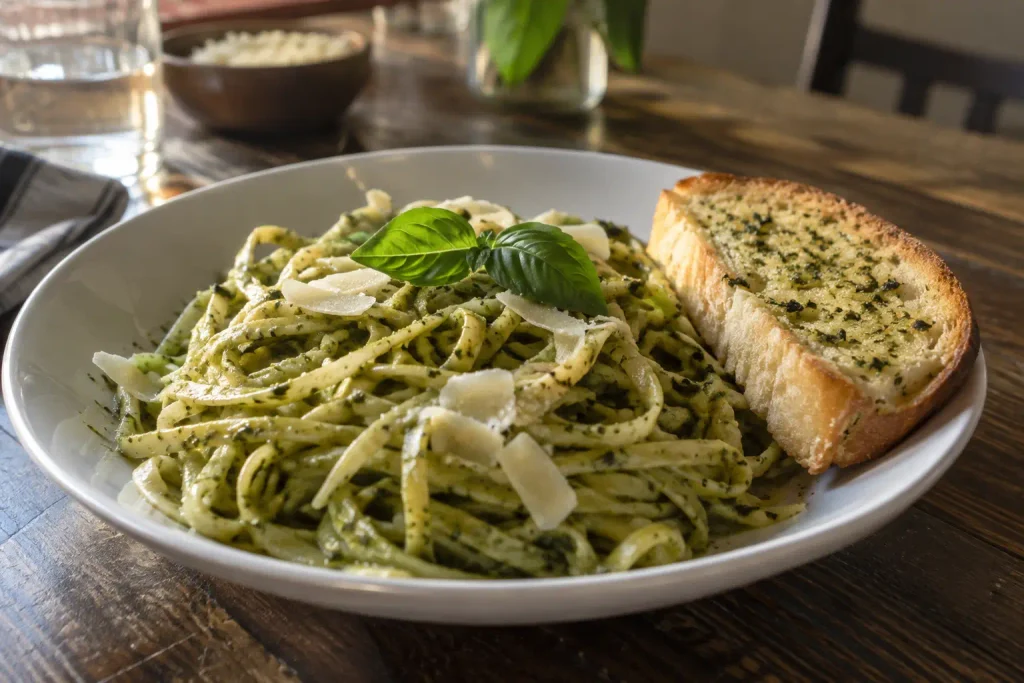
Garlic bread is the obvious pairing with pesto pasta: the crisp, buttery crust gives your fork something to scrape the last of the sauce off the plate with. A simple arugula salad with lemon cuts through the richness with something sharp and cold.
Grilled chicken or shrimp turns this into a protein forward dinner, and either takes on the garlic and basil well since neither competes for attention. A caprese style side of tomato and mozzarella works too, since tomato’s acidity balances the fat in the pesto.
Frequently Asked Questions
Can I make pesto pasta ahead of time for a party or meal prep?
The pesto itself holds up better made ahead than finished pesto pasta does, since the noodles are what suffer with time. Make the sauce up to 3 days ahead, kept in the fridge under a thin layer of olive oil to block air. Cook the pasta fresh right before serving and toss it while the pesto is at room temperature, so it loosens properly.
Why did my pesto turn brown after I made it?
Basil oxidizes when it’s exposed to air, and heat from a blade run too long speeds up that reaction. Blending in short pulses rather than one continuous run keeps the sauce from heating up inside the bowl. Plastic wrap pressed directly onto the surface, or a thin film of oil over the top, blocks most of the air contact that causes browning.
What can I use instead of pine nuts in pesto pasta?
Walnuts work at the same quantity and are the closest substitute in texture, though they shift the flavor more earthy and less buttery than pine nuts. Toasted almonds or pistachios work too, each nudging the sauce a different direction, almonds fairly neutral and pistachios noticeably sweeter. Sunflower seeds are the nut free option, with a milder flavor that leans less rich overall.
How do I know when the pasta is done cooking?
Start tasting a strand about a minute before the package time listed, since that time is only ever a guideline and stovetops vary. It’s ready when the center still has a slight resistance to the bite, not a fully soft texture, since it keeps softening once it’s tossed with the warm sauce off the heat. Pull it a touch early if you’re unsure.
Is it normal for pesto pasta to look kind of oily right when it’s done?
A light sheen from the olive oil is normal on pesto pasta and is what makes the noodles glossy. What’s not normal is a visible puddle of oil separated from the sauce, which usually means the pasta was too hot when the pesto went in. Let it cool a minute next time, and add the reserved water gradually instead of all at once.
One more thing before you plate it
Pesto pasta rewards patience in exactly one place, and it’s not the sauce itself. It’s the minute you wait after draining before the pesto touches the noodles. I’ve skipped that pause plenty of times and ended up eating noodles in a puddle of separated oil instead of coated in sauce. The version that looks and tastes the way it should takes the same 20 minutes either way. It just spends one of those minutes waiting instead of rushing.
If you’ve been making this from a jar, the fresh version costs a few extra minutes of blending and pays it back in a sauce that tastes like actual basil, not preserved basil.
Pin this pesto pasta recipe now so it’s ready the next time you need a fast dinner.
Pesto Pasta
Ingredients
Method
- Toast the pine nuts in a dry skillet over medium heat, about 3 minutes, until light gold.
- Pulse basil, pine nuts, garlic, Parmesan, salt, and pepper in a food processor until coarse.
- Stream in the olive oil slowly while the processor runs until smooth and glossy.
- Boil the pasta in salted water 9 to 11 minutes until just short of fully tender.
- Scoop out 1 cup of pasta water, then drain the pasta.
- Let the drained pasta rest off heat in the pot for 1 to 2 minutes.
- Toss the pasta with the pesto in two additions, loosening with reserved water a splash at a time.