Teriyaki Chicken Recipe: A Sticky Glaze Ready in 25 Minutes
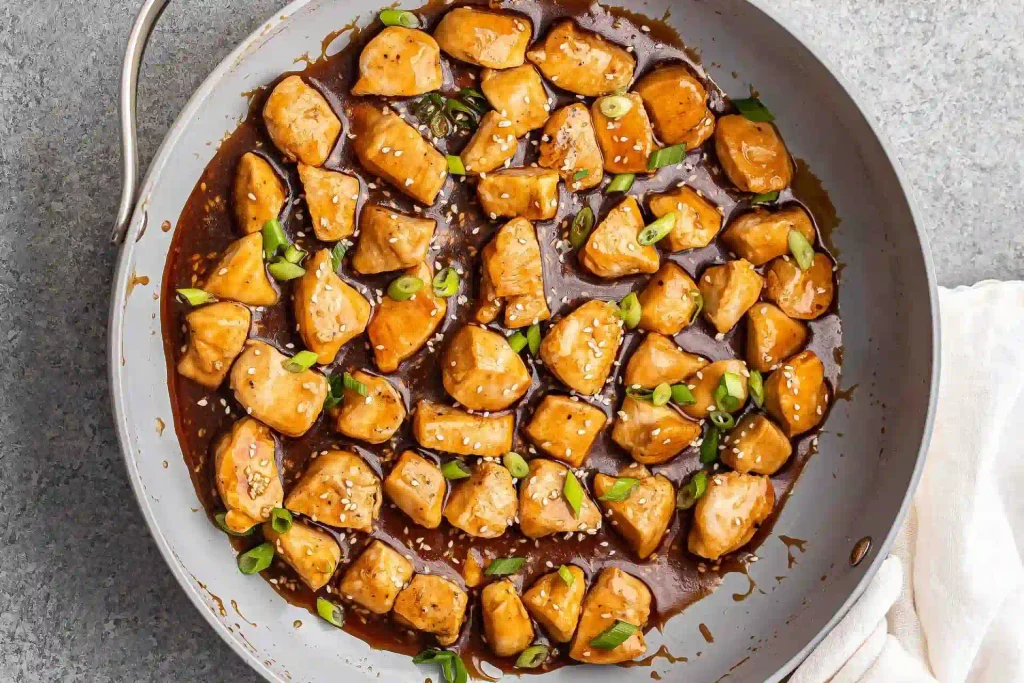
Dump raw chicken straight into teriyaki sauce and you get one of two results: sauce that never thickens because it’s diluted by chicken juices, or chicken that turns chalky from sitting in a simmering pan waiting for the glaze to catch up. Teriyaki chicken only works when the sauce and the meat get separate attention.
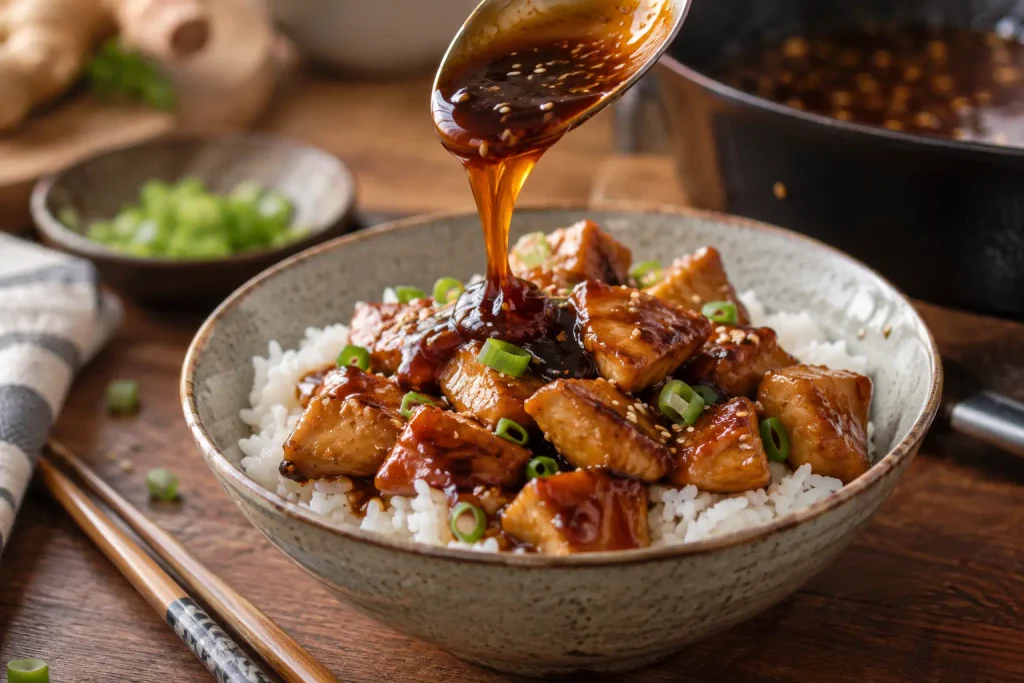
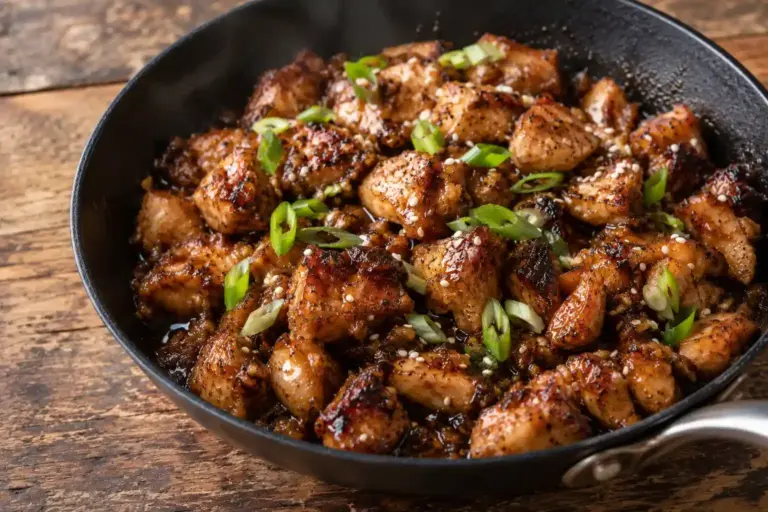
This recipe reduces the glaze in its own small pan while the chicken sears in a different one. One pan gets a good sear and stays there, the other reduces down to something that coats a spoon without turning into candy. They meet for the last ninety seconds, just long enough for the glaze to cling to every piece.
The sauce itself is soy sauce, brown sugar, garlic, ginger, and a cornstarch slurry, nothing that needs a special aisle at the store. It reduces from a thin brown liquid to something glossy enough to see your reflection in, and that shift happens fast, closer to four minutes than ten. Miss the window and it goes from glaze to caramel before you can pull it off the heat.
Why You’ll Love This
- Reheats clean. Plain cornstarch doesn’t break down the way modified starch in bottled sauce does, so day two teriyaki chicken stays glossy instead of gluey.
- Twenty five minutes end to end. Faster than most delivery apps quote for a driver to show up.
- One glaze, three ways to serve it. Rice, noodles, or lettuce wraps, with nothing else to make.
- High heat doesn’t dry it out. Thigh meat carries enough fat to take a hard sear without turning tough.
Quick Info
- Prep Time: 10 minutes
- Cook Time: 15 minutes
- Total Time: 25 minutes
- Servings: 4
- Difficulty: Easy
- Calories: about 340 per serving
- What decides the outcome: a cornstarch slurry stirred into the glaze during the last minute of reduction, not before
- Best for: a fast teriyaki chicken dinner or a make-ahead meal prep bowl
Nutrition Information
| Nutrient | Amount Per Serving |
| Serving Size | 1 cup (240 g) |
| Servings Per Recipe | 4 |
| Calories | 340 |
| Protein | 28 g |
| Carbohydrates | 22 g |
| Fat | 14 g |
| Fiber | 1 g |
| Sugar | 16 g |
| Sodium | 780 mg |
Most of the protein comes from the chicken thighs, about 28 grams per serving. The sugar sits almost entirely in the glaze, since brown sugar gives teriyaki chicken its shine and stickiness, and the sodium comes from the soy sauce doing double duty as salt and umami. Values are estimates that vary with brands, measuring, and substitutions.
Ingredients
For the Chicken
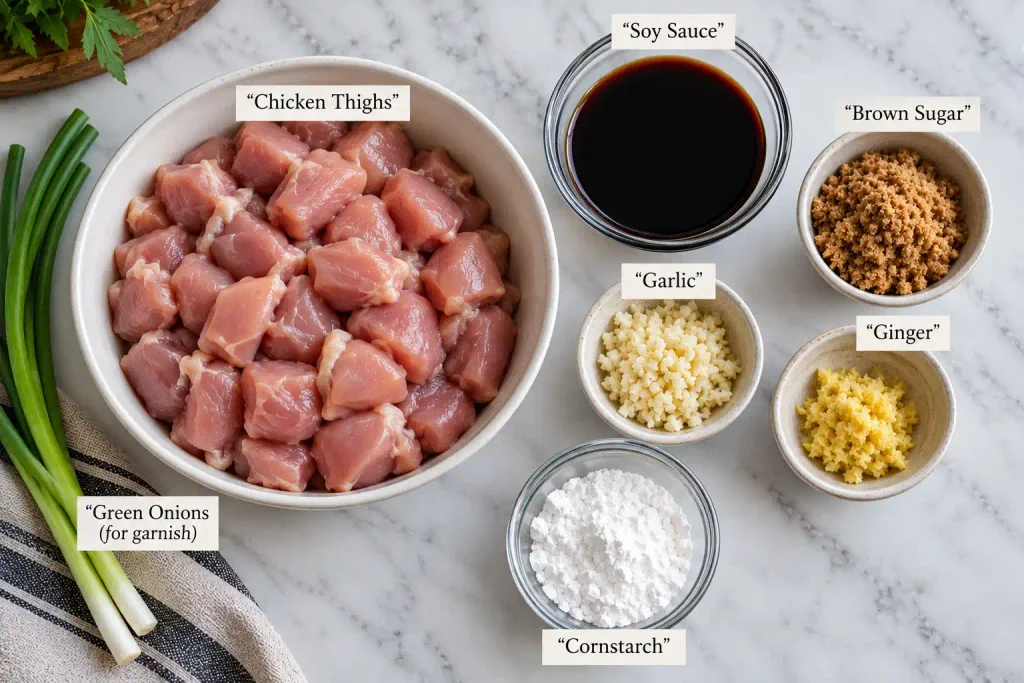
- 1.5 lb (680 g) boneless, skinless chicken thighs, cut into 1-inch pieces. Thighs hold moisture better than breast, which is why this teriyaki chicken recipe leans on them
- 1 tablespoon (15 ml) neutral oil, such as avocado or vegetable oil
- 2 tablespoons (16 g) cornstarch, for dredging
- Salt and black pepper, to season
For the Teriyaki Glaze
- 1/2 cup (120 ml) low sodium soy sauce, the backbone of the glaze
- 1/3 cup (70 g) brown sugar, packed, for the shine and the sticky set
- 3 cloves garlic, minced
- 1 tablespoon (6 g) fresh ginger, grated (powdered works in a pinch, though flatter)
- 2 tablespoons (30 ml) rice vinegar, for balance
- 1/2 cup (120 ml) water
- 1 tablespoon (8 g) cornstarch mixed with 2 tablespoons (30 ml) cold water, for the slurry
- 1 teaspoon (5 ml) toasted sesame oil, stirred in off the heat
To Finish
- 2 green onions, sliced thin
- 1 tablespoon (9 g) sesame seeds
- Cooked rice, for serving
No rice vinegar on hand? White vinegar with a splash of water works, though sharper.
Allergen and Dietary Disclosure
As written, this teriyaki chicken contains soy, from the soy sauce, and sesame, from both the toasted oil and the seeds on top. It’s dairy free, egg free, and nut free, but not gluten free, since regular soy sauce is brewed with wheat.
Swap in tamari or a certified gluten free soy sauce and it becomes gluten free, though tamari tastes slightly less sharp, so the glaze may need an extra half teaspoon to match saltiness. Skip the sesame seeds and toasted oil entirely if sesame is a concern, rather than assuming a small amount is safe.
Equipment Needed
- A 12 inch nonstick or well seasoned skillet. Teriyaki chicken has enough sugar in the glaze to stick hard to bare stainless steel.
- A small saucepan for the glaze. Reducing the sauce separately from the chicken is the whole point of this method.
- A fine mesh strainer or small whisk, for smoothing the cornstarch slurry before it hits the hot glaze, since lumps won’t dissolve once heated.
- An instant read thermometer. Diced pieces this small go from underdone to overcooked in under a minute.
- Tongs. Turning two dozen small pieces of teriyaki chicken with a spatula takes too long; tongs move the whole batch at once.
Preparation
This teriyaki chicken recipe moves fast once the pan is hot, so cut the chicken into 1-inch pieces first, then pat them dry. Wet chicken steams instead of searing, and steamed chicken never develops the color the glaze needs to cling to.
Mix the sauce ingredients (soy sauce, brown sugar, garlic, ginger, rice vinegar, water) in a small bowl, ready to pour in one motion. Make the cornstarch slurry separately in its own dish; it stays apart from the rest until right before it goes into the pan, or it clumps before it can do its job.
Get both burners ready before the chicken goes near heat: skillet on medium high with oil in it, saucepan empty and within reach.
Step by Step Directions
Step 1. Dredge and season the chicken
Toss the diced chicken with salt, pepper, and the cornstarch until every piece looks matte instead of wet. That coating lets the glaze grip the meat instead of sliding off.
Step 2. Sear in batches
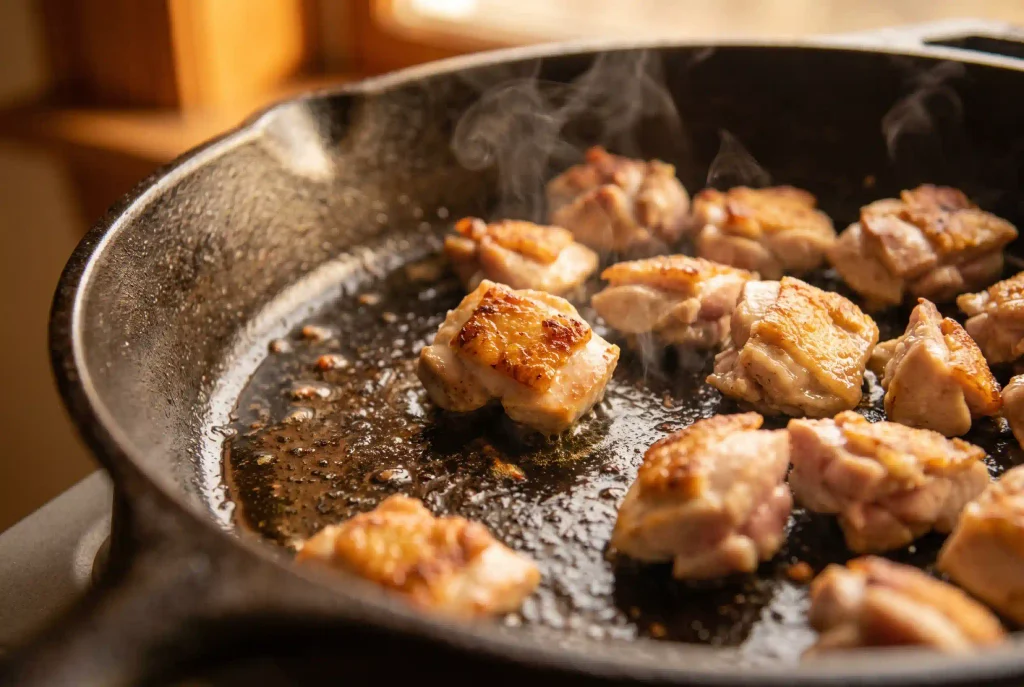
The oil needs to shimmer, about 375°F (190°C) at the pan surface, before any chicken goes in. Add it in a single layer, working in batches if needed, and leave it alone for a full 3 minutes before checking underneath.
Chef’s Note: Crowded pieces steam instead of brown. That’s the single most common reason teriyaki chicken comes out pale instead of golden.
Step 3. Finish the sear
Once the bottom turns deep gold, flip and give the pieces about 3 more minutes. The largest piece should read 160°F (71°C) on a thermometer; pieces this small turn dry within about 90 seconds past that mark.
Step 4. Build the glaze
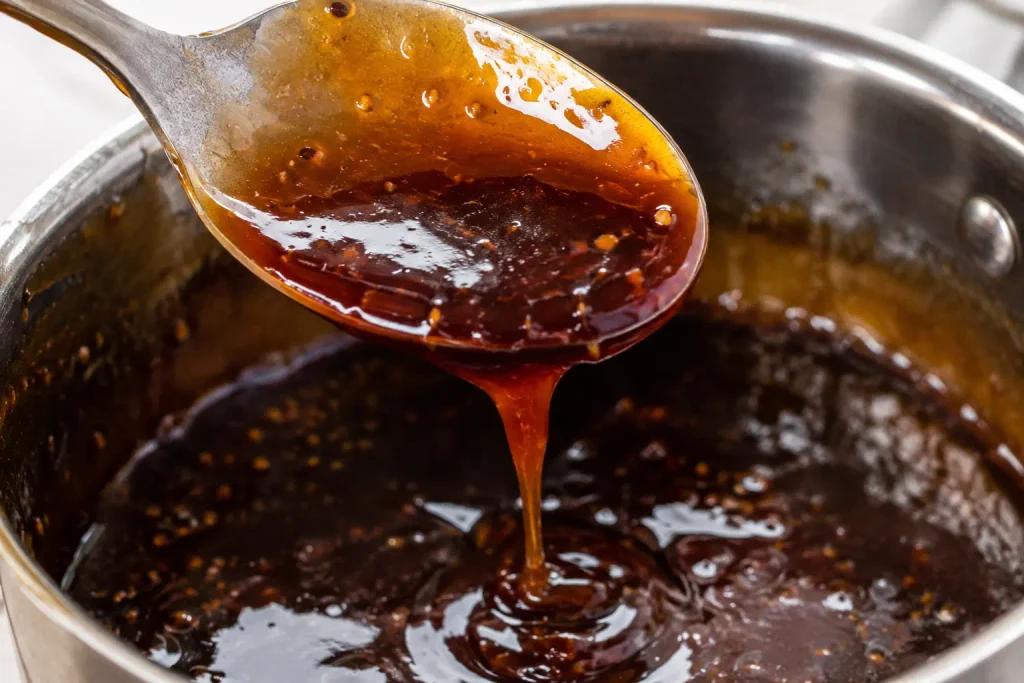
While the chicken rests on a plate, pour the sauce ingredients into the saucepan over medium heat and bring to a low bubble, not a hard boil. Give it about 4 minutes: the color shifts from thin and watery to darker and syrupy, though still too loose to call finished.
Chef’s Note: Most recipes cook the sauce directly with the chicken instead. Reducing it alone means the glaze finishes on its own timeline, not the chicken’s.
Chicken thighs cut to an even 1-inch size finish cooking within seconds of each other. Uneven pieces are the main reason parts of the batch dry out while others stay underdone.
Step 5. Thicken with the slurry
The slurry settles fast, so stir it once more before whisking it in while the sauce simmers. It thickens within about 30 seconds into a glaze that coats the back of a spoon and holds a line when a finger drags through it, so pull it off the heat before another minute turns it gummy.
The glaze goes from syrupy to glossy in under 30 seconds once the slurry hits it. Stand at the pan for that stretch instead of stepping away.
Step 6. Combine and finish
Back into the glaze goes the seared chicken, along with whatever juice collected on the plate, tossed until coated. Ninety seconds over low heat warms it through without cooking it further.
Chef’s Note: Adding the chicken’s resting juice back in isn’t optional; skip it and the glaze tastes flatter than it should.
Step 7. Rest, garnish, and serve
Off the heat, the glaze keeps tightening for about 2 minutes as it cools, so let the pan sit that long before plating. Serve it too hot and the glaze runs right off instead of clinging. Scatter green onions and sesame seeds over the teriyaki chicken right before serving.
Expert Tips and Tricks
Don’t sauce the chicken while it’s still in the pan. This is the mistake almost every teriyaki chicken recipe makes: dumping the glaze over chicken that’s still searing, so the sugar burns onto the hot surface before the chicken finishes.
Make the glaze up to five days ahead. It keeps in a sealed jar and only needs a quick reheat and a fresh chicken sear.
Store leftovers separately if you can. Chicken and glaze mixed together in the fridge means the glaze soaks into the meat overnight and turns thick rather than pourable.
Cut the chicken to a uniform size. Pieces ranging from half an inch to an inch and a half cook at different speeds, so small ones dry out while big ones stay pink.
Toast the sesame seeds dry for 90 seconds before the chicken hits the pan. Raw seeds taste flat, and toasting first means one less thing to do at the end.
Common Mistakes and Troubleshooting
| Problem | Cause | Solution |
| The glaze stays thin | The slurry went in at a rolling boil, so the starch cooked off before binding | Pull to low heat, whisk in a fresh slurry. It sets within 30 seconds |
| Chicken tastes dry despite looking golden | Pieces sat past 160°F (71°C) internal, usually from checking by color instead of a thermometer | Pull the next batch two minutes earlier and check with a thermometer |
| The glaze turns bitter | Sugar caramelized too far, usually from medium high heat instead of medium | Watch for light brown shifting to amber, not a smell change |
| Chicken sticks hard to the pan | A bare stainless pan was used, or the oil wasn’t hot enough | Switch to nonstick, and wait for a visible shimmer first |
The most common failure in any teriyaki chicken recipe is the thin glaze, tracing back to timing. The slurry needs the sauce below a hard boil, or the starch cooks off before it binds, leaving sweet, salty water instead of a glaze. The fix: pull the pan off heat, wait 15 seconds for the bubbling to calm, whisk in a fresh slurry, and return to low heat just long enough to watch it thicken.
Storage Instructions
Teriyaki chicken doesn’t hold safely at room temperature for more than about 2 hours, so skip straight to the fridge or freezer once it’s cooled on the counter.
Refrigerator
Cooled leftovers keep up to 4 days in a sealed container. The glaze thickens overnight, closer to a thin jam than a pourable sauce, which is normal rather than a sign it’s gone bad.
Freezer
This dish freezes well for up to 3 months in a freezer safe bag with the air pressed out. Thaw it in the fridge overnight, since the glaze separates at room temperature.
Reheating
A skillet over medium low heat with a splash of water brings the glaze back to pourable in about 3 minutes. The microwave works too, though it can scorch the glaze in spots if not stirred halfway through.
Make Ahead
The glaze holds on its own in the fridge for up to 5 days, making same-day teriyaki chicken mostly a matter of searing meat and warming sauce.
Variations and Substitutions
Spicy. Whisk a teaspoon of chili garlic sauce into the glaze during reduction. It adds heat without watering the sauce down, though it mutes some of the ginger.
Kid friendly. Cut the brown sugar back by a tablespoon and skip the sesame oil. The glaze turns milder and plainer, closer to a restaurant counter version of teriyaki chicken.
Vegetarian. Swap the chicken for extra firm tofu, pressed and cubed, or for cauliflower florets. Tofu needs a hotter pan and a longer sear to develop any color at all.
Gluten free. Coconut aminos work in place of soy sauce at the same measurement and skip the wheat question entirely. It’s sweeter out of the bottle, so pull the brown sugar back a tablespoon or the glaze turns cloying.
A couple more swaps. Honey works in place of brown sugar, though the glaze sets softer, without a knife-edge line. Chicken breast works instead of thighs, but pull it at 155°F (68°C) instead of 160°F (71°C), since it carries far less fat against drying out.
Serving Suggestions
Steamed white rice is the obvious base, and it earns that reputation honestly: plain rice soaks up the extra glaze instead of competing with the teriyaki chicken itself. For more bite, serve it over quick sesame slaw, where the crunch offsets the soft, sticky chicken.
Garlic green beans work for the same reason: texture contrast against the glaze. Pickled cucumbers cut the sweetness if the glaze leans too far into sugar.
For a full meal, pair this teriyaki chicken with fried rice and a quick cucumber salad, since both come together in the same 25 minutes and neither needs the oven.
Frequently Asked Questions
Can I make teriyaki chicken ahead of time?
The glaze holds in the fridge for up to 5 days on its own, sealed in a jar, which is the part worth doing ahead. Searing the chicken fresh takes under 10 minutes, so there’s little upside to making the whole dish early, since reheated seared chicken loses some of its crust either way. Keep the chicken and the glaze in separate containers if prepping components in advance, since combining them early softens that crust faster than serving them fresh.
Why did my teriyaki sauce turn out watery?
A watery glaze almost always means the cornstarch slurry hit the pan while the sauce was still at a hard boil, and the starch cooked off before it could bind. Pull the pan to low heat, whisk in a fresh slurry, and it thickens within half a minute. A candy thermometer isn’t necessary here; watching the bubbles slow from a rolling boil to a gentle simmer is cue enough before that slurry goes in.
What can I use instead of soy sauce?
Coconut aminos and tamari both work as substitutes, and each changes the result slightly: coconut aminos reads sweeter and needs less added sugar, while tamari tastes closest to regular soy sauce but costs more per bottle. Either one makes teriyaki chicken without the wheat that regular soy sauce carries. Low sodium soy sauce is worth reaching for regardless of which path is chosen, since the regular kind pushes the glaze past salty before the sugar has a chance to balance it.
How do I know when the chicken is done without cutting it open?
An instant read thermometer reading 160°F (71°C) in the thickest piece is the only reliable check at this size, since pieces this small brown on the outside well before the center catches up. Cutting one open works in a pinch, but it also lets juice escape that would otherwise keep the meat moist. Check the largest piece in the batch rather than a random one, since it’s the piece most likely to still be underdone when the smaller ones are already finished.
Is it normal for the glaze to look thin right after it thickens, then get thicker later?
This is one of the more confusing parts of making teriyaki chicken from scratch, and the answer is that it’s completely expected. The glaze keeps tightening as it cools, both during the rest and again once it hits the fridge, so a glaze that looks slightly loose straight off the heat is usually right on target rather than underdone. Pulling it too early, while it still runs off a spoon, is the more common mistake than waiting too long.
Two pans instead of one is the only real cost here, and it’s worth paying. Skipping the separate reduction seems like the obvious shortcut, right up until the sauce comes out thin and the chicken pays for it by overcooking while the pan waits on a glaze that was never going to thicken on its own. Splitting the two jobs fixes both problems at once.
Once the glaze coats a spoon and holds a line, it’s ready, and that window is short enough that walking away for even a minute costs the whole batch its shine. Keep a spoon nearby during those last thirty seconds rather than trusting a timer. Pin this teriyaki chicken recipe now so the method’s there the next time chicken thighs are on sale and dinner needs to happen fast.
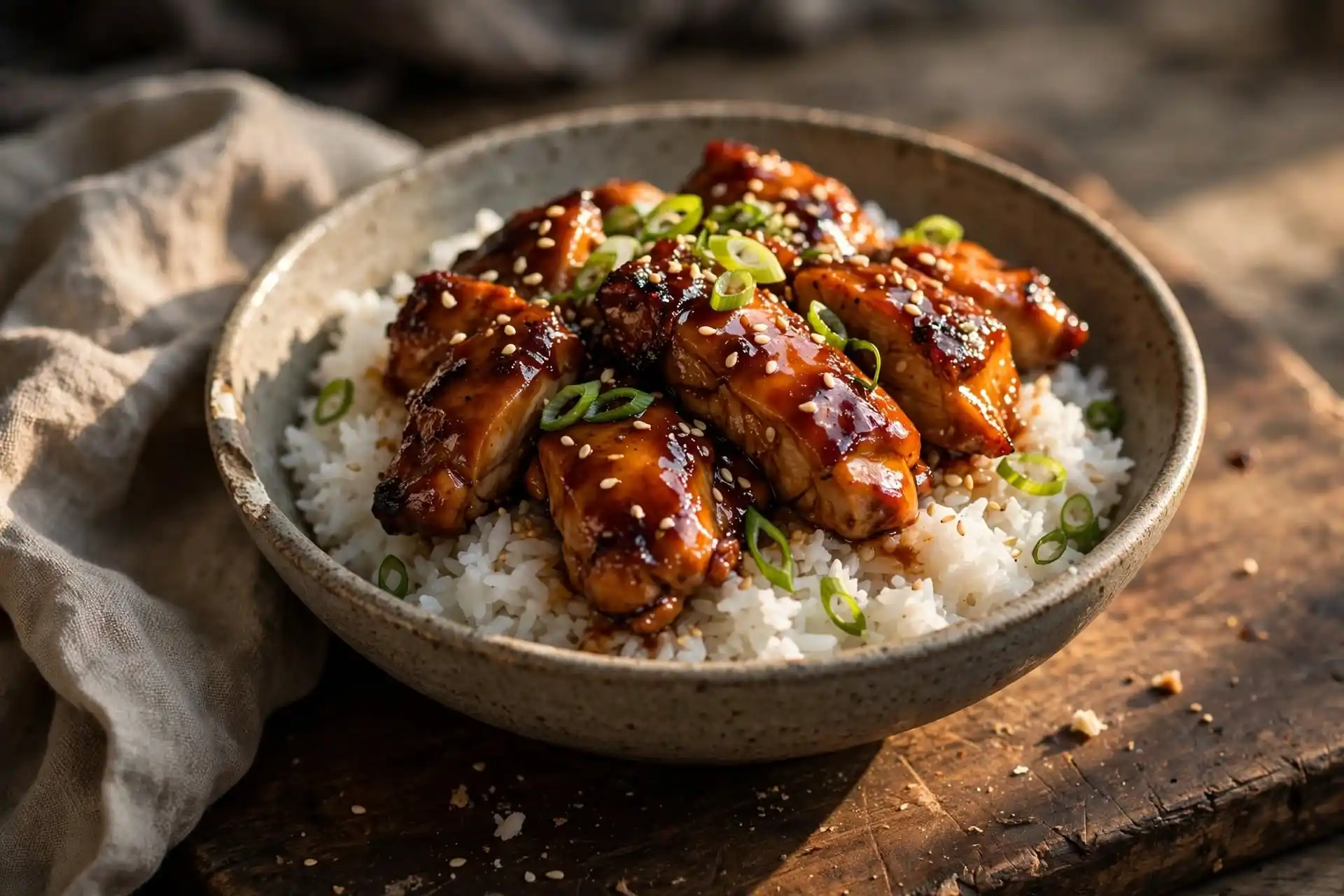
Teriyaki Chicken
Ingredients
Method
- Toss chicken with salt, pepper, and cornstarch.
- Sear in oil at 375°F (190°C) for 3 minutes per side, in batches.
- Pull chicken at 160°F (71°C) internal and set aside.
- Combine soy sauce, brown sugar, garlic, ginger, vinegar, and water in a saucepan and simmer 4 minutes.
- Whisk in the cornstarch slurry and cook until thickened, about 30 seconds.
- Return chicken to the glaze and toss for 90 seconds.
- Stir in sesame oil off heat, then rest 2 minutes before serving.
3 Comments
Comments are closed.