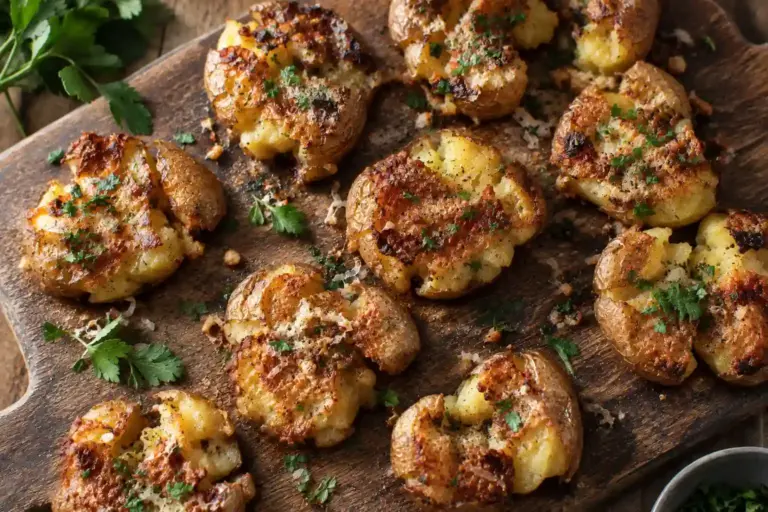
Roasted Potatoes Recipe: A Crispy Crust and Soft Middle for 6
Most home ovens turn out potatoes with pale, damp skins and a limp bite. A hotter oven will not fix that. What does is parboiling, a short boil that cooks the chunks partway, then a hard shake in the pot that scuffs the outsides into a cloudy starch slurry, which fries into a real crust in hot oil.
Recipes usually give one number for the boil and move on. This one does not. The crust on roasted potatoes is decided in that gap: at 5 minutes the chunks stay smooth and tight, and at 9 the corners round off while several pieces split. Seven is the window, and the steps show how to spot it by feel.
A cold pan is the other trap. It glues the slurry to the metal, so the pan goes into the oven empty and oil touches it only once the potatoes are ready. Plan on 25 minutes of hands on work and 55 of waiting.
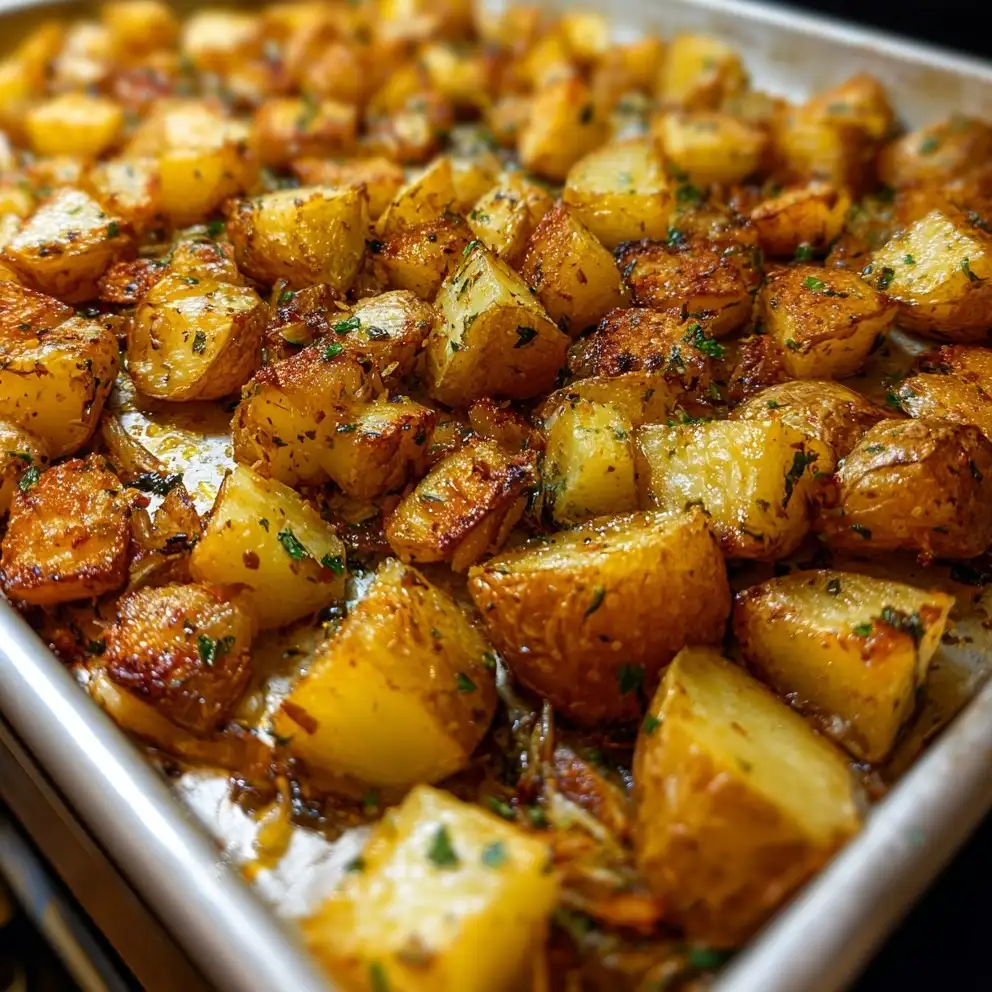
Why You’ll Love These Oven Roasted Potatoes
- Stays crisp while dinner finishes. The crust holds its snap for about 15 minutes off the heat, so the potatoes can wait for the main dish.
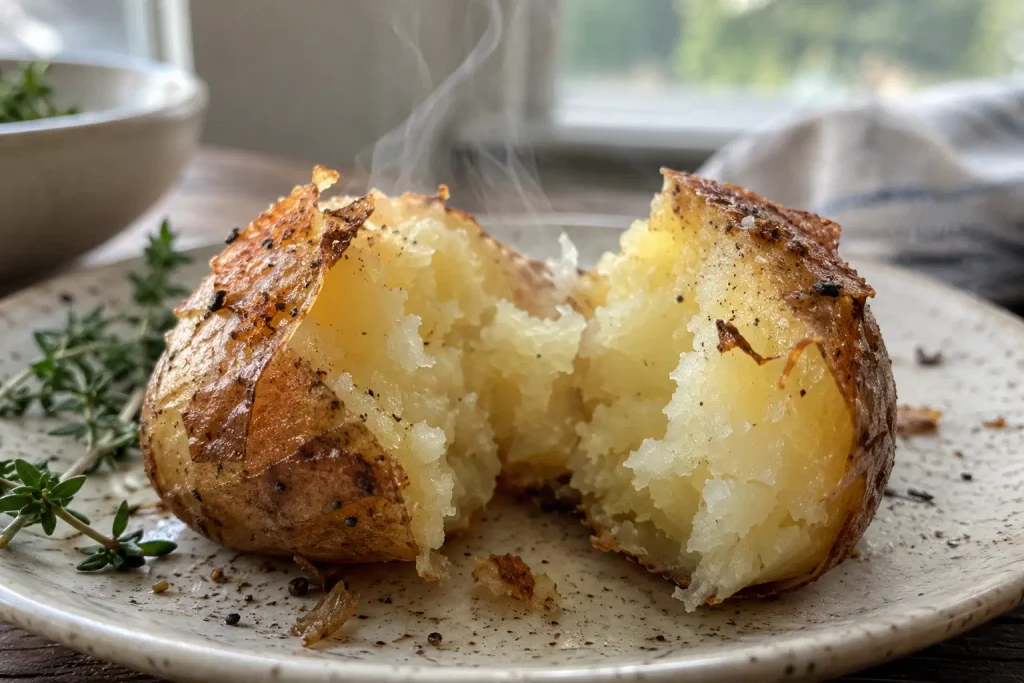
- Fluffy middle. A 7 minute boil brings the centers to the edge of tender, so the oven only has to brown the outside.
- One pot, one pan. The pot handles the boil and the shake. The sheet pan does the rest.
- Mostly waiting. Only 25 of the 80 minutes need you.
- Feeds six from a single layer. Three pounds fit on one sheet pan with room between pieces.
Recipe Snapshot
- Prep time: 15 minutes
- Cook time: 65 minutes
- Total time: 80 minutes
- Servings: 6
- Difficulty: Easy
- Calories: 260 per serving
- Deciding factor: baking soda in the boil
- Best for: roasted potatoes beside roast dinners
Nutrition Information
| Nutrient | Amount Per Serving |
| Serving Size | 1 cup (170 g) |
| Servings Per Recipe | 6 |
| Calories | 260 |
| Protein | 5 g |
| Carbohydrates | 40 g |
| Fat | 9 g |
| Fiber | 4 g |
| Sugar | 2 g |
| Sodium | 480 mg |
Per serving, these roasted potatoes carry about 5 grams of protein, all from the potatoes. Nearly all of the 9 grams of fat is olive oil, and the 4 grams of fiber sits mostly in the skins. Salt drives the sodium.
Values are estimates and vary by brand.
Ingredients for Crispy Oven Potatoes
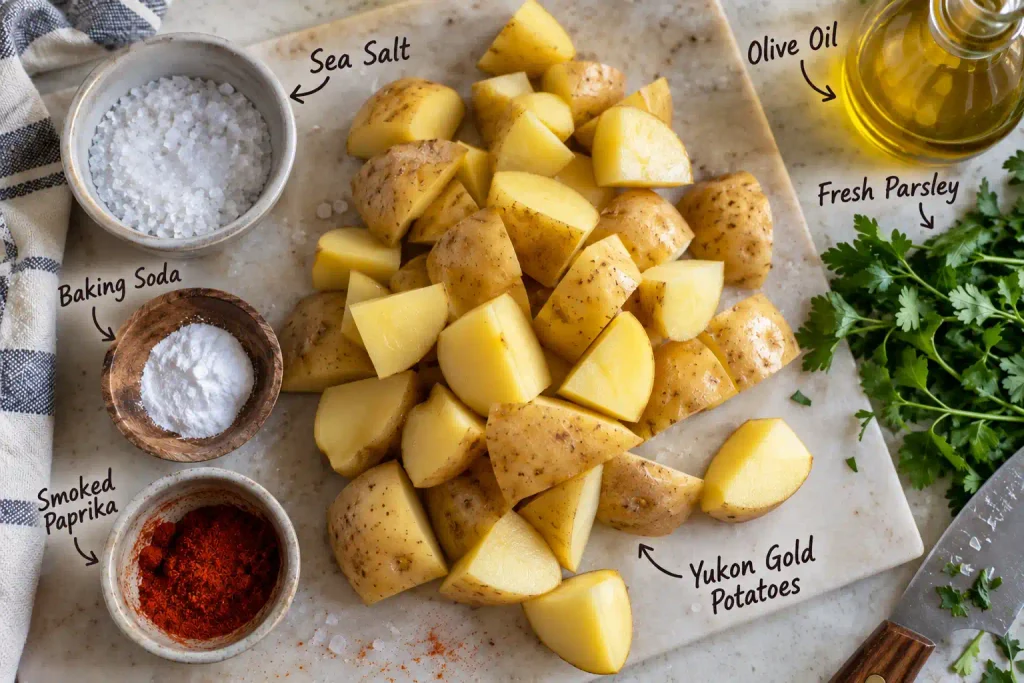
For the Parboil
- 3 pounds (1.4 kg) Yukon Gold potatoes, scrubbed and cut into 1½ inch (4 cm) chunks. Medium starch and thin skins keep the middles fluffy and the chunks whole.
- 3 quarts (2.8 L) cold water
- 1 tablespoon (18 g) fine sea salt. Weigh it, since Morton and Diamond Crystal kosher salt differ a lot by the spoonful.
- ½ teaspoon (2.5 g) baking soda. Alkaline water dissolves pectin (the glue between potato cells) at the surface, which feeds the slurry. Without baking soda the crust comes out thinner and paler.
For the Roast
- ¼ cup (60 ml) light olive oil or avocado oil, divided. Extra virgin turns harsh at this heat.
- 1 teaspoon (6 g) fine sea salt
- ½ teaspoon (1 g) freshly ground black pepper
- 1 teaspoon (3 g) garlic powder. Fresh cloves would scorch over 40 minutes.
- 1 teaspoon (2.5 g) smoked paprika. Sweet paprika plus a pinch of chili powder stands in.
- 2 tablespoons (8 g) chopped fresh parsley
- Flaky sea salt, for finishing (optional)
Allergen and Dietary Disclosure
As written, this recipe contains none of the nine major allergens: the potatoes, oil, salt, baking soda, and spices carry no milk, eggs, tree nuts, peanuts, wheat, soy, sesame, fish, or shellfish. Labels it earns: halal, vegetarian, vegan, gluten free, dairy free, nut free, and egg free.
Milk is the allergen most likely to sneak into roasted potatoes, since butter often gets added at the end. A dairy free finish is an extra teaspoon of oil, which keeps the crust crisper because butter’s water softens it. Wheat hides in spice jars. Seasoning salts and blended paprika can carry wheat based fillers, so read the ingredient line.
Equipment Needed
- Rimmed half sheet pan (18 by 13 inches). Use heavy, light colored aluminum. Dark nonstick browns the bottoms before the middles finish, and a thin, warped pan lets the oil pool in one corner.
- 6 quart stockpot with a lid. It boils, then shakes, so no second bowl is needed.
- Thin metal spatula. A stiff, thin edge lifts the crust whole, where a thick silicone one leaves half of it stuck to the pan.
- Oven thermometer. Mine ran 20°F hot until I checked. That scorched the paprika on a tray of roasted potatoes before the middles finished.
Preparation
Scrub the potatoes and leave the skins on for crunch. Cut them to 1½ inches (4 cm), all within half an inch of each other, because a 3 inch wedge beside a 1 inch nub is raw or mush by minute 7.
Cut the chunks straight into the pot of cold water as you go. They never brown. There is no bowl to wash.
Stir the salt and baking soda into the water until the powder disappears, and split the oil into two 2 tablespoon portions. The pan needs 20 minutes at full heat. That is about as long as the boil and steam dry take together.
How to Make Roasted Potatoes Step by Step
Step 1. Start in cold water
Set the pot over high heat with the lid off, and slide the empty sheet pan onto the lower middle rack of a 425°F (220°C) oven. At minute 12, bubbles roll across the surface. Turn the burner down until the water moves but no longer churns, and 7 minutes later a paring knife should slide a quarter inch (6 mm) into a chunk and stop at a firm center.
Chef’s Note: Under 6 minutes the surface stays glossy and the shake makes almost no slurry, and past 9 the corners round off and the water turns thick and gray. Broken pieces still crisp, so keep them.
Step 2. Drain and steam dry
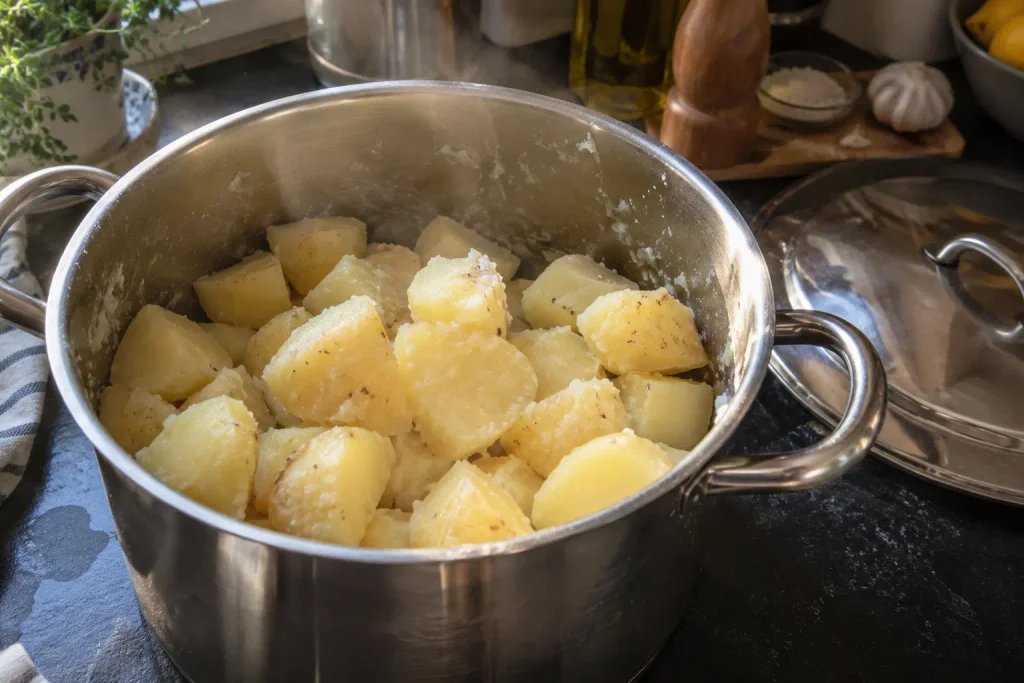
Tip the pot into the colander and leave it alone for 5 minutes. Steam lifts off, and the surface goes from glossy to dull and chalky as the water leaves and the starch on it dries. My old habit was 2 minutes, and those batches came out pale.
Step 3. Shake up the slurry
Back into the empty pot go the chunks, with 2 tablespoons of oil and the salt and pepper. Lid on, shake hard in circles for 15 seconds, until a thick, cloudy paste coats every piece.
Chef’s Note: Cold or wet chunks shed less paste. If the shake leaves them slick, give them 3 more minutes in the colander and shake again.
Step 4. Load the hot pan
A hot pan announces itself: out of the oven it comes, and the remaining 2 tablespoons of oil should shimmer and thin within seconds. Tip the potatoes on flattest side down in a single layer, and listen for a loud sizzle on contact. Silence means the pan was not ready.
Step 5. Roast until they release
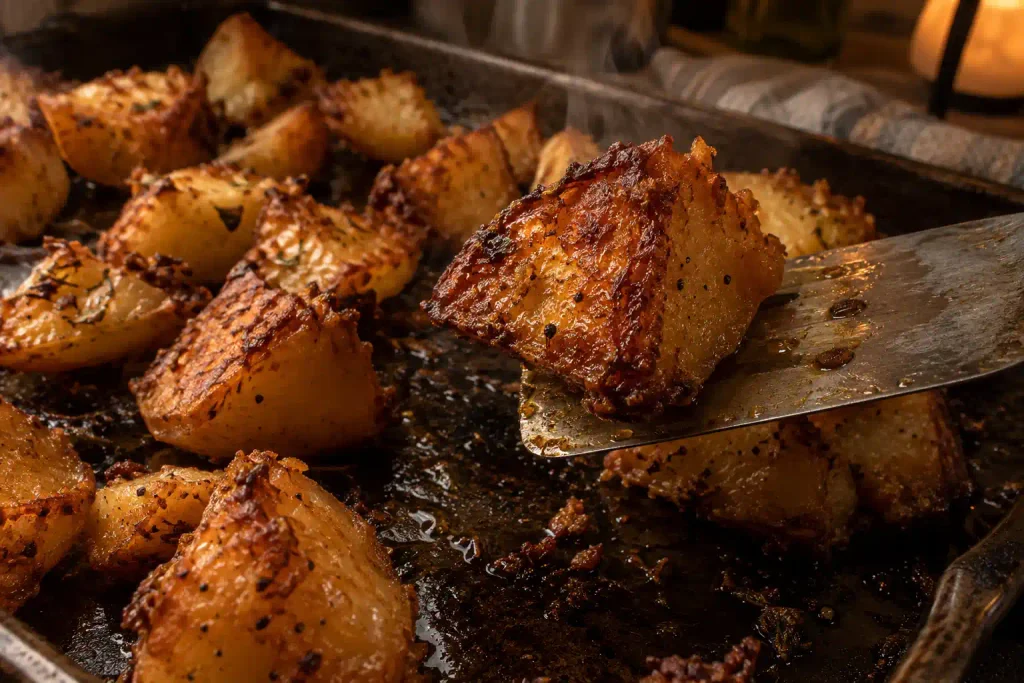
The first roast is 20 minutes at 425°F (220°C), with the pan back on the lower middle rack and no stirring. Then slide a spatula under one chunk: the bottom should lift in a single piece and look deep gold, and a chunk that clings needs 5 more minutes.
On a convection setting, drop the temperature to 400°F (200°C) and check the pan 5 minutes early. The fan browns faster, and the paprika added later scorches sooner.
Chef’s Note: Release, not the timer, is the signal. I tried 450°F to save time, and the outsides browned before the slurry set, so the chunks stuck harder.
Step 6. Flip and add paprika
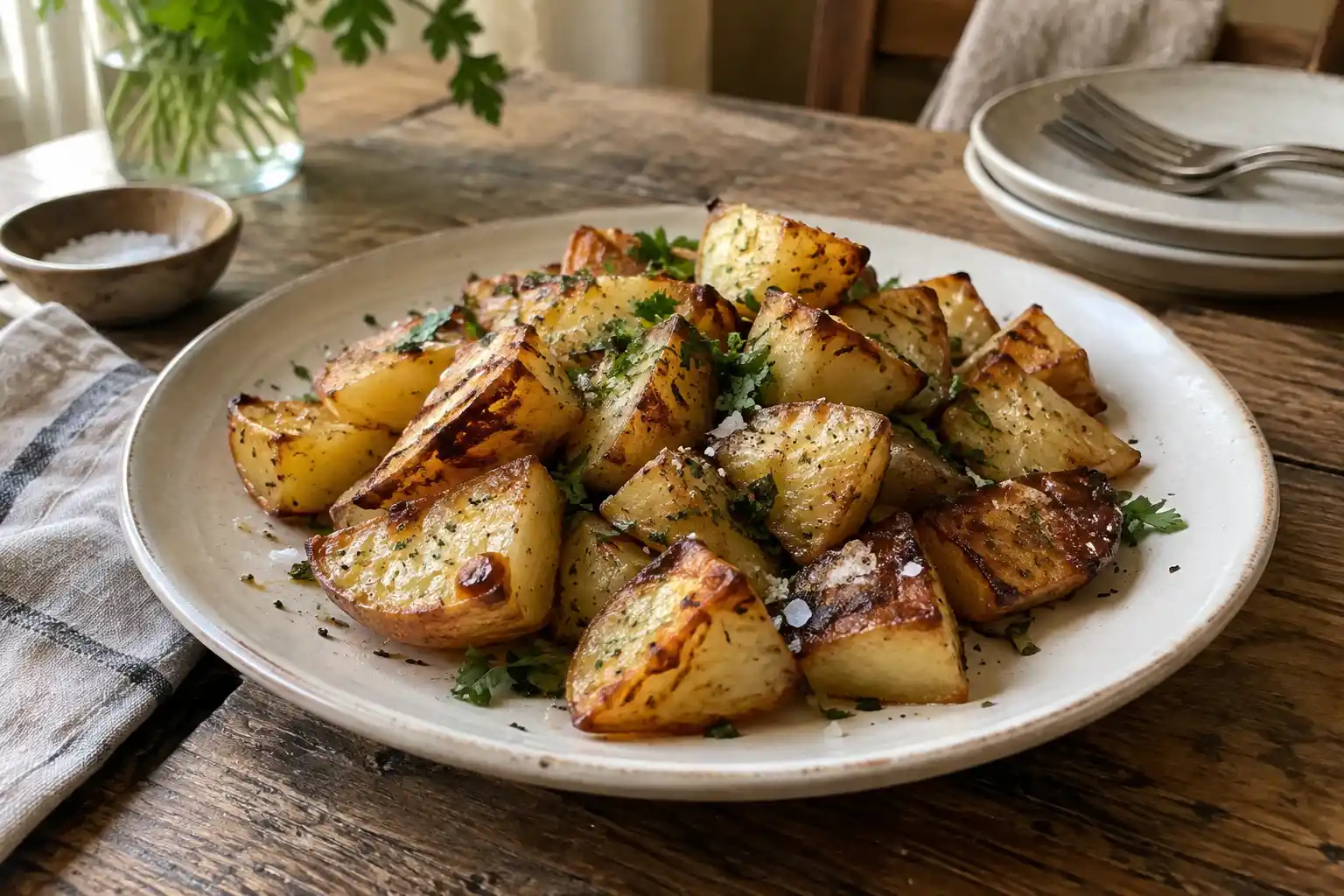
Every piece gets flipped now, and the garlic powder and smoked paprika go over the pan. Another 15 to 20 minutes turns the paprika rusty and gives the roasted potatoes dark, craggy edges with a dry snap when nudged.
Step 7. Tap test and parsley
Press one chunk with the spatula. It should give a dry snap over a soft middle. Slide the potatoes into a warm bowl with the parsley and a pinch of flaky salt, and serve within 15 minutes.
Expert Tips for Crispy Roasted Potatoes
Crowding is the mistake to watch for. Chunks that touch trap steam between them, so both faces turn leathery. Leave half an inch around each piece. If three pounds will not fit, split the batch across two pans.
Boil and shake a day early. Refrigerate the shaken chunks uncovered, then roast them straight from the fridge with 5 extra minutes. Cold air dries the slurry into a thicker shell, so make ahead roasted potatoes often crunch harder than same day ones.
Cool leftovers on the pan first. Give them 15 minutes uncovered. Condensation otherwise drips back onto the crust.
Shake in circles. Use a pot at least twice the volume of the potatoes, with a towel holding the lid down. Circles drag the chunks along the walls and against each other, and that steady scuffing is what builds the slurry. Bouncing mostly moves air.
Salt twice. Fine salt goes on before roasting and melts into the slurry. Flaky salt goes last and stays crunchy.
Pick a wide pot. More base sits over the burner, so the water boils sooner.
Common Mistakes and Troubleshooting
| Problem | Cause | Solution |
| Soggy roasted potatoes, pale and wet after 30 minutes | Surface water steamed the crust, or the pan was crowded | Steam dry the full 5 minutes. To rescue a batch, roast on the top rack at 450°F (230°C) for 10 minutes. |
| The batch is glued to the pan | A lukewarm pan let starch bond to bare metal before oil could separate them | Preheat the full 20 minutes. For a stuck batch, wait 5 more minutes, then slide a thin spatula under each piece. |
| Chunks crumbled in the pot | The boil ran past 9 minutes or at a hard churn, and the pectin holding the cells together dissolved | Hold a gentle bubble and test at 6 minutes. Save the broken bits: they become the crunchiest pieces. |
| Crisp crust, hard middle | Chunks over 2 inches, or a 5 minute boil, so heat never reached the center | Cut to 1½ inches and hold 7 minutes. To rescue, tent with foil for 10 minutes at 425°F (220°C), then uncover for 5. |
Sogginess announces itself around minute 25. The sizzle fades and a film of oil and cloudy liquid pools in the corners while the chunks turn soft. Water beat the oil to the surface, so no crust formed; spoon out the liquid and move the pan to the top rack at 450°F (230°C). Check every 3 minutes: within about 10, the edges darken and snap.
How to Store Roasted Potatoes
Room temperature does not apply. Cooked potatoes should not sit out longer than 2 hours, and that window is for serving, not for storing them later.
Refrigerator
A shallow glass container lined with a paper towel holds roasted potatoes for 4 days. By morning the crust has gone leathery where it touched the container. Heat fixes that.
Freezer
Freeze cooled chunks flat on a tray for 1 hour, then bag them and press out the air. They keep for 2 months and roast straight from frozen, since thawing turns the crust to paste.
Reheating Roasted Potatoes
Use a preheated pan in a 425°F (220°C) oven: 10 to 12 minutes from the fridge, 15 to 18 from frozen, turning once. An air fryer at 400°F (200°C) needs 6 to 8 minutes. The microwave leaves the crust limp.
Variations and Substitutions
Spicy. Add 1 teaspoon (2 g) of red chili powder with the paprika at the flip. It darkens the crust faster.
Mild or kid friendly. Cut the chunks to 1 inch (2.5 cm) and halve the paprika. The boil drops to 5 minutes and the oven to about 30, though the fluffy center shrinks and the crust runs crunchier.
Vegetarian. This recipe is already vegetarian. For a main, add a drained, dried 15 ounce (425 g) can of chickpeas at the flip; they crisp outside but stay chewy.
Gluten free. Nothing needs swapping, so try a crunch upgrade: 2 tablespoons (16 g) of cornmeal in the pot for the shake. The crust turns grittier.
Other swaps. Halved baby potatoes need 6 minutes in the boil and give a thinner crust. Rosemary can replace the paprika in roasted potatoes, added at the flip so the needles do not blacken.
Serving Suggestions
What to serve with roasted potatoes comes down to contrast: salty, crunchy potatoes want something juicy or cool.
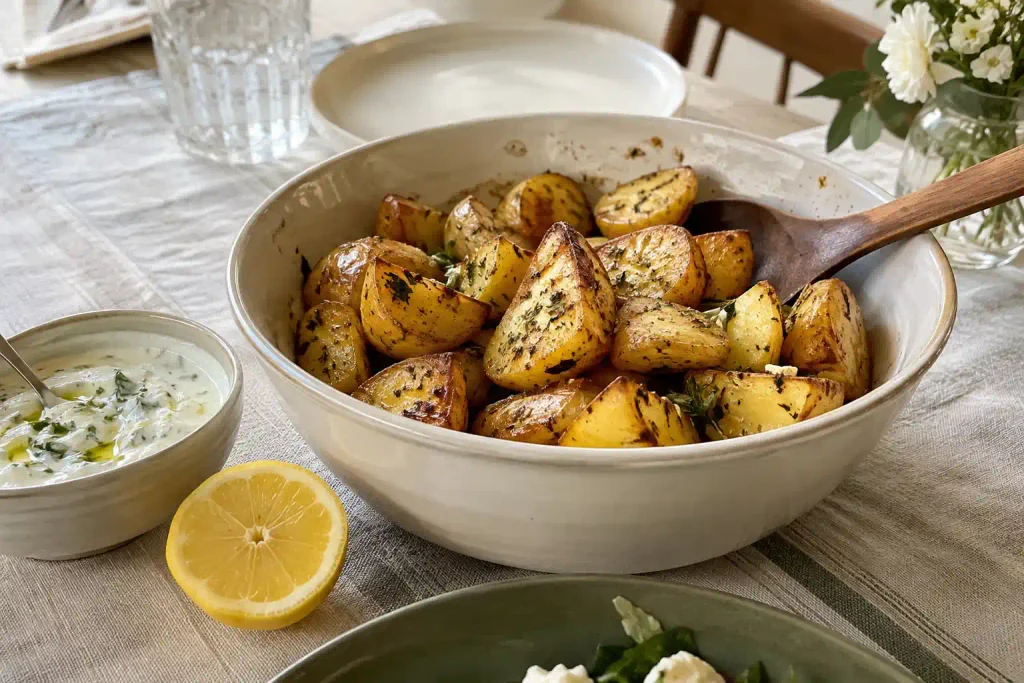
Main dish. Lemon herb roast chicken brings juicy meat against the crunchy shell.
Sauce. A cold dip such as garlic yogurt sauce cuts through the oil and sets a temperature contrast against the hot crust.
Greens. Bitter, snappy charred green beans cut the starch.
Garnish and drink. Squeeze lemon on at the table, since acid softens the crust within minutes. Iced mint lemonade resets the palate.
Frequently Asked Questions
Why do leftover roasted potatoes turn hard in the fridge?
Cold makes softened starch firm back up, a change called retrogradation, where loosened starch chains re-bond as they chill. That is why day old oven potatoes feel dense and heavy. A hot oven reverses most of it: the middle softens again and the crust comes back on a preheated pan. The microwave warms the inside but leaves the shell limp and soft.
Why do my roasted potatoes taste bland inside?
The salt stayed on the surface. Sprinkled salt barely moves past the outer millimeter of a dense potato, while the boil carries it all the way through. Use 1 tablespoon (18 g) of fine sea salt for 3 quarts (2.8 L) of water, and taste a chunk straight from the pot: it should read lightly seasoned. Salt added later never reaches the middle.
Can I use russet potatoes instead of Yukon Gold?
Russets work. They give a crunchier, more crumbly crust but break down sooner, so cut the boil to 6 minutes and go gently in the shake. Expect a drier, fluffier middle and a shell that flakes off in sheets. Yukon Gold is still the better pick when the chunks need to hold their shape on the plate or sit for a while.
How long do roasted potatoes take at 400°F?
At 400°F (200°C), roast potatoes need 45 to 50 minutes, about 10 more than at 425°F. Trust the release test over the clock: a chunk that lifts off the pan in one piece with a deep gold bottom is done. Lower heat builds a thinner shell. Expect finished pieces a shade paler and slightly softer than the main method, though still crisp.
Is boiling potatoes before roasting worth the extra pot?
The extra pot earns its place. Raw chunks can brown, but they build a thin skin and need close to an hour for the centers to soften. Parboiled potatoes reach the oven nearly tender. Their slurry coat gives the crust far more to fry. Skipping the boil still gives good roasted potatoes for a weeknight tray, just chewier and less fluffy than this version.
One Thing to Remember
Trust the timer over your eyes. At 7 minutes the chunks look underdone in the colander, and that slightly raw look is what leaves the crust room to build. Pulled at 5 minutes, my batches came out smooth and pale every time. Pushed to 10, they fell apart in the shake.
Once the window is memorized, roasted potatoes stop being a gamble and become a potato side dish you can time around everything else on the stove. Pin this recipe to your side dishes board so the 7 minute rule is easy to find again the next time the oven is on.

Crispy Oven Roasted Potatoes
Ingredients
Method
- Cut the potatoes into 1½ inch (4 cm) chunks, dropping them into the cold water with the 18 g of salt and the baking soda.
- Put the empty half sheet pan on the lower middle rack and set the oven to 425°F (220°C).
- Set the pot over high heat. When the water boils, about 12 minutes in, lower it to a gentle bubble.
- Simmer 7 minutes, until a paring knife enters a quarter inch (6 mm) and stops at a firm center.
- Drain into a colander and steam dry 5 minutes, until the chunks look dull and chalky.
- Return the chunks to the pot with 2 tablespoons of oil, 1 teaspoon of salt, and the pepper. Lid on, shake 15 seconds until a cloudy paste coats each piece.
- Pour 2 tablespoons of oil onto the hot pan, then tip the potatoes on in one layer, half an inch apart.
- Roast 20 minutes, until the bottoms release from the pan and look deep gold.
- Flip, scatter on the garlic powder and paprika, and roast 15 to 20 minutes more, until the edges look dark and snap.
- Finish with parsley and flaky salt. Serve within 15 minutes.