Shrimp Scampi Recipe: Juicy Shrimp and Linguine in 40 Minutes
A pan of shrimp scampi should taste like shrimp. Many versions taste like lemon and butter with shrimp parked in them, because the sauce comes from broth and acid and never touches the shells, where much of the shrimp flavor lives.
This one starts there. The shells toast in butter for two minutes, then simmer in chicken broth and lemon juice for eight. That liquid smells like the sea and tastes faintly sweet, and it costs ten extra minutes and one strainer to wash.
The second fix is timing. Large shrimp go from tender to rubbery in about 40 seconds, so they leave the pan at roughly 70 percent done and finish inside the sauce. That sauce looks wrong for a moment when the cold butter goes in, thin and glassy, with cubes skating across the pan. It’s supposed to. A few swirls later it turns opaque and glossy, and dinner, peeling included, is on the table in 40 minutes.
Why You’ll Love This Shrimp Scampi
- The sauce tastes like shrimp. Toasted shells simmered in broth put the sweet, briny part of the shrimp into the liquid before any lemon or butter arrives.
- The shrimp keep their snap. They leave the pan about 70 percent done and finish in the sauce, which heats them more gently than dry metal.
- Dinner takes 40 minutes. The pasta water heats while you peel, and the broth simmers while the linguine boils.
- The heat is optional. Only 1/2 teaspoon of red pepper flakes carries any spice, so leaving them out for kids changes nothing else in the sauce.
Easy Shrimp Scampi at a Glance
- Prep time: 20 minutes
- Cook time: 20 minutes
- Total time: 40 minutes
- Servings: 4
- Difficulty: Easy
- Calories: about 600 per serving
Nutrition Information
| Nutrient | Amount Per Serving |
| Serving Size | 1 plate (about 330 g) |
| Servings Per Recipe | 4 |
| Calories | 600 |
| Protein | 34 g |
| Carbohydrates | 64 g |
| Fat | 24 g |
| Fiber | 4 g |
| Sugar | 3 g |
| Sodium | 700 mg |
Shrimp supply roughly two thirds of the protein on the plate, and the linguine accounts for nearly all of the carbohydrate. Values are estimates and shift with the brands you buy.
Ingredients for Shrimp Scampi with Linguine
For the Shell Broth
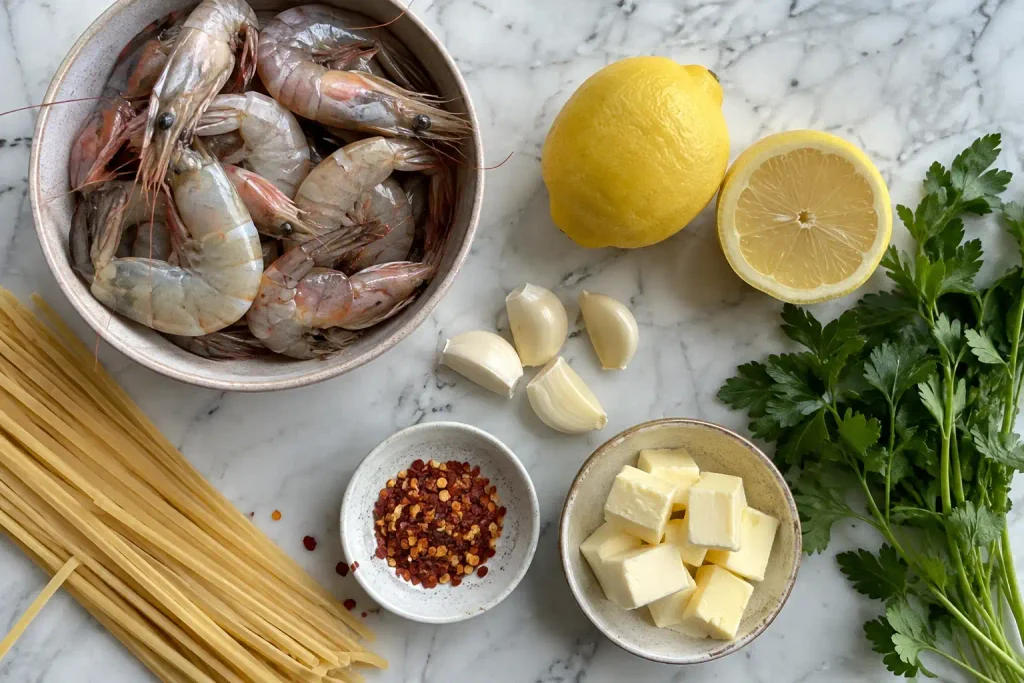
- 1 1/4 pounds (570 g) large shell-on shrimp, 21 to 25 count, deveined (about 28 shrimp, or 15 ounces/425 g once peeled)
- 1 tablespoon (14 g) unsalted butter
- 1 cup (240 ml) low sodium chicken broth, because the salt concentrates as it reduces
- 2 tablespoons (30 ml) fresh lemon juice, squeezed from the sauce lemon
- 1 teaspoon (5 ml) rice vinegar, for a sharper edge
For the Pasta and Sauce
- 12 ounces (340 g) linguine
- 2 tablespoons (18 g) kosher salt for 4 quarts (3.8 L) of pasta water
- 2 tablespoons (30 ml) olive oil, since butter alone browns too fast for the sear
- 1/2 teaspoon (1.5 g) kosher salt and 1/4 teaspoon black pepper, for the shrimp
- 5 large garlic cloves (about 15 g), minced. Five looks like too many and isn’t.
- 1/2 teaspoon red pepper flakes, the only heat in the dish
- 4 tablespoons (57 g) cold unsalted butter, in 1/2 inch (1 cm) cubes
- 1 large lemon, zested (about 1 tablespoon or 6 g) and juiced (about 3 tablespoons or 45 ml)
- 1/4 cup (15 g) chopped flat leaf parsley
- 1 more lemon, cut into wedges, for the table
Substitutions. Peeled shrimp work if you skip the shell broth: use 3/4 cup (180 ml) of broth and 2 tablespoons of lemon juice in the skillet, and expect a garlic lemon butter sauce with no shrimp behind it.
The count on the bag is shrimp per pound, and this recipe is timed for 21 to 25. Smaller shrimp need about 20 seconds less and jumbo about 20 more, so watch the curl, not the clock.
Allergen and Dietary Notes
The shrimp and their shells carry shellfish. The butter carries milk, and the linguine carries wheat and gluten, while the recipe has no eggs, tree nuts, peanuts, sesame or fish.
As written, this shrimp scampi is nut free and egg free. It is not vegetarian. The butter rules out dairy free, and the linguine rules out gluten free.
For milk, use plant based butter in the same amounts and reduce the broth an extra minute first, because the sauce holds together with less body. Read the chicken broth label, since boxed broth is the usual hidden source of celery or soy.
Equipment Needed
- 12 inch stainless steel or cast iron skillet: it holds heat when cold shrimp land and leaves browned bits that become sauce, which nonstick won’t. In a smaller pan, sear in three batches.
- Small saucepan, 1.5 to 2 quarts: the narrow shape keeps 1 cup of liquid deep enough to cover the shells.
- Fine mesh strainer: a colander lets shell fragments through as hard specks.
- Rasp style zester: it shaves only the yellow layer, which melts into the sauce.
- Tongs: one tool flips shrimp and tosses linguine.
Prep Before the Burner Goes On
Put 4 quarts (3.8 L) of water and the salt on high heat, lid on, before you touch a shrimp. It needs 12 to 15 minutes to boil, about as long as peeling shrimp scampi takes.
Peel the shrimp and keep every shell. Pat the meat with paper towels until the towel stops coming away wet, then park it in the fridge.
Mince the garlic, zest the lemon before you juice it (a squeezed lemon is nearly impossible to zest), chop the parsley, and cube the butter and chill it.
Every salt measurement here was tested with Diamond Crystal kosher salt. Morton is much denser by volume, so use about half as much and taste before adding more.
How to Make Shrimp Scampi Step by Step
Step 1. Toast the shells
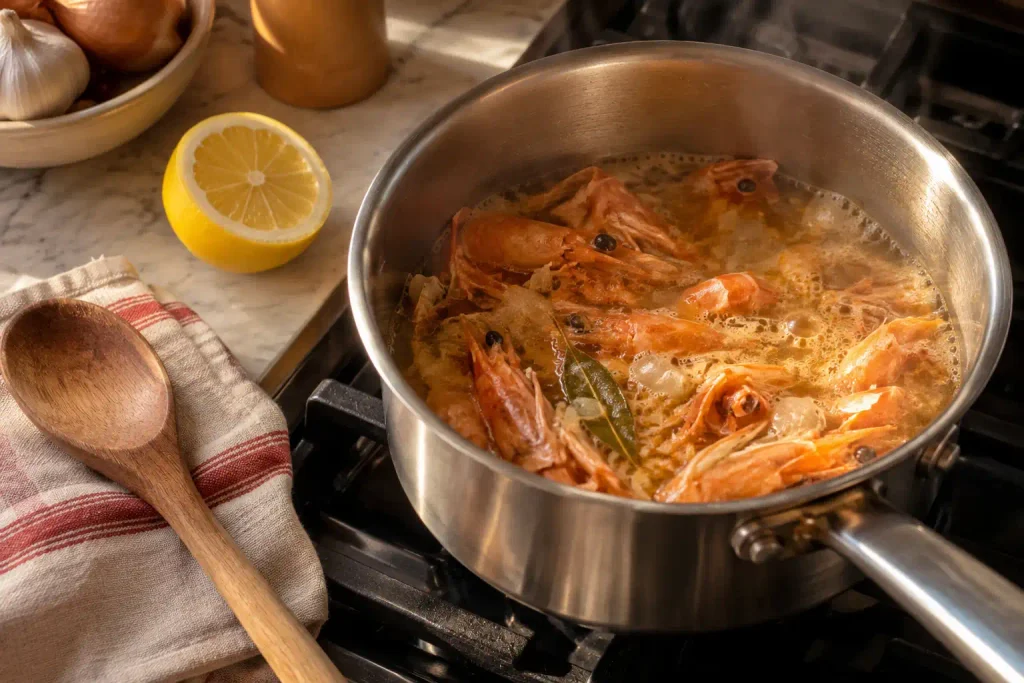
Two minutes make the sauce taste like shrimp. Melt 1 tablespoon of butter in the small saucepan over medium heat, then add every shell and stir until they turn coral orange and smell sweet instead of raw.
Step 2. Simmer the shell broth
Pour in the broth, 2 tablespoons of lemon juice and the rice vinegar, then hold a lazy simmer, about 195°F (90°C), for 8 minutes, until the liquid drops to roughly 3/4 cup (180 ml). Strain it into a measuring cup, pressing the shells with a spoon, and discard them.
Chef’s Note: Keep the bubbles lazy. A hard boil clouds the broth and turns its flavor muddy.
Step 3. Boil the linguine
As soon as the broth is strained, the linguine goes into the rolling boil, 212°F (100°C), and cooks while the shrimp sear. Pull it at about 8 minutes, a minute short of the package time, when a bitten strand still shows a thin pale core. That firm bite is al dente.
Step 4. Sear the shrimp
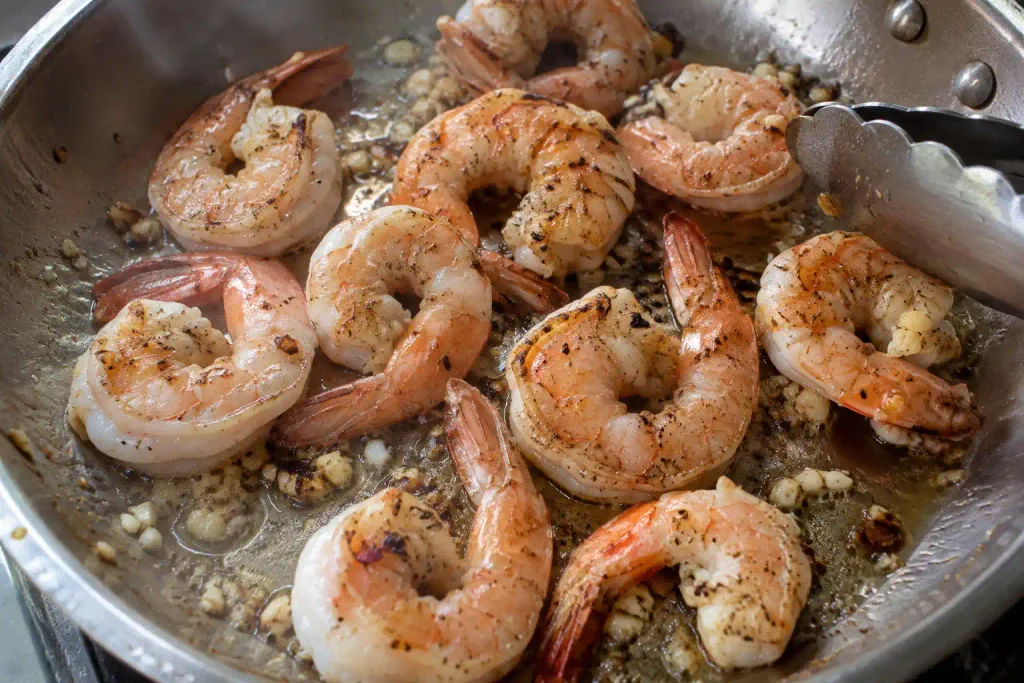
Season the shrimp with the 1/2 teaspoon of salt and the pepper, then heat the olive oil in the skillet over medium-high until it shimmers, about 375°F (190°C). Sear half the shrimp in one layer for 60 to 75 seconds, then flip them for 30 to 40 more. Pull each batch while the thickest part of the back is still gray and glassy and the body forms a loose C.
Chef’s Note: For 21 to 25 count shrimp, the gap between glassy and rubbery is about 40 seconds. A loose C means pull, and a tight O means you were late.
Step 5. Bloom the garlic
Garlic scorches in about 45 seconds. Drop the burner to medium-low, then stir the garlic and pepper flakes for 30 seconds, until pale gold and sweet smelling instead of sharp.
Step 6. Reduce the shell broth
Pour in the strained broth and scrape the pan to lift the fond, the browned film the shrimp left behind. After about 3 minutes the bubbles turn large and slow and the liquid sits at roughly 1/2 cup (120 ml), so dip out 1 cup (240 ml) of pasta water. Drain the linguine now.
Step 7. Swirl in cold butter
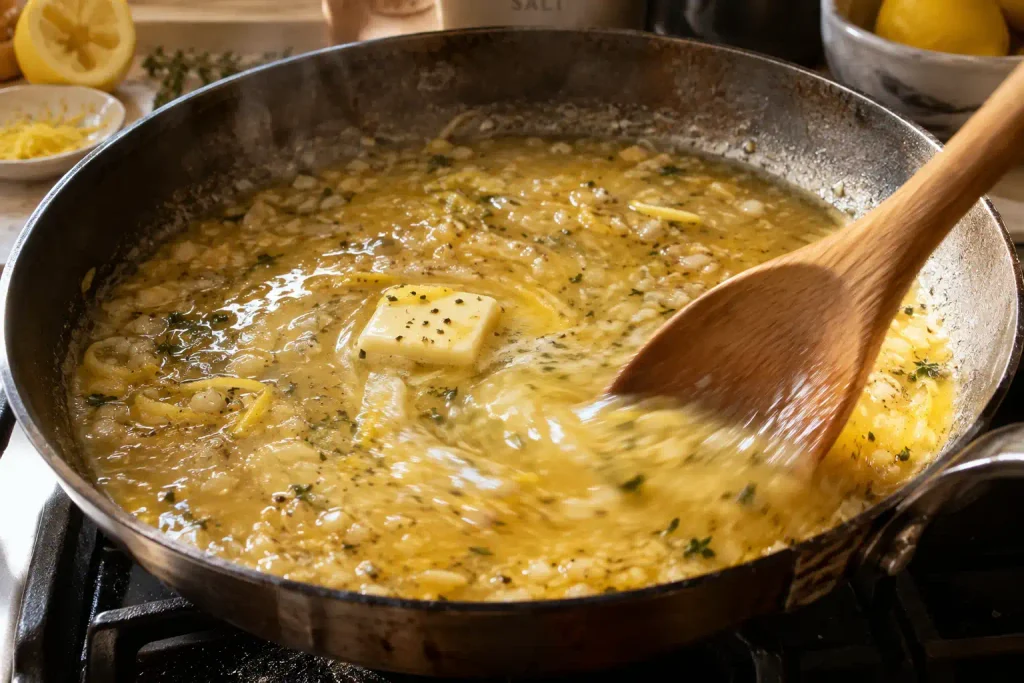
Off the burner, and about 20 seconds after the bubbling stops, add the cold butter three cubes at a time while you swirl the pan. Keep swirling for about 45 seconds, until the last cube disappears and the sauce turns opaque and pale gold, an emulsion of butterfat suspended in liquid as tiny droplets.
Chef’s Note: Cold cubes melt slowly and break into fine droplets. Melted butter pools and stays pooled.
Step 8. Finish in the sauce
Return the pan to low heat and add the linguine, the shrimp with their plate juices, 1/4 cup (60 ml) of pasta water, the zest, 1 tablespoon of lemon juice and the parsley. Toss with tongs for 60 to 90 seconds, until the sauce clings to the noodles and the fattest shrimp is opaque through the middle, or 145°F (63°C) on a thermometer. Taste, and add salt before lemon.
Expert Tips That Change the Result
Drain the linguine last. Pasta left in a colander for three minutes fuses into a block. Drain it just as the broth finishes reducing.
Do the slow half the day before. Shrimp scampi is a better make ahead dinner than it looks: the shell broth keeps 2 days and peeled, dried shrimp keep 24 hours in the fridge under a loose cover. Salt them only at the sear, since salt left on overnight draws out water.
Freeze spare shells. Shells from other shrimp dinners keep 3 months in a zip bag and make this broth on peeled shrimp night.
Mince the garlic by knife. A press makes a wet paste that browns faster and tastes harsher.
Judge the sauce in the pan. Shrimp scampi sauce should flow like heavy cream when you tilt the skillet, since linguine keeps drinking on the way to the table.
Buy easy peel shrimp. The shell is already split down the back and the vein is gone, so peeling goes faster.
Shrimp Scampi Problems and How to Fix Them
| Problem | Cause | Solution |
| The shrimp are tight, rubbery rings | Heat squeezed out their water past the glassy stage | Pull at the loose C and let the sauce finish them. Slice a tightened batch thin to hide it. |
| The sauce runs thin and pools under the noodles | The broth stopped reducing above 1/2 cup, leaving no body for the butter | Boil it down 60 seconds, go off the heat, and swirl in one more cold cube. |
| It tastes like lemon and butter and little else | Nothing in the liquid came from the shrimp | Simmer the shells next time. A pinch of salt only patches a finished sauce. |
| The shrimp look pale and boiled, with liquid in the pan | They were wet or crowded, so the pan cooled and they cooked in their own water | Dry them until the towel comes away barely damp, and sear 14 at a time. |
The split sauce is the failure most cooks hit, and it announces itself fast. The butter looks fine for two seconds, then yellow slicks spread across the top while a thin watery layer runs underneath. Nothing is ruined. Slide the pan off the burner, wait 10 seconds for the bubbles to die, add 1 tablespoon of cold pasta water, and whisk in small circles from the center outward. Within half a minute the sauce turns opaque and coats the spoon.
Storing Leftover Shrimp Scampi
Room temperature storage doesn’t apply: cooked shrimp shouldn’t sit out longer than 2 hours, or 1 hour above 90°F (32°C).
Refrigerator
Pack leftovers into a shallow lidded glass container within 2 hours of cooking. They keep up to 3 days. Day two is the turning point, since the linguine drinks the sauce and the shrimp firm up.
Freezer
I don’t freeze finished shrimp scampi, because the butter emulsion breaks as it thaws and the shrimp turn spongy. If you must, freeze it flat in a zip bag for up to 1 month and rebuild the sauce with broth.
Reheating
Warm shrimp scampi in a skillet over low heat with 2 tablespoons of water or broth, covered, for 3 to 4 minutes, sliding the shrimp back in for the last 30 seconds so they don’t toughen.
Variations and Substitutions
Spicy. Raise the red pepper flakes to 1 1/2 teaspoons and add them with the garlic. Heat flattens lemon, so a spicy shrimp scampi needs an extra teaspoon of juice at the end to stay bright.
Mild. Leave the flakes out and add a pinch more zest for a sweeter sauce.
Vegetarian. Swap the shrimp for 1 pound (450 g) of king oyster mushroom coins, seared 3 to 4 minutes per side, and simmer vegetable broth with the trimmed stems for 8 minutes.
Gluten free. Corn and rice linguine turns mushy within a minute, so pull it a minute early and keep an extra 1/4 cup (60 ml) of pasta water ready.
Other swaps. One pound (450 g) of large sea scallops, patted dry, sears about 2 minutes per side and replaces the shrimp. Torn basil gives a sweeter finish than parsley, so add it at the table.
What to Serve with Shrimp Scampi
Peppery arugula with a lemon vinaigrette. Cold, bitter leaves reset your mouth between forkfuls of buttery pasta.
Roasted asparagus. Charred tips add a smoky edge that sweet shrimp and soft noodles lack.
A plain crusty loaf. It exists for the sauce left in the bowl, so skip garlic bread, since the linguine already carries five cloves.
Skip grated cheese, which dulls the lemon and muddies the butter. Salad plus bread turns a pan of shrimp scampi into a full dinner for four.
Frequently Asked Questions
Can I make shrimp scampi ahead and hold it for guests?
Stop at the reduced broth. The garlic and shell broth can sit off the heat for 30 minutes, and the seared shrimp can wait on a plate too, since they are only 70 percent cooked. Boil the linguine and do the butter and the toss when people sit down. A pan left in a warm oven keeps cooking, so the shrimp tighten and the noodles fuse.
Why does my scampi sauce taste bitter?
Shrimp scampi turns bitter when the garlic browns. Minced cloves go from pale gold to brown in under a minute in a hot pan, and browned edges taste acrid. The other source is zest that carried the white pith, so shave only the yellow layer. If the sauce is already bitter, a cold butter cube and a pinch of salt soften it.
What can I use instead of chicken broth?
Clam juice is the closest match. It already tastes of the sea, so it suits shrimp scampi well, though it runs salty: cut it half and half with water and simmer the shells in it as written. Vegetable broth also works, though the sauce turns slightly sweeter and less savory. Plain water is a last resort, so add 1/4 teaspoon of salt.
How long do the shrimp need in the sauce before they’re done?
About 60 to 90 seconds of tossing over low heat, but the fattest shrimp sets the clock. Cut one in half. Opaque white all the way through means done, and a glassy center means another 30 seconds with the pan covered so steam finishes them gently. Pull the pan off the heat the moment they turn opaque, because they keep cooking in the sauce.
Can I just use frozen shrimp, or does it come out mushy?
Frozen works fine for shrimp scampi, and shrimp sold as fresh at the counter have usually been frozen already. Thaw them in a bowl of cold water for 15 to 20 minutes, then dry them well, because shrimp dropped straight from the freezer shed enough liquid to poach instead of sear. Shell-on frozen shrimp still give you the broth once thawed, so keep the shells.
Watch the Curl
The one thing that can’t be rescued is the shrimp. Past the loose C they are done, and no sauce brings them back, so that moment gets your full attention while everything else forgives a little. I’ve made this without the shell broth when short on time, and it was good but generic, so the ten minutes are the part I’d protect. Watch the curl and this shrimp scampi holds together every time. If it earns a place in your rotation, save it to a Pinterest dinner board so the shell broth step is easy to find the next time shrimp go on sale.
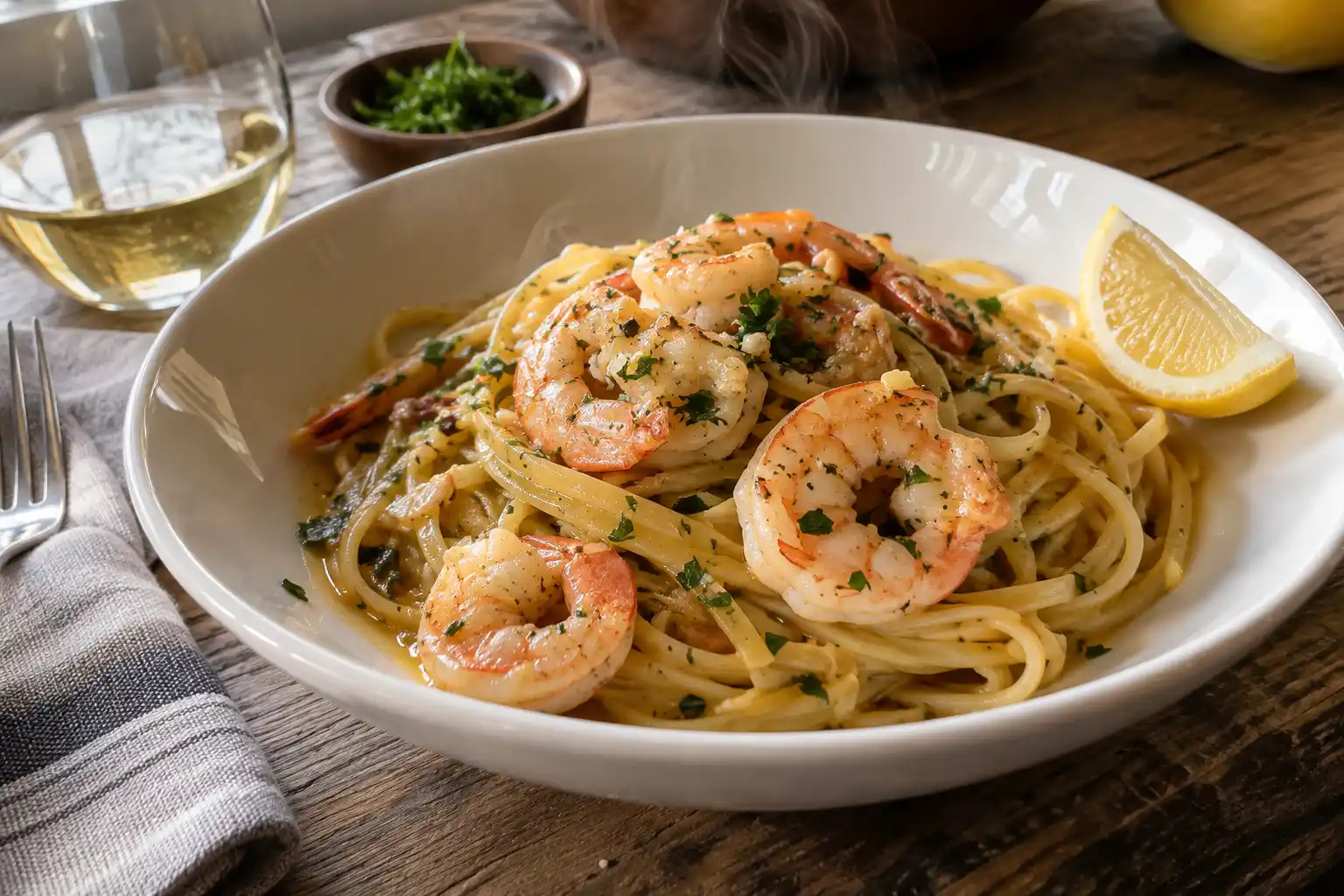

Shrimp Scampi with Linguine
Ingredients
Method
- Toast the shells in 1 tbsp butter, medium heat, 2 minutes, until orange.
- Add broth, 2 tbsp lemon juice and vinegar. Simmer 8 minutes, then strain and discard the shells.
- Drop the linguine into the boiling salted water as the broth comes off. Cook about 8 minutes to al dente.
- Season the shrimp. Sear in olive oil over medium-high in 2 batches: 60 to 75 seconds, flip, 30 to 40 more.
- Pull each batch at a loose C shape.
- Drop to medium-low. Cook garlic and pepper flakes 30 seconds.
- Add the strained broth, scrape the pan, and reduce about 3 minutes to 1/2 cup.
- Save 1 cup of pasta water, then drain the linguine.
- Take the pan off the heat. Swirl in cold butter cubes until glossy and pale gold.
- Return to low heat with linguine, shrimp, 1/4 cup pasta water, zest, 1 tbsp lemon juice and parsley.
- Toss 60 to 90 seconds until the sauce clings. Serve at once with lemon wedges.