Lasagna Soup Recipe: A Hearty One Pot Dinner in 40 Minutes
The first time I made lasagna soup, I stirred the broken noodles in with twenty minutes left on the timer and went to set the table. Big mistake. By the time I ladled it into bowls, half the noodles had gone soft enough to fall apart on the spoon, and the broth had thickened into something closer to porridge than soup. That’s the part nobody warns you about with lasagna soup: the noodles don’t stop cooking just because the burner did.
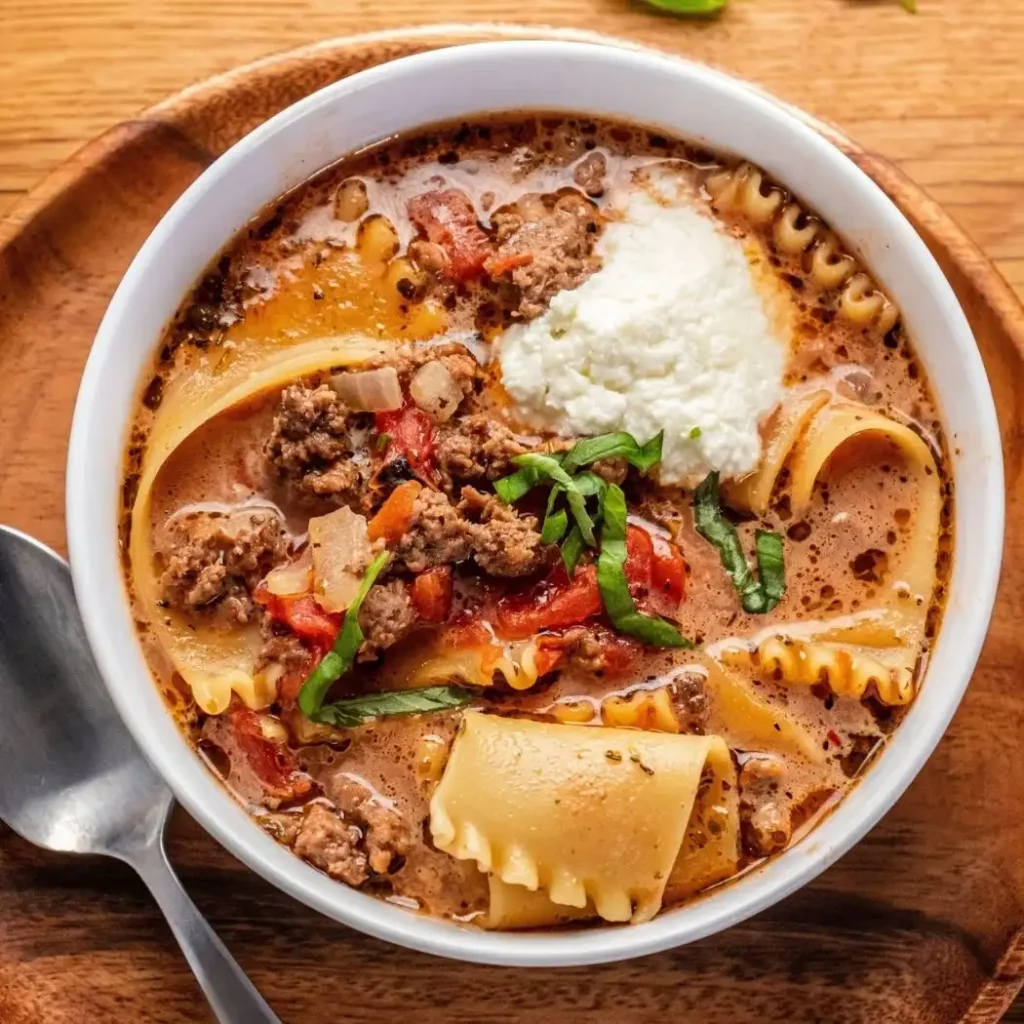
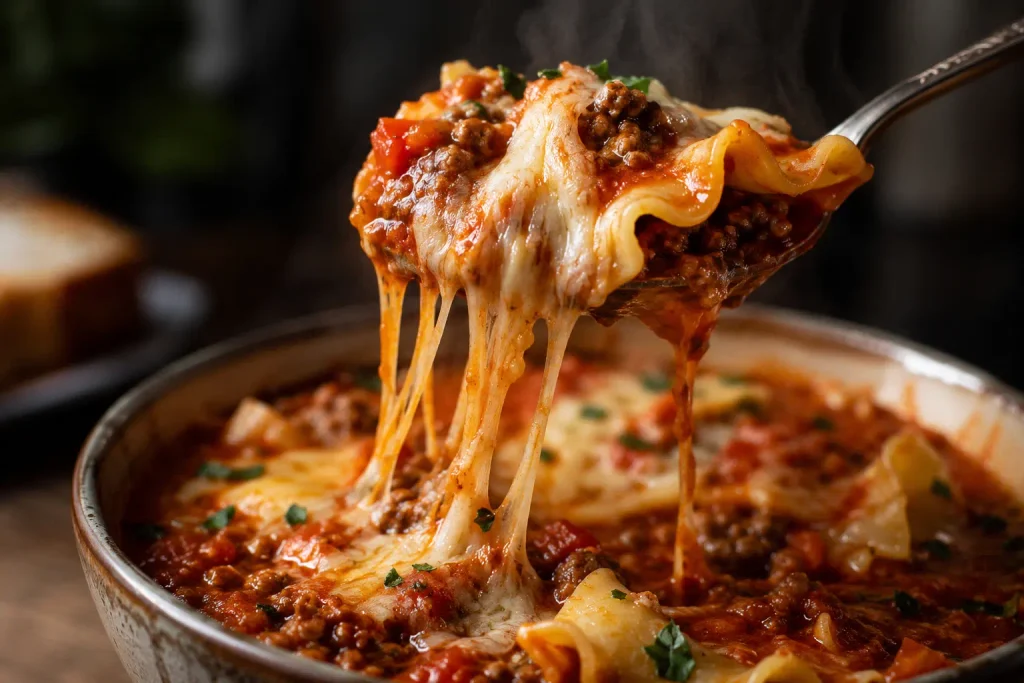
This version treats the noodles as a timing decision instead of an ingredient you dump in and forget. You still get what makes lasagna good, a meaty tomato sauce that’s had time to reduce, a scoop of ricotta that turns soft the second it touches the broth, and mozzarella that stretches when you pull the spoon back. It just skips the layering, the baking dish, and the oven.
Why You’ll Love This Lasagna Soup
- One pot, one cleanup. Browning, simmering, and finishing under the cheese all happen in the same pot, so there’s no casserole dish crusted with baked on mozzarella after.
- It reheats better than it has any right to. Hold the noodles separately and the leftovers taste like day one instead of the thick, starchy soup you get when everything sits together overnight.
- Ricotta that stays ricotta. A spoonful goes on top of each bowl instead of getting stirred in, so it stays a distinct, warm bite rather than dissolving into the broth.
- Thirty five of the forty minutes here is hands off simmering, not standing over the stove.
- Feeds six without a special trip to the store. Ground beef, canned tomatoes, and broken lasagna noodles are the kind of things most kitchens already have on a Tuesday.
Lasagna Soup at a Glance
- Prep: 15 minutes
- Cook: 40 minutes
- Total: 55 minutes
- Servings: 6
- Difficulty: Easy
- Calories: about 430 per bowl
- The one thing that decides the outcome: when the noodles go into the pot
- Best for: a weeknight when baked lasagna feels like too much oven time
Nutrition Information
| Nutrient | Amount Per Serving |
| Serving Size | 1 3/4 cups (420 g) |
| Servings Per Recipe | 6 |
| Calories | 430 |
| Protein | 27 g |
| Carbohydrates | 34 g |
| Fat | 20 g |
| Fiber | 3 g |
| Sugar | 7 g |
| Sodium | 780 mg |
The protein comes from two directions, the beef and the ricotta and mozzarella on top, which is part of why a bowl fills you up faster than the same size bowl of tomato soup. Sodium climbs from three places at once, the broth, the tomatoes, and the parmesan, so a low sodium broth is the easiest place to pull it back.
These values are estimates and shift with the broth brand, the cheese portion, and how the noodles are measured.
Lasagna Soup Ingredients
For the Soup Base
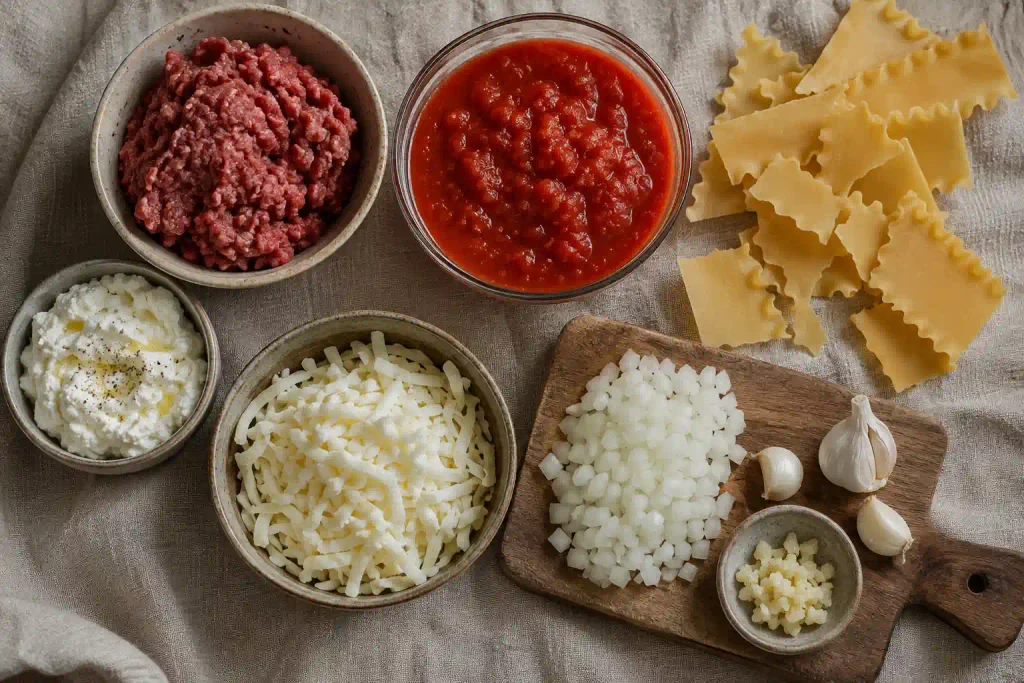
- 1 lb (450 g) ground beef, 85/15. The extra fat renders out and carries a lot of the flavor into the sauce.
- 1 tablespoon olive oil, only if the beef looks lean enough to stick
- 1 small yellow onion, diced (about 1 cup / 150 g)
- 4 garlic cloves, minced
- 2 tablespoons (32 g) tomato paste
- 1 can (28 oz / 794 g) crushed tomatoes
- 4 cups (960 ml) beef broth, or chicken broth if that’s what’s on hand
- 1 teaspoon dried oregano
- 1 teaspoon dried basil
- 1/2 teaspoon red pepper flakes, optional
- 8 to 9 lasagna noodles (about 6 oz / 170 g), broken into 2 inch pieces
- Salt and black pepper
For Topping Each Bowl
- 1 cup (240 g) whole milk ricotta. Low fat works in a pinch, but it separates faster once it hits hot broth.
- 1 1/2 cups (170 g) shredded mozzarella
- 1/2 cup (50 g) grated parmesan
- Fresh basil leaves, torn
Ground turkey can stand in for the beef, though the pot needs an extra tablespoon of olive oil since turkey renders less fat.
Allergen and Dietary Disclosure
This lasagna soup carries milk from the ricotta, mozzarella, and parmesan, and wheat from the noodles. It has no eggs, tree nuts, peanuts, soy, sesame, fish, or shellfish as written. It’s halal as written, and vegetarian if the beef is swapped for a plant based crumble, though not currently dairy free or gluten free. A gluten free lasagna noodle swaps in fine, though it softens 2 to 3 minutes faster than wheat, so check earlier. The other spot worth a look is the broth: some boxed stocks carry wheat or celery based flavoring that doesn’t show up clearly on the label.
Equipment Needed
- Large Dutch oven or heavy bottomed pot. Room for the beef, the tomatoes, and four cups of broth without crowding; a heavy bottom keeps the fond, the browned bits that build flavor, from scorching.
- Wooden spoon or flat edged spatula. For scraping up the browned bits after the beef comes out, where a lot of the flavor is hiding.
- Ladle. Noodles settle at the bottom, so a ladle that reaches it matters more here than for a thinner soup.
- Kitchen shears or a sharp knife. For breaking the noodles into pieces; snapping them by hand leaves jagged shards that cook unevenly.
- Fine mesh strainer or a large spoon. Ground beef at 85/15 renders a fair amount of fat, and skimming it off keeps the broth from turning greasy.
No Dutch oven on hand? Any heavy bottomed stockpot works the same, as long as it’s wide enough that the beef browns instead of steams.
Preparation
Dice the onion and mince the garlic before the beef goes near the pot; once it starts browning there’s no time to chop without burning what’s already there. Break the noodles into roughly two inch pieces and keep them by the stove, not the pantry. Pull the ricotta out about ten minutes before serving, since cold ricotta straight from the fridge takes the edge off the hot broth instead of going soft and warm.
Step by Step Directions
Step 1. Brown the Beef
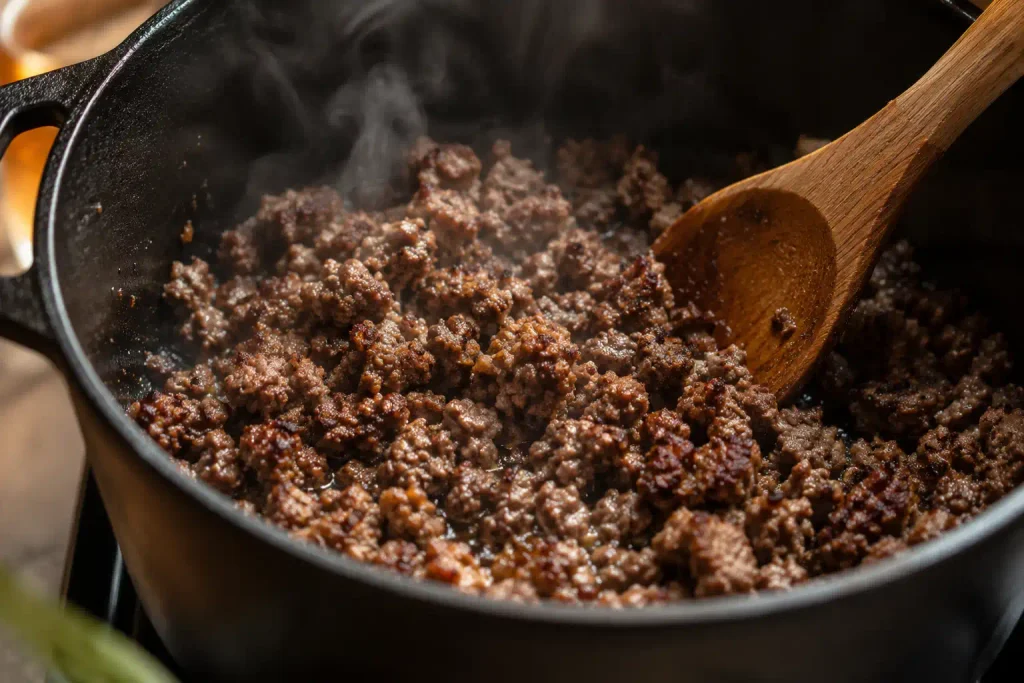
Get the pot over medium high heat and add the beef in one layer, leaving it alone for a full three minutes before breaking it up. The underside should go from pink to a deep brown, not gray, before you flip it. Season with half a teaspoon of salt as it cooks. Six to eight minutes browns it fully.
Chef’s Note: Beef throwing off a lot of liquid before it browns means the pot wasn’t hot enough or had too much meat in it. Finish browning in two batches instead of one.
Step 2. Soften the Onion and Garlic
Scoop out any fat past about two tablespoons, then add the onion to what’s left. Four to five minutes turns the edges translucent; garlic goes in for the last 30 seconds only, since it scorches fast. The fond, the browned bits on the bottom, lifts free as the onion releases moisture.
Step 3. Toast the Tomato Paste
Push the onion aside and drop the tomato paste onto the bare metal for about 90 seconds, stirring it against the hot surface rather than into the onions. It darkens from bright red to rusty brick, and that color change means the raw, tinny edge has cooked off.
Chef’s Note: Skipping this step is the easiest way to end up with a flat tasting sauce. Ninety seconds of direct heat does more here than ten extra minutes of simmering later.
If the tomato paste smells sharp and metallic straight out of the can, that’s normal. It mellows out completely once it hits the hot pan for those 90 seconds.
Step 4. Build the Broth
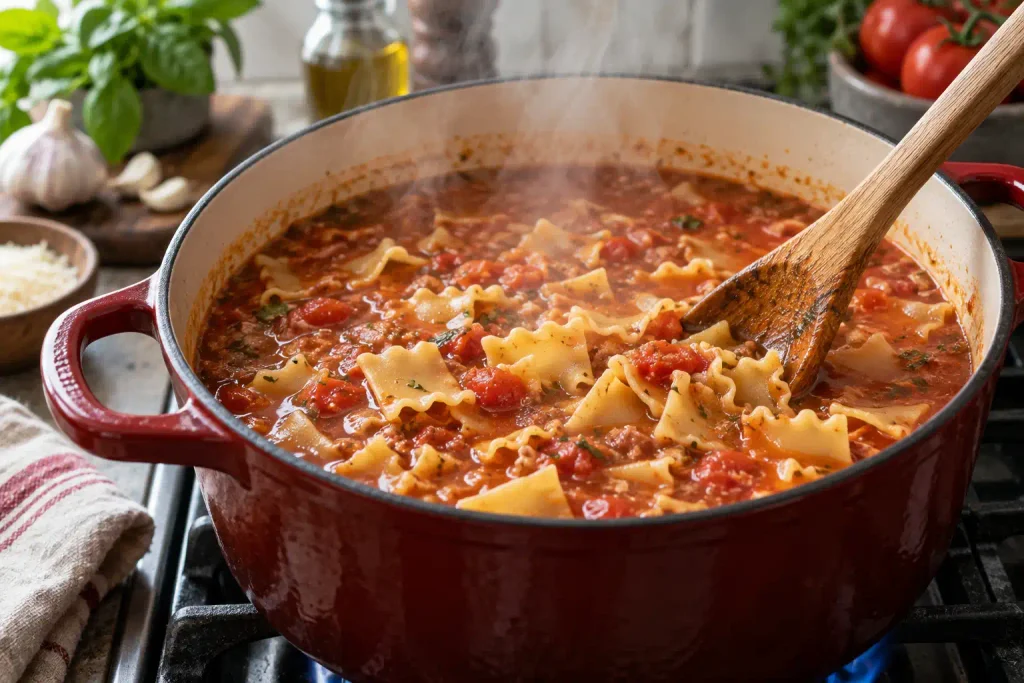
Stir the beef back in with the crushed tomatoes, broth, oregano, basil, and red pepper flakes. Bring it to a full boil, then cut the heat back until only the edges are moving, and hold that gentle simmer for 15 minutes. A hard boil reduces the broth faster than the flavors can blend.
Step 5. Add the Noodles
This step decides what the leftovers taste like. Stir in the broken noodles and cook 9 to 11 minutes, tasting one starting around minute 8, until just short of al dente, meaning a slight resistance left at the center, since they keep softening once the heat is off. Eating it all tonight, that’s as far as it matters. Planning on leftovers, cook the noodles separately in salted water and add a portion to each bowl at serving.
Chef’s Note: I learned this after a batch sat overnight and came back more porridge than soup. Separate noodles and broth is the fix; it costs one extra pot to wash.
Step 6. Finish with Cheese
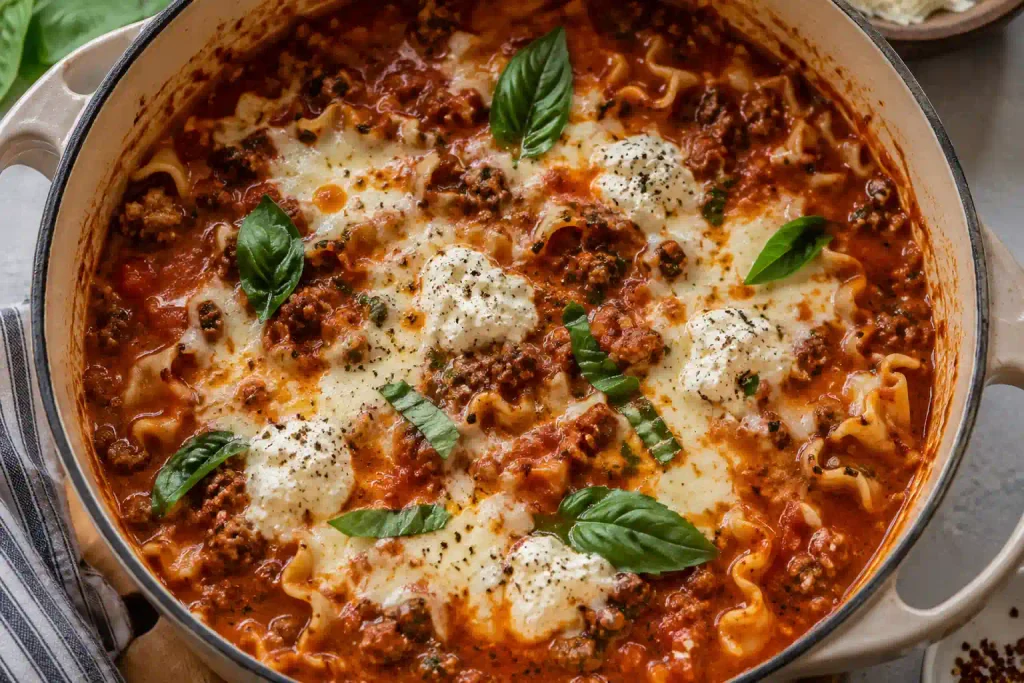
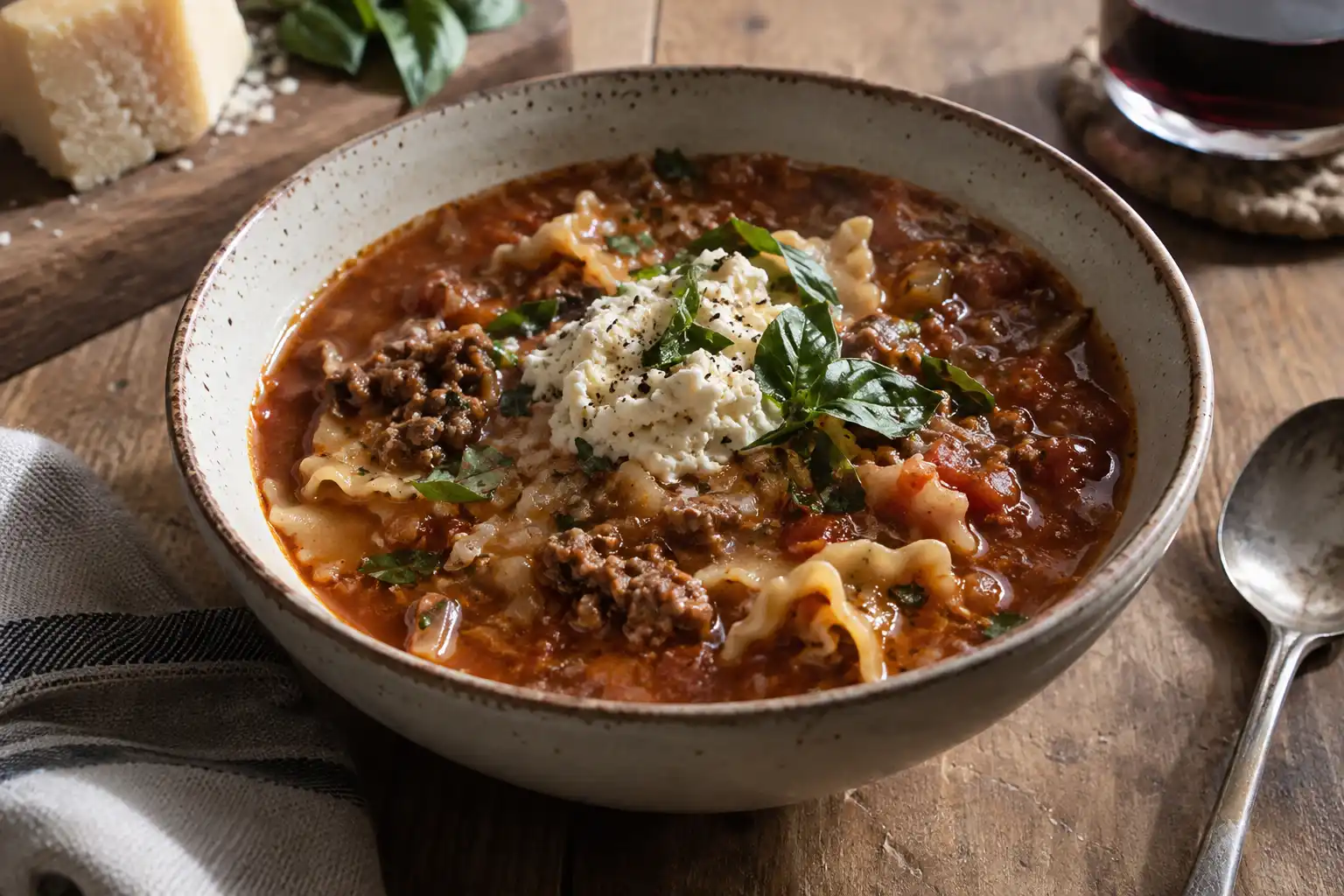
Pull the pot off the heat once the noodles are tender. Ladle into bowls, then top with ricotta, mozzarella, and parmesan. Residual heat melts the mozzarella into loose strands within about a minute; if it isn’t melting, the broth cooled too much and needs a quick reheat. Add torn basil right before serving, since it darkens fast in hot broth.
Expert Tips and Tricks
The easy mistake: dumping the noodles in and walking away. They keep drinking broth off the heat, and a pot that looked perfect at the table can be thick enough to stand a spoon in twenty minutes later.
Make ahead: the sauce base, through step 4, holds in the fridge up to three days before the noodles get involved.
Storage: keep noodles and broth apart in separate containers if leftovers are likely.
Technique: toast the tomato paste against bare metal, not stirred into the onions, for the full 90 seconds; that direct contact is where the depth comes from.
Texture: whole milk ricotta holds its shape on a hot bowl better than part skim, which tends to thin out and disappear into the broth.
Time saving: pre diced onion and pre minced garlic cut about five minutes off the prep, worth it in a 40 minute recipe.
Common Mistakes and Troubleshooting
| Problem | Cause | Solution |
| The broth turns thick and starchy by the second day | Noodles left in the broth keep absorbing liquid and shedding starch after the pot leaves the heat | Store noodles separate from the broth and combine them in the bowl at serving |
| The sauce tastes flat despite plenty of seasoning | The tomato paste went into the liquid without direct contact with the hot pot first | Toast the paste against bare metal until it darkens before adding broth or tomatoes |
| The ricotta breaks into grainy curds | It was stirred into a hard boiling pot and the heat overcooked the milk proteins | Add ricotta only as a bowl topping once the broth is off direct heat |
| The finished soup is saltier than expected | Salt from the broth, the tomatoes, and the parmesan stack on top of each other | Salt the beef lightly, hold off on the broth, and taste again before the cheese goes on |
The starchy leftovers problem is the one nearly every lasagna soup runs into. The pot looks right at dinner, broth loose enough to spoon around the noodles easily. By the next afternoon it’s thickened toward a spoon standing on its own, because the noodles never stopped pulling liquid out of the broth, even cold in the fridge. The fix is keeping the noodles in their own container from the start.
How to Store Lasagna Soup
This one doesn’t hold at room temperature past the meal it’s made for; the beef and dairy toppings need the fridge within two hours.
Refrigerator
Keep the broth and noodles in two separate sealed containers, up to 4 days. Add the ricotta and mozzarella fresh when you reheat; they lose texture sitting under the broth overnight.
Freezer
The sauce base freezes well up to 3 months in a freezer safe bag, left flat to thaw faster. Skip freezing the noodles; they turn mushy once thawed.
Reheating
Warm the broth on the stovetop over medium heat until steaming, about 8 minutes for a full batch from the fridge. Add the noodles for the last 2 minutes, then top with fresh cheese.
Make Ahead
The sauce, through the simmering stage, can be made up to 3 days ahead and kept chilled. Add the noodles only when you’re ready to eat.
Variations and Substitutions
Spicy: double the red pepper flakes to a full teaspoon and stir in a spoonful of chili crisp before serving. It sharpens the tomato flavor, though too much can overpower the ricotta.
Mild or kid friendly: drop the red pepper flakes and lean the herbs more toward basil than oregano. The sauce loses some depth without oregano’s bitterness, so a pinch of sugar in the tomatoes helps close the gap.
Vegetarian: swap the beef for a plant based crumble or chopped mushrooms and lentils, browned the same way. It loses the rendered fat that carries flavor in the original, so add a tablespoon of olive oil to the base.
Gluten free: use a gluten free lasagna noodle, broken the same way. It softens 2 to 3 minutes faster than wheat, so check for doneness earlier.
Grated pecorino in place of parmesan pushes the flavor sharper and saltier, so ease back on added salt.
Serving Suggestions
Garlic bread or a crusty loaf is good for mopping up the broth once the noodles are gone, and its chew is a solid contrast to how soft everything else is.
A simple arugula salad with lemon and olive oil works well too, since the peppery greens and sharp acid cut through the richness of the cheese and beef.
Roasted broccoli or green beans round the meal out with more vegetables than what’s floating in the soup itself.
For a full lasagna adjacent spread without turning on the oven twice, pair it with a simple Caesar salad. White Chicken Chili Recipe
Frequently Asked Questions
How do I know when the noodles are done?
The noodles are ready once they bend easily but still hold a slight firmness at the center, around the 9 to 11 minute mark. Bite one directly rather than judging by color, since broth stained noodles look done before they are. Planning on leftovers, stop a minute early since they keep softening in the hot broth after the pot comes off the stove.
Why did my lasagna soup turn out so thick?
Thick broth usually traces back to the noodles sitting in the pot too long, either during cooking or after storage, since they keep pulling liquid the whole time they’re in contact with it. A pot that looked right at dinner can turn nearly solid by the next day for exactly that reason. An extra splash of broth stirred in while reheating thins it right back out.
Can I make lasagna soup ahead of time?
The sauce base for this lasagna soup holds up well made up to 3 days ahead, kept in the fridge and reheated to a simmer before the noodles go in fresh. Cooking the noodles days ahead doesn’t work as well, since they lose texture and the broth turns starchy before serving. For a dinner party, handle the noodle step right before guests sit down.
Can I use regular pasta instead of lasagna noodles?
Broken pasta shapes like penne, farfalle, or bowtie work fine here and cook on roughly the same 9 to 11 minute window. Lasagna noodles broken by hand give wider, flatter pieces that hold sauce a bit differently, more like small ribbons, but the flavor comes out nearly identical either way. Taste one a minute before the stated time just to check.
Is lasagna soup supposed to be this thick, or should it be more like a regular soup?
A finished bowl of lasagna soup should still move easily off a spoon, closer to a thick minestrone than a stew. The tomato base and the noodle starch both add body naturally, part of what makes it taste like lasagna instead of tomato soup. If yours firmed up more than that, it very likely sat too long with the noodles already in it.
Final Thoughts
Give the noodles their own space and this stops being finicky in a way most one pot pastas aren’t. I’ve made this lasagna soup on a rushed Tuesday and on a slow Sunday, and the only real difference was whether I bothered to cook the noodles separately. Skip that step for a meal you’re eating tonight. Use it the moment leftovers are part of the plan. Either way, a bowl with the ricotta still holding its shape on top is worth the ninety seconds it takes to toast the tomato paste properly. That’s the whole trick this recipe is built around.
Pin this one now so it’s easy to find the next time a weeknight needs something warm and this uncomplicated.
Hearty Lasagna Soup
Ingredients
Method
- Brown the ground beef in a large pot over medium high heat, 6 to 8 minutes.
- Remove excess fat, add the onion for 4 to 5 minutes, then the garlic for 30 seconds.
- Push ingredients aside and toast the tomato paste against the hot pot for 90 seconds.
- Stir in the beef, crushed tomatoes, broth, oregano, basil, and red pepper flakes. Boil, then simmer 15 minutes.
- Add the broken noodles and cook 9 to 11 minutes until just tender.
- Ladle into bowls and top with ricotta, mozzarella, parmesan, and fresh basil.



2 Comments
Comments are closed.