Fried Rice Recipe: A Smoky, 25 Minute Weeknight Skillet Dinner
Fried rice fails at home for one reason: the rice never touches hot metal long enough to brown. You dump it in, stir every few seconds so nothing sticks, and thirty seconds later you’ve got warm, soy sauced rice instead of the real thing. This recipe fixes that by leaving the grains alone in short stretches, the same contact time a restaurant wok gets for free just by running hotter than any home stove can.
I ruined three batches learning this. The first came out gray and clumped from rice straight out of the rice cooker. The second was better but still soft, from scraping the pan every ten seconds out of nerves. The third worked, and the only thing that changed was patience. You can hear the difference before you see it: real grains crackle against the metal, not the soft hiss of rice sitting in a warm pan. If takeout fried rice never tastes the same at home, it’s rarely the soy sauce. It’s the pan.
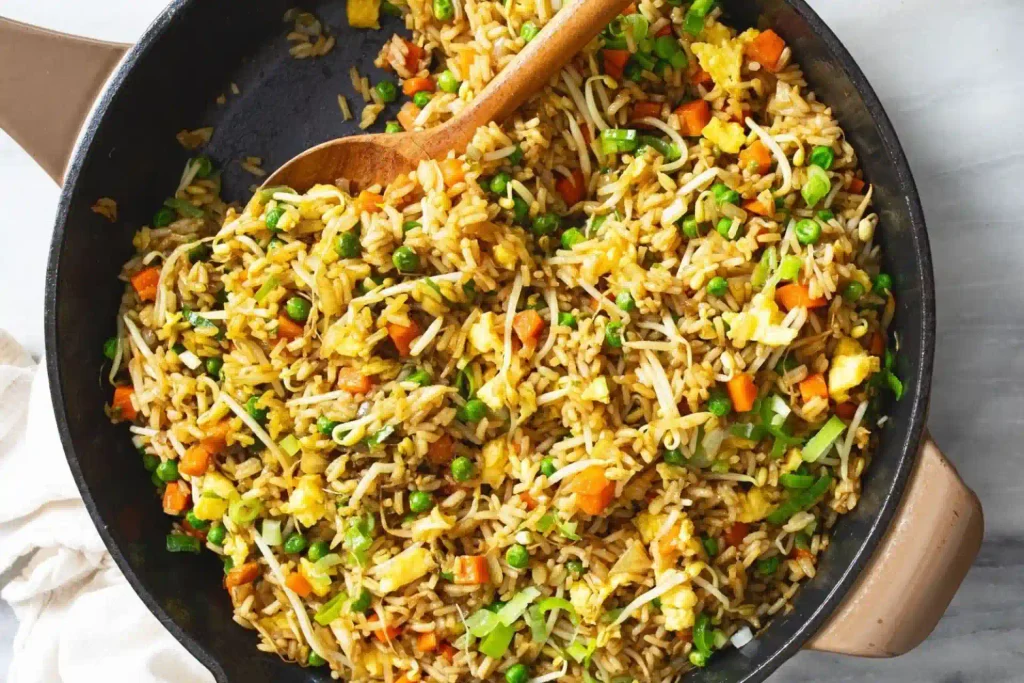
Why You’ll Love This Fried Rice Recipe
- Uses up rice you already have. Leftover rice gone hard in the fridge is the better choice for fried rice, not a compromise.
- One pan, twenty five minutes. Eggs, rice, everything happens in the same wok, so there’s one pan to wash.
- Cheap. Four cups of rice, three eggs, and whatever’s in the crisper drawer turns into dinner for four.
- Forgiving on protein. Add chicken, shrimp, or skip meat; the rice and eggs carry it either way.
- Reheats better than most stir fries, since a minute in a hot pan brings the texture back.
Quick Information
- Prep time: 10 minutes
- Cook time: 15 minutes
- Total time: 25 minutes
- Servings: 4
- Difficulty: Easy
- The ingredient that decides the outcome: cold, dried out rice
- Best for: weeknight dinners, using leftover rice
Nutrition Information
| Nutrient | Amount Per Serving |
| Serving Size | 1 ½ cups (approx. 320 g) |
| Servings Per Recipe | 4 |
| Calories | 430 |
| Protein | 19 g |
| Carbohydrates | 54 g |
| Fat | 15 g |
| Fiber | 3 g |
| Sugar | 3 g |
| Sodium | 760 mg |
Most of the protein in this fried rice comes from the eggs and diced chicken, not the rice. The fat is mostly the cooking oil. Sodium runs higher than typical home cooking since soy sauce carries the seasoning load salt usually does. Numbers are estimates and shift with your soy sauce brand and oil amount.
Ingredients
The Rice Base
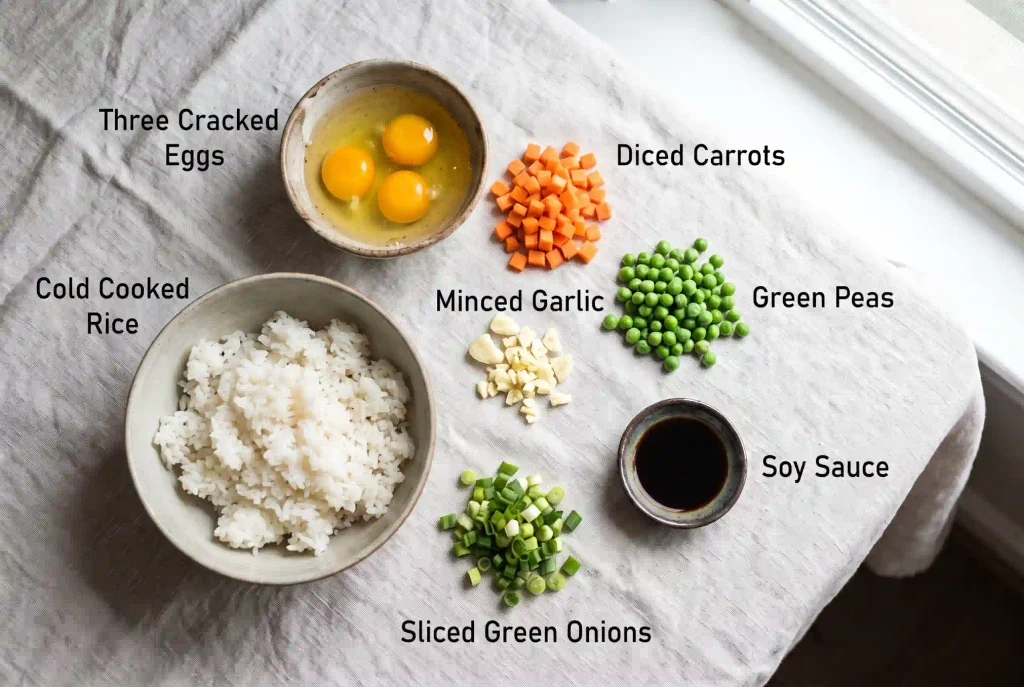
- 4 cups cooked, cold day old rice (about 680 g), jasmine or any long grain white. A dried out surface keeps the grains separate.
- 3 tablespoons (45 ml) neutral oil such as avocado or vegetable, divided
Aromatics and Vegetables
- 3 large eggs, whisked with a pinch of salt
- 3 garlic cloves, minced
- 4 green onions, sliced, whites kept separate from the dark green tops
- ½ cup (65 g) diced carrot, small dice
- ½ cup (65 g) frozen peas, thawed and patted dry
- 1 ½ cups (about 210 g) diced cooked chicken, optional
Seasoning
- 3 tablespoons (45 ml) soy sauce, plus more to taste
- 1 teaspoon (5 ml) toasted sesame oil
- ½ teaspoon white pepper, or black pepper
No leftover rice on hand for fried rice? Spread fresh cooked rice on a sheet pan and freeze 15 to 20 minutes. Swap the chicken for pressed, cubed tofu for meatless, or skip protein and crack in an extra egg.
Allergen and Dietary Disclosure
As written, this fried rice recipe contains eggs and soy, from the whisked eggs and the soy sauce, plus trace sesame depending on your oil brand. It has no milk, tree nuts, peanuts, wheat, fish, or shellfish unless you add shrimp. As written it’s halal, dairy free, and nut free, though not vegetarian with chicken included.
For egg free, skip the eggs and add ½ cup more diced vegetables to keep the volume right, though you lose some richness. For soy free, swap in coconut aminos at the same amount, but expect a sweeter, less salty result. Some soy sauce brands carry wheat as a thickener, so check the label rather than assume soy sauce is gluten free.
Equipment Needed
- 14 inch carbon steel wok, or your largest heavy skillet. Sloped sides and surface area matter more than the material here.
- A wide metal spatula or wok chuan, which gets under the rice in one motion instead of chopping through it.
- A rimmed sheet pan, for cooling and drying fresh rice fast without a day in the fridge.
- A liquid measuring cup with a spout, so soy sauce pours in a thin stream instead of pooling in one spot.
- A timer. The contact time trick depends on stretches of stillness, easy to cut short from habit.
Preparation
Dice the carrot small so it cooks through in under ten minutes, and thaw and drain the peas before anything hits the pan. Mince the garlic and slice the onions, keeping whites separate from the dark green tops since they go in at different stages. Whisk the eggs with a pinch of salt so they’re ready the second the pan is hot. Using chicken, let it sit at room temperature rather than going in cold, since cold meat drops the pan’s heat right when you need it highest. Break up clumps in the cold rice with your fingers before it goes near the pan; a crowded skillet just smashes the grains instead.
Step by Step Directions
Step 1. Cook the eggs first and pull them out
Heat 1 tablespoon of oil over medium high until it shimmers, about a minute. Pour in the eggs, let them sit 10 seconds, then push into loose curds, about 45 seconds. Slide onto a plate while still barely set; overcooking here is why fried rice eggs turn rubbery.
Chef’s Note: Undercook the eggs on purpose. They finish in the pan later, so soft curds now turn set by plating time.
Step 2. Build the aromatic base
Add the remaining 2 tablespoons of oil and bring the pan back to medium high. Drop in the garlic and onion whites, stirring 20 seconds until you smell garlic but nothing has browned. Add the carrot and cook 2 minutes, until the edges soften.
Step 3. Add the rice and let it sit
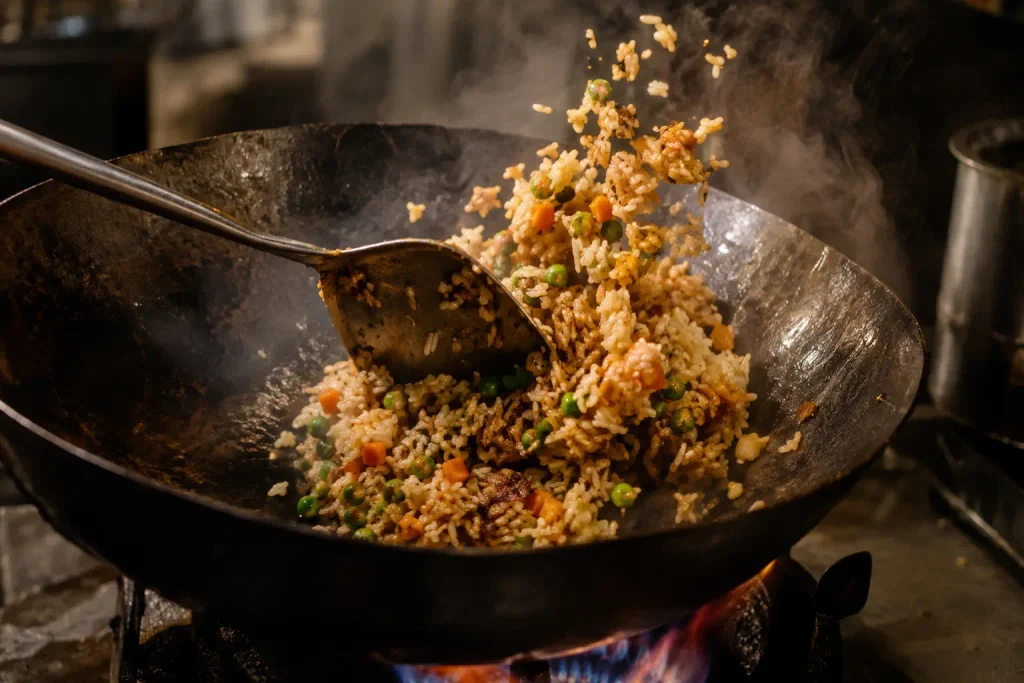
Break the cold rice apart with your hands as it goes in, spreading it as thin as the pan allows. Leave it alone for 45 seconds. That stillness toasts the underside instead of steaming it through, and it’s the step that decides this dish.
Chef’s Note: A steady sizzle with rising steam means the pan is hot enough. A quiet pan means the rice will steam, not fry.
Step 4. Toss, then repeat the stillness
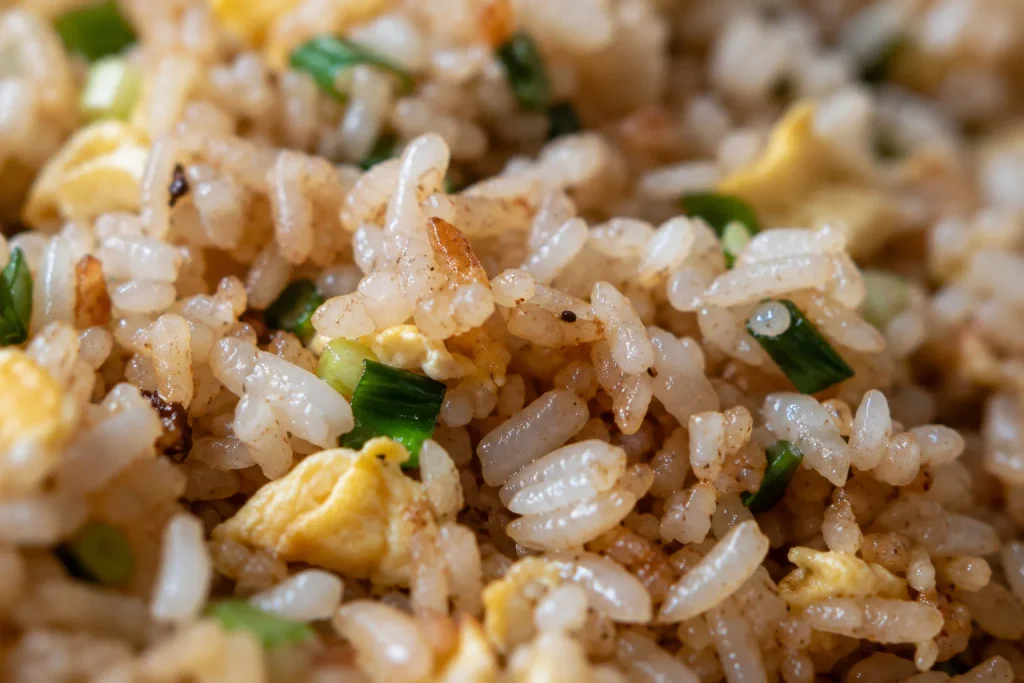
Flip and toss once, breaking up clumps, then spread flat and leave it for another 30 seconds. Repeat the toss and rest pattern two more times, about 3 minutes total. Scattered light brown spots are the goal, not one even golden color.
Step 5. Season around the edges
Push the rice aside and pour the soy sauce onto bare metal rather than over the rice. Let it sizzle a few seconds to caramelize, then fold it through with sesame oil and white pepper. Add the peas now, since they only need warming, not cooking from raw.
Chef’s Note: Soy sauce poured over a pile of rice pools in one spot and salts that corner while the rest stays bland. Hitting empty metal first fixes both.
Step 6. Fold in the eggs and any protein
Return the eggs to the pan with the chicken, if using, breaking the curds up gently as it comes together. Cook another minute to heat the chicken through.
Step 7. Finish with the green tops
Kill the heat, scatter the green tops over the rice, and toss once more off the burner. Taste for salt now, since soy sauce needs a minute to spread evenly first.
Expert Tips and Tricks
Cold rice isn’t optional, it’s the mechanism. Warm rice carries surface moisture that flashes to steam in a hot pan, turning fried rice mushy instead of separate grained.
Don’t crowd the pan. Under 12 inches, cook in two batches; a pile deeper than an inch steams in the middle no matter how hot the edges get.
Parcook the rice a day early and stop there for make ahead.
Reheat leftovers in a hot pan with a teaspoon of water, not the microwave, which turns dry rice gummy.
A real sizzle on contact matters more than the clock. Sound tells you what heat is doing faster than a timer does.
Prep everything before the burner goes on. This moves fast once hot, and stopping to dice carrots mid cook means the rice sits too long and burns.
High smoke point oil matters more than the soy sauce brand. Olive oil turns bitter before the rice even browns.
This contact time trick works on any stir fried rice or noodle dish. Once you know what a properly hot pan sounds like, use it anywhere you’re getting soft results instead of browned ones.
Common Mistakes and Troubleshooting
| Problem | Cause | Solution |
| Rice clumps into a mushy mass instead of separating | Warm, fresh rice was used, or the pan was too crowded for steam to escape | Freeze fresh rice on a sheet pan 15 minutes first, and split the batch in a smaller pan |
| The dish tastes flat despite the soy sauce | Soy sauce was poured over the rice and pooled instead of caramelizing against hot metal | Push rice aside, pour soy sauce onto bare metal, let it sizzle, then fold through |
| Eggs turn rubbery and gray | Eggs went back into the pan too early and cooked twice past soft set | Pull the eggs while still barely set, not fully firm |
| Parts of the rice burn while the rest stays pale | Oil ran out in one section, or that spot sat over the hottest zone every toss | Coat the whole surface with oil and rotate which section sits over the hottest spot |
| Vegetables turn watery and dilute the dish | Frozen peas and carrots went in without thawing and draining | Thaw fully and pat dry before they touch the pan |
The mushy clump problem ruins the most batches, and it starts before the pan is hot. Warm rice, barely cooled, carries surface moisture on every grain. The instant it hits hot oil, that moisture flashes to steam, cooking the rice from the outside in rather than frying it. Mid batch, spread it thin, raise the heat, and stop tossing for a full minute so the moisture can cook off.
Storage Instructions
Refrigerator
Cool to room temperature within an hour, then store airtight for up to 4 days. Fried rice holds up better than plain rice in the fridge, since the oil coating slows the grains from drying.
Freezer
Portion the fried rice into flat, sealed bags and freeze lying flat to break off single servings later. It keeps up to 2 months, though the peas soften more than anything else once frozen.
Reheating
A hot skillet with a teaspoon of water and a lid on for the first minute brings this closer to fresh than anything else. The microwave works in a pinch, but rice dried out by day two turns gummy.
Make Ahead
The rice is the only piece worth prepping ahead. Chill it, dice the vegetables and protein, and dinner comes together in under 15 minutes.
Variations and Substitutions
For heat, stir a tablespoon of chili garlic sauce into the soy sauce, or finish with chili oil at the table. It also tints the rice slightly red, which surprises people the first time.
For a kid friendly fried rice, cut the white pepper and use half the soy sauce, salting separately so it stays gentle.
For vegetarian fried rice, drop the chicken and add an extra egg plus a half cup of diced mushrooms for the savory depth meat would carry.
For gluten free, use tamari or certified gluten free soy sauce at the same amount; most people can’t tell the difference.
Shrimp can replace chicken if it goes in raw during step 2 instead of step 6, since it needs about 3 minutes and turning pink is the cue. Brown rice can replace white, though it needs a more thorough dry out first, since it holds more moisture and clumps easily while warm.
Serving Suggestions
This fried rice recipe works as a full meal with the chicken included, but it also holds up as a side next to something grilled, since the smoky pan flavor doesn’t compete with char the way a creamy side would.
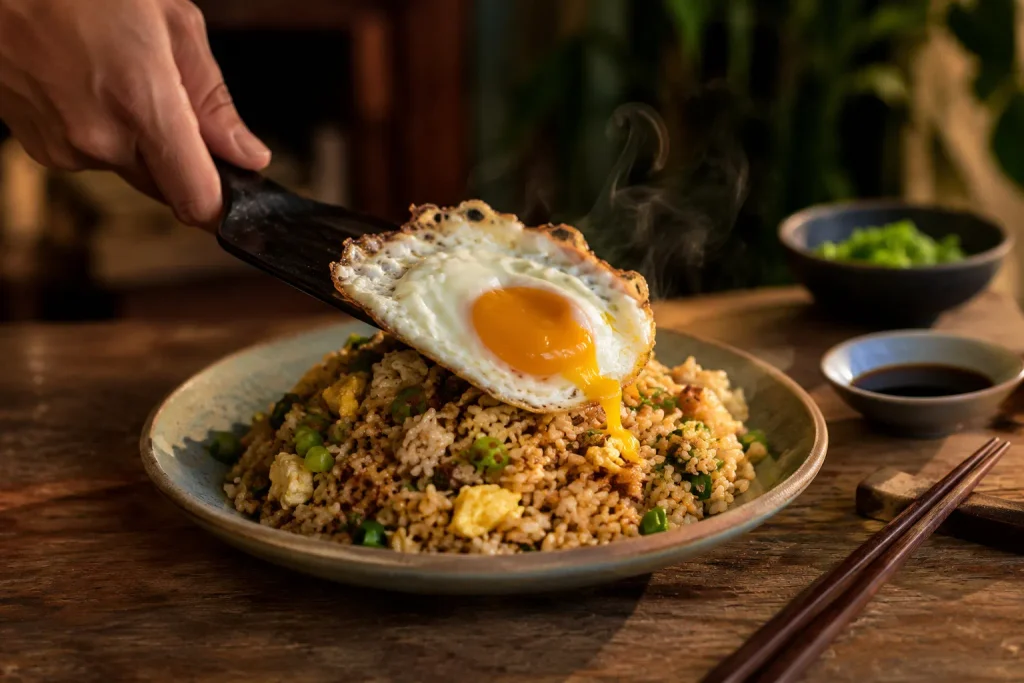
A fried egg on top, yolk still runny, turns this into breakfast for dinner and works as an informal sauce once it breaks.
A cucumber salad dressed in rice vinegar cuts through the oil in a way a heavier side can’t.
Jasmine tea or cold water is all this needs, since anything sweeter competes with the soy sauce base.
Frequently Asked Questions
Can I make this fried rice recipe ahead of time?
The rice is the part worth making ahead, cooked and chilled up to 2 days before you actually cook the dish. Dice the vegetables and protein the night before too, and the rest comes together in under 15 minutes. Fully cooked fried rice keeps for 4 days in the fridge, so a double batch on Sunday covers two weeknight dinners.
Why does my fried rice always turn out mushy?
It comes down to moisture sitting in the rice before it touches the pan. Rice that hasn’t fully cooled and dried on the surface releases steam the second it hits hot oil, and that steam cooks the grains from the outside in instead of frying them. Freezing spread out rice on a sheet pan for 15 to 20 minutes solves this faster than waiting a full day.
Can I use brown rice instead of white rice?
Brown rice works here, though it needs a longer chill and a more thorough dry out first, since it holds more surface moisture than white rice. Cook it a day ahead if you can, and expect a chewier bite and nuttier flavor than the jasmine rice this fried rice recipe is normally built around. Cook time in the pan stays about the same either way.
How do I know when the rice is actually done?
Look for scattered light brown spots across the grains rather than one even golden color over the whole pan, along with a steady sizzle wherever the rice touches bare metal. A quiet pan paired with uniformly pale rice means it’s steaming rather than frying. If that happens mid batch, spread everything thinner, raise the heat, and give it another minute of contact before tossing again.
Is it weird to use rice I cooked that same morning?
Same day rice works fine if you spread it out and get it properly cold first, ideally with a fast stint in the freezer rather than just sitting on the counter. What actually matters is the surface being dry and cold, not the calendar date the rice was cooked on. Day old is shorthand for a texture you can get same day in a hurry.
One More Thing Before You Go
The contact time trick behind this fried rice recipe is worth carrying into every other stir fry you make. Most home cooks stir constantly because it feels like the careful thing to do, and it’s the opposite of what a hot pan needs from rice. Give it short stretches of stillness and you’ll hear the difference before you see it: a real sizzle instead of a quiet hiss.
I still undercook the eggs on the first pass every time I make this fried rice recipe, even after dozens of batches, because a curd that looks too soft is easy to second guess. Trust it. They finish cooking in the pan later.
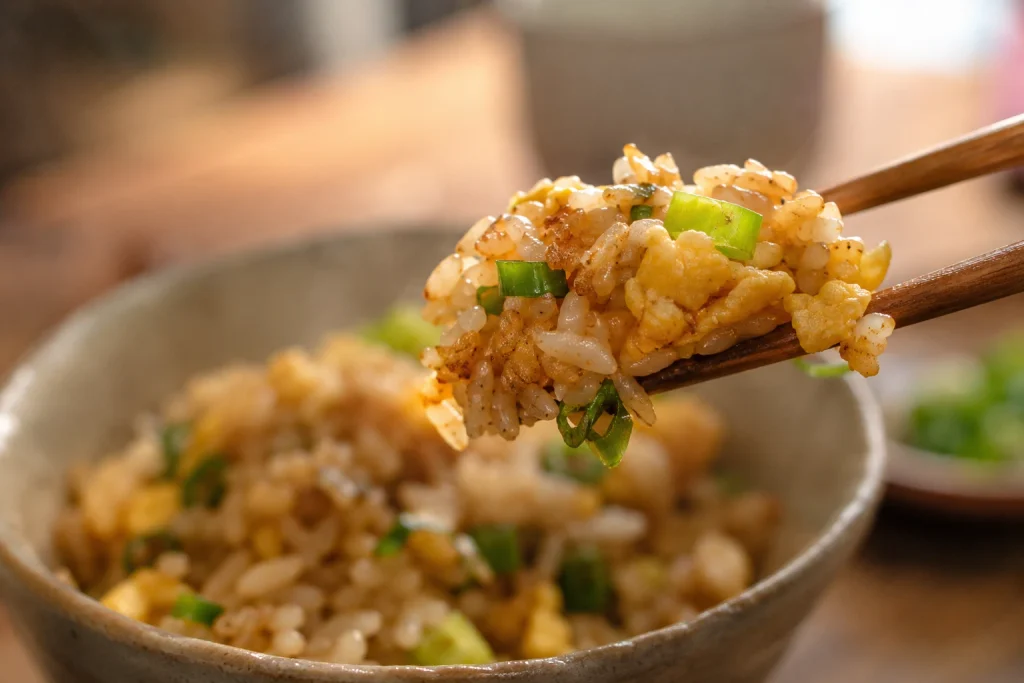
Save this fried rice recipe for a weeknight when the fridge has leftover rice and nothing planned for dinner.
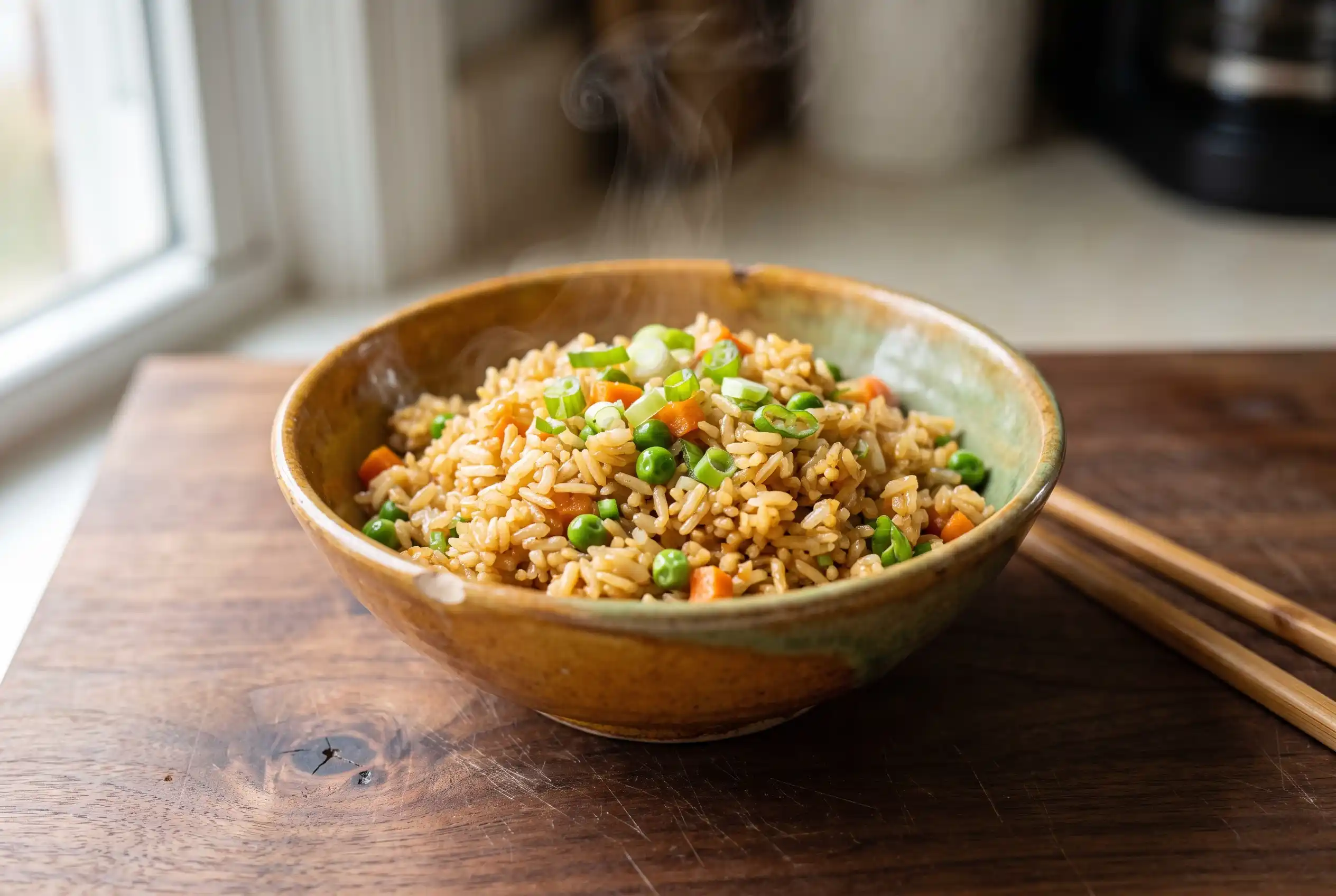
Fried Rice
Ingredients
Method
- Heat 1 tablespoon oil, scramble the eggs into soft curds, and remove from the pan.
- Add remaining oil, cook garlic and onion whites 20 seconds, add carrot, cook 2 minutes.
- Add cold rice, spread thin, and let it sit untouched for 45 seconds.
- Toss and rest in 30 second intervals for about 3 minutes, until spotted golden brown.
- Push rice aside, add soy sauce to bare pan, let it sizzle, then fold in with sesame oil, pepper, and peas.
- Return eggs and chicken to the pan, toss together, and cook 1 minute.
- Remove from heat, stir in the green onion tops, and serve.
4 Comments
Comments are closed.