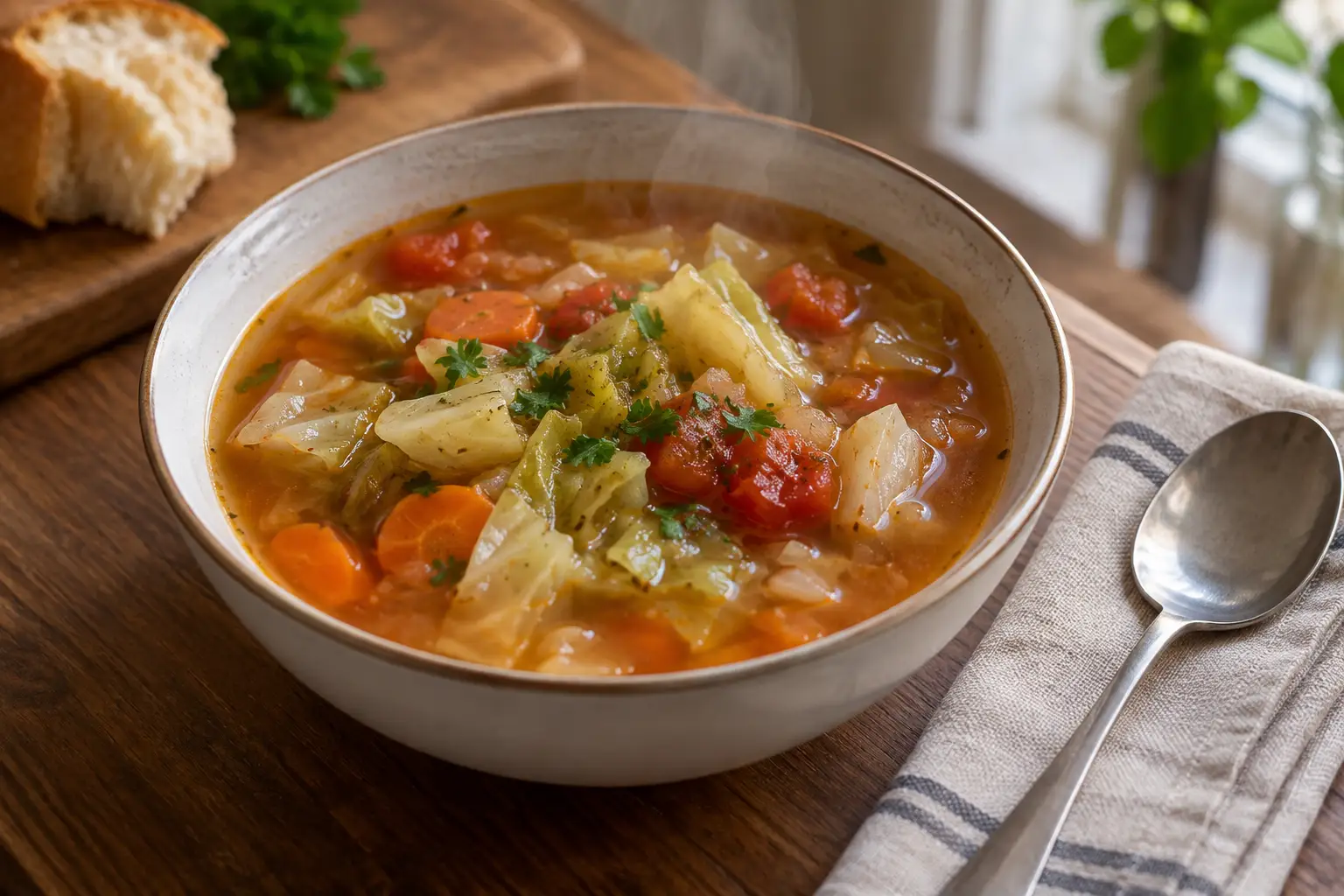
Cabbage Soup Recipe: A Hearty One Pot Dinner Ready in 45 Minutes
Most cabbage soup recipes tell you to throw the whole head in at the start and let it simmer for half an hour. By the time you’re ladling it out, the cabbage has gone gray and lost every bit of texture. This version splits the head into two batches. Half goes in early so it breaks down and thickens the broth. The rest goes in during the last stretch, so the finished bowl still has some bite in it.
Everything else stays simple. Onion, celery and carrot cook down in olive oil until they smell sweet instead of sharp. Garlic, thyme and smoked paprika go in next, then broth, tomatoes and the first batch of cabbage. A splash of soy sauce does the quiet work people usually reach for a long simmered stock to get. One pot, about 45 minutes start to finish. If a past batch came out watery or flat, the fix is almost always timing: when the cabbage goes in, and when the vinegar hits at the end.

Why You’ll Love This Cabbage Soup
- Ready in under an hour. Fifteen minutes of chopping and thirty minutes on the stove, no planning ahead required.
- One pot, one cleanup. Everything from the onions to the last ladle happens in the same Dutch oven.
- The cabbage keeps its texture. The two batch method gives the broth body from the first half while the second half stays tender, not mushy.
- Cheap to make. A head of cabbage, a can of tomatoes and some broth feed six people for less than takeout for two.
- Leftovers taste even better on day two, once the broth pulls more flavor from the bay leaf and thyme.
Quick Information
- Prep 15 minutes, cook 30 minutes, total 45 minutes
- Servings: 6, about 1.5 cups each
- Difficulty: Easy
- Calories: approximately 150 per serving
- The detail that decides the outcome: when the second batch of cabbage goes into the pot
- Best for weeknight dinners or a big pot of cabbage soup to freeze
Nutrition Information
| Nutrient | Amount Per Serving |
| Serving Size | 1.5 cups (360 g) |
| Servings Per Recipe | 6 |
| Calories | 150 |
| Protein | 5 g |
| Carbohydrates | 20 g |
| Fat | 6 g |
| Fiber | 6 g |
| Sugar | 9 g |
| Sodium | 690 mg |
Most of the protein in this cabbage soup comes from the broth and the soy sauce rather than any single ingredient. The fat is almost entirely the olive oil used to soften the vegetables. Sodium climbs from the broth and soy sauce together, so a low sodium broth helps if you’re watching that number. Values are estimates and vary with brands, measuring, and substitutions.
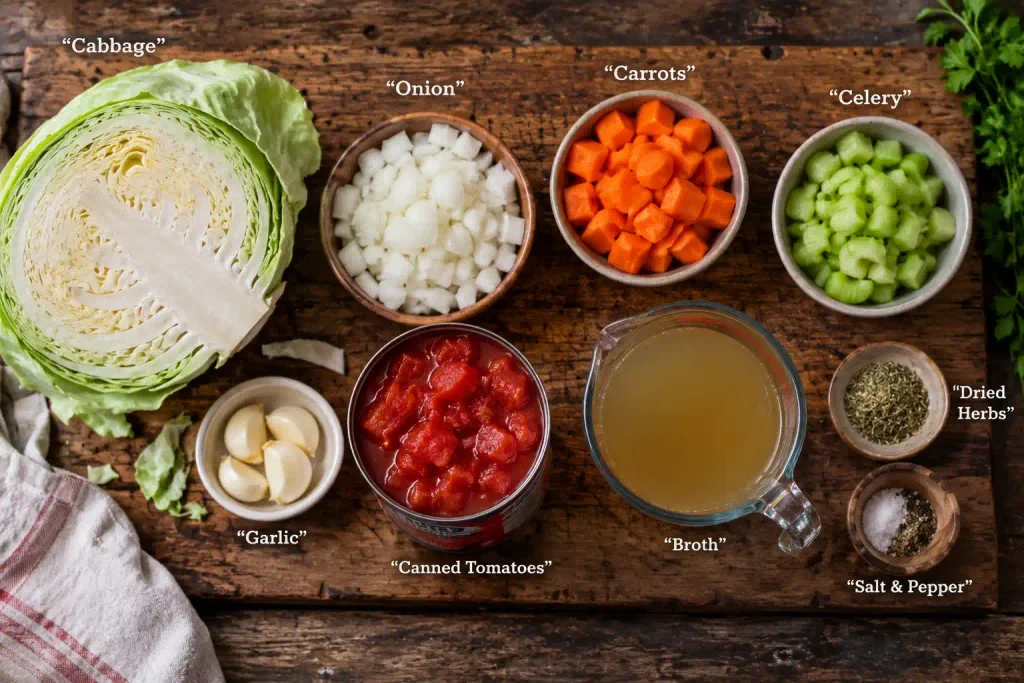
Ingredients
For the base
- 2 tablespoons (30 ml) olive oil, carries the vegetables’ flavor through the pot
- 1 medium yellow onion, diced (about 1 cup / 150 g)
- 2 celery stalks, diced (about 3/4 cup / 100 g), adds a savoriness plain broth lacks
- 2 medium carrots, diced (about 1 cup / 130 g)
- 4 garlic cloves, minced
For the soup
- 1 small head green cabbage, cored and chopped (about 2 pounds / 900 g), divided into two portions
- 1 can (14.5 ounces / 411 g) diced tomatoes, undrained
- 6 cups (1.4 liters) chicken broth, or vegetable broth for a vegetarian pot
- 1 tablespoon (15 ml) soy sauce, adds a savory pull without a long simmered stock
- 1 teaspoon dried thyme
- 1 teaspoon smoked paprika
- 1 bay leaf
- 1 tablespoon (15 ml) apple cider vinegar, added at the end
- Salt and black pepper, to taste
- 2 tablespoons chopped fresh parsley, for serving
The cabbage is what makes this cabbage soup work, so weigh it if you can. A head over 3 pounds crowds the pot. Save the extra for slaw.
Allergen and Dietary Disclosure
As written, this cabbage soup contains soy from the soy sauce, and most bottled soy sauce also carries wheat, so treat it as a gluten source unless the label says otherwise. There’s no milk, egg, tree nut, peanut, sesame, fish, or shellfish here.
As written: halal, dairy free, egg free, nut free. Not vegetarian unless you use vegetable broth instead of chicken broth, and not gluten free unless you swap the soy sauce for a gluten free tamari.
Tamari removes the wheat and tastes close to identical, making it the easier swap. Vegetable broth makes the pot vegetarian, though it loses a shade of savoriness without the chicken base. Some broth cartons list wheat starch or barley malt, so check the panel.
Equipment Needed
- 6 quart Dutch oven or heavy bottomed stockpot. A thin pot lets onions scorch on one side before the other softens.
- Sharp chef’s knife. A cabbage core is dense enough that a dull blade tears it instead of slicing clean.
- Kitchen scale. Cabbage heads range from a pound and a half to three pounds, and weighing the two batches keeps the split even.
- Wide ladle, for portioning consistent bowls of cabbage soup and skimming foam early in the simmer.
- Wooden spoon, to scrape browned bits off the bottom without scratching a Dutch oven’s enamel.
Preparation
Dice the onion, celery and carrot before the burner goes on. Once the onion hits hot oil, there’s no time to chop anything else. Mince the garlic separately and hold it back for later.
Core the cabbage for this cabbage soup and chop it into rough one inch pieces, then split it into two piles by weight, or by eye if you don’t have a scale. Cover the second pile until the recipe calls for it. Measure the broth and open the tomatoes ahead of time. Nothing here needs an oven. Skip preheating.
Doubling the batch works in a large enough pot, but let both cabbage additions simmer about five minutes longer than written, since a fuller pot takes longer to come back to a simmer.
How to Make Cabbage Soup Step by Step
Step 1. Soften the onion, celery and carrot
Warm the olive oil in the Dutch oven over medium heat, then add the onion, celery and carrot. Stir every minute or so for about six minutes, until the onion turns translucent and the pot smells sweet instead of sharp.
Chef’s Note: If the vegetables brown before six minutes, the heat is too high. Drop it a notch.
Step 2. Bloom the garlic and spices
Clear a space in the pot and add the garlic, thyme and paprika. Cook 30 seconds until the raw garlic smell turns toasted, then stir it in.
Step 3. Add the first batch of cabbage
Stir in half the cabbage with the tomatoes, broth, soy sauce and bay leaf. Bring it to a boil, then drop to a bare simmer, just small bubbles at the surface.
Chef’s Note: A hard boil is the biggest reason cabbage soup turns gray and stringy. Hold a bare simmer for the full 20 minutes, even if you have to check twice.
Step 4. Let the first batch break down
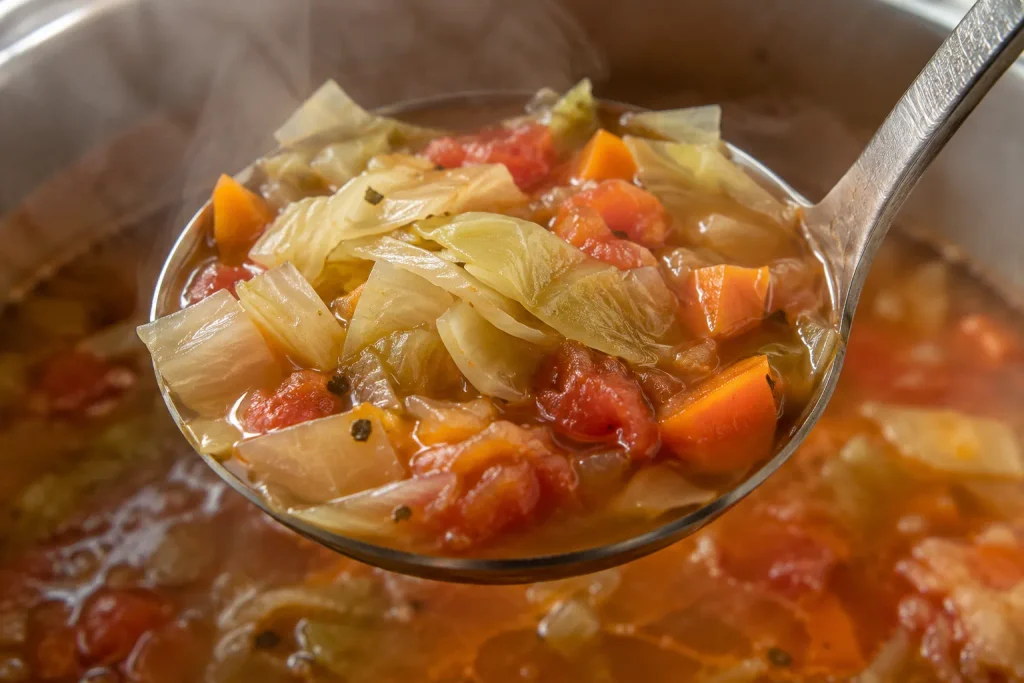
Simmer uncovered for about 20 minutes. The cabbage should go from crisp white ribs to soft and slightly translucent, and the broth thickens as it releases its liquid.
Step 5. Stir in the second batch of cabbage
Add the remaining cabbage now, not before. Bring it back to a simmer and cook 8 to 10 minutes, until it still has some bite, not the full softness of the first batch.
This step decides whether the soup has any texture left at the end. Set a timer for 8 minutes and taste a piece before adding more.
Step 6. Season and brighten with vinegar
Pull out the bay leaf, stir in the vinegar, then taste before adding salt and pepper. It should cut the richness without tasting sour, so add it a half tablespoon at a time if unsure.
Chef’s Note: Salt added early gets pulled into the cabbage, so the broth tastes flat later no matter how much more goes in. Hold most of it until now.
Step 7. Rest briefly and serve
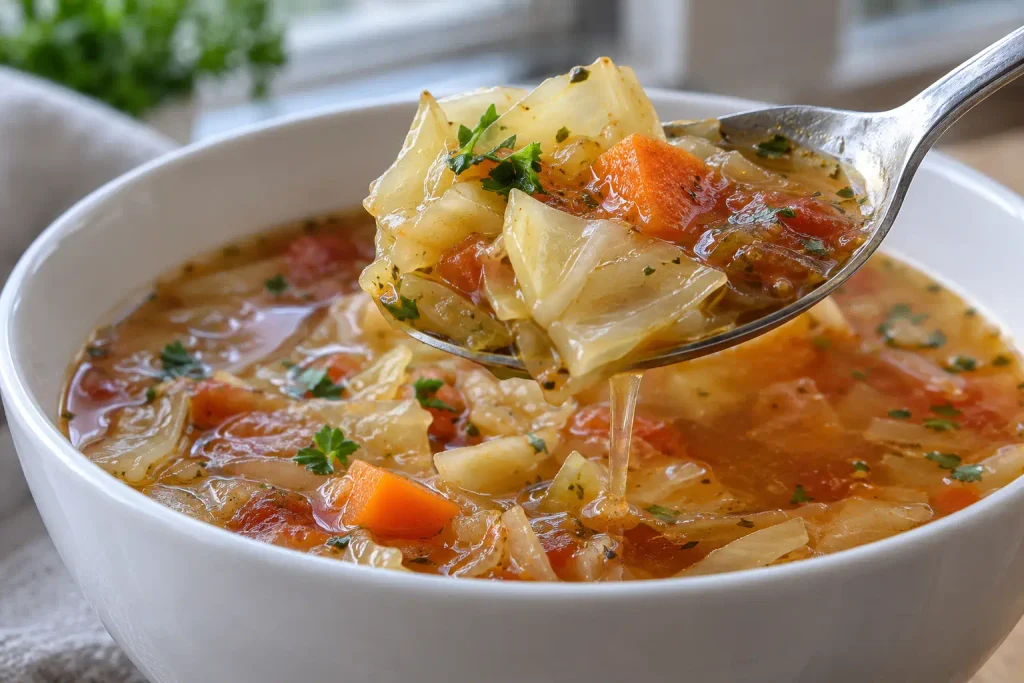
Let the pot sit off heat for five minutes. The broth thickens slightly as it cools and the flavors settle. Top each bowl with parsley before serving.

Expert Tips and Tricks
Don’t salt the pot until step six. Salting early pulls water from the vegetables, and the broth reduces faster than expected, throwing the balance off.
This cabbage soup keeps improving for two days in the fridge, since the bay leaf and thyme keep releasing flavor after the pot comes off the stove.
Cut the cabbage into pieces roughly the size of a large postage stamp. Smaller shreds turn to mush before the second batch catches up, and bigger pieces never soften enough to eat off a spoon.
A bag of pre-shredded coleslaw mix works in a pinch, though it’s cut thinner than hand chopped cabbage, so pull it off the heat a couple of minutes early.
Freeze it in the portion size you’ll actually reheat. Thawing a full batch to eat one bowl dries out the rest on the second reheat.
If the broth tastes thin no matter how long it simmers, mash a few pieces of canned tomato against the pot with your spoon. It adds body without changing the flavor the way more broth would.
Common Mistakes and Troubleshooting
| Problem | Cause | Solution |
| Cabbage turns gray and stringy | It boiled hard instead of simmering gently, breaking the cell walls down too fast | Drop the heat the moment it rolls and hold a bare simmer for the rest of the cook time |
| Soup tastes flat even with plenty of salt | No acid in the pot to balance the vegetables’ sweetness | Stir in the vinegar off heat at the end, a half tablespoon at a time, until the flavor sharpens |
| A strong sulfur smell fills the kitchen | Cabbage cooked too long | Keep cabbage cook time close to the recipe and crack a window if the smell builds early |
| Broth stays thin no matter how long it cooks | Not enough vegetable content has broken down yet | Mash a few pieces of canned tomato against the pot, or stir in diced potato with the first batch |
| Bottom of the pot scorches during the simmer | Heat set too high | Lower the heat right after it boils and stir every 5 to 10 minutes near the edges |
The gray, stringy cabbage problem ruins the most batches of cabbage soup. It happens fast: a hard boil agitates the cabbage enough to break its cell walls within minutes, and the color drains from bright green to dull olive. The texture won’t come back, but the flavor is still fine. Blend it smooth with an immersion blender and serve it as a pureed soup instead.
How to Store Cabbage Soup
This cabbage soup isn’t safe left out at room temperature more than about two hours, since the broth sits right in the range where bacteria multiply fastest.
Refrigerator
Keep it in a sealed container up to 4 days. The second batch keeps softening a little each day, so day one and day three won’t taste identical, though both are good.
Freezer
Freezes up to 3 months in a freezer safe container, with an inch of headspace for the broth to expand. The texture holds up better than most vegetable soups, since the second batch was never fully cooked down.
Reheating
Warm it on the stovetop over medium low heat, stirring occasionally, about 8 minutes from the fridge or 15 from frozen. A splash of extra broth loosens it, since cabbage keeps absorbing liquid in storage.
Make Ahead
The base through step 4 can be made up to 2 days ahead and refrigerated. Add the second batch fresh at reheating, so the texture contrast survives.
Variations and Substitutions
Spicy version. Add a diced jalapeño with the onion, or a half teaspoon of red pepper flakes with the garlic. The heat builds as it sits, so go lighter if leftovers are planned.
Mild and kid friendly. Skip the smoked paprika and add an extra carrot, which sweetens the broth.
Vegetarian. Swap the chicken broth for vegetable broth to keep this cabbage soup meat free. It loses some savory backbone without the chicken base, so a little extra vinegar helps close the gap.
Gluten free. Use tamari or coconut aminos in place of regular soy sauce, and check the broth carton for wheat based thickeners.
Heartier version. Stir in a cup of white beans or two cups of diced potato with the first batch. Beans add protein fast, while potato thickens the broth but adds about 10 minutes.
Meat added. Brown a pound of ground beef or chicken sausage before the onions go in, then use the fat left behind in place of the olive oil.
Serving Suggestions
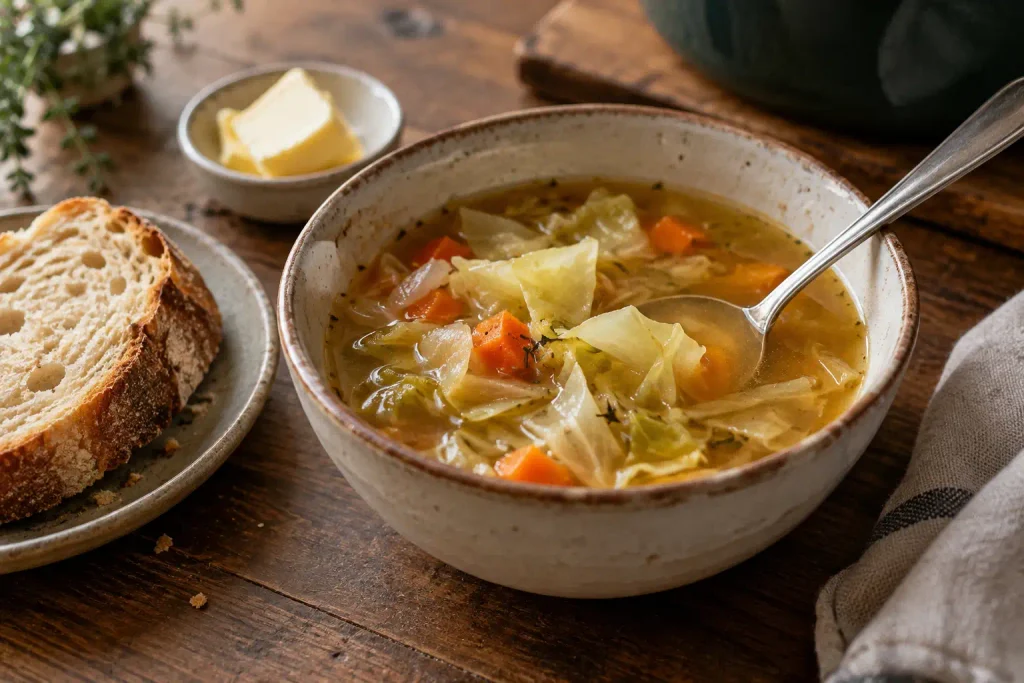
A thick slice of crusty bread is the obvious match, built for soaking up the broth once the solids are gone.
A grilled cheese sandwich on the side turns this cabbage soup into a full meal, and a sharp cheddar cuts through the acidity instead of getting lost in it.
A dollop of sour cream stirred in right before eating cools the vinegar’s bite and adds richness the broth doesn’t have alone.
For a full spread, pair it with a lightly dressed side salad, since the soup already carries plenty of acid.
Frequently Asked Questions
Can I make cabbage soup ahead of time?
The base holds up well for up to 2 days in the fridge if you stop before adding the second batch of cabbage. Add that batch fresh when you reheat, since cabbage sitting in hot broth for two days loses the texture contrast this version is built around. Reheat gently over medium low heat rather than a hard boil, and freeze the base separately for longer storage.
Why does my cabbage soup smell so strong while it cooks?
Cabbage releases more sulfur compounds the longer it sits at a simmer, and the smell gets noticeably stronger past the 20 minute mark. Keeping the first batch to about 20 minutes and the second to under 10 limits how much builds up in the kitchen. Cracking a window or running the stove fan handles the rest. A splash of vinegar at the end also cuts the smell that lingers in the bowl.
What can I use instead of chicken broth?
Vegetable broth works directly in place of chicken broth, though the soup ends up a shade less savory without that base. Beef broth also works and pushes the flavor closer to a classic vegetable beef soup. Whichever you use, a low sodium version gives more control over the final salt level than a regular broth does. Bouillon dissolved in hot water works too, taste before adding extra salt.
How long does cabbage actually take to soften in this soup?
The first batch needs about 20 minutes at a gentle simmer to go fully soft and slightly translucent. The second only needs 8 to 10 minutes, since the goal there is some bite left in the leaf rather than full softness. Cabbage cut thicker than an inch needs a few extra minutes either way. If you’re unsure, taste a piece rather than judging by how it looks in the pot.
My cabbage soup always tastes flat, what am I missing?
Flat tasting soup is almost always missing acid, not salt. Cooked cabbage and broth both taste sweet on their own, and without something sharp to cut through that, more salt just makes it taste salty. Stir in the apple cider vinegar at the end, off heat, and taste again before reaching for the salt shaker. A squeeze of lemon works the same way if you’re out of vinegar.
The One Thing to Get Right
Homemade cabbage soup rewards attention to timing more than it rewards a longer ingredient list. Once you’ve made it with the cabbage split into two batches, going back to dumping the whole head in at once feels like a step backward, since the texture difference shows up in the first spoonful. The broth itself is forgiving. An extra five minutes of simmer or a little more broth won’t ruin it. The cabbage timing is the one part worth setting a timer for.
Save this cabbage soup recipe for the next time a head of cabbage is sitting in the crisper drawer with nowhere else to go. It comes together fast enough for a weeknight and keeps well enough to plan around for lunches later in the week.
Cabbage Soup
Ingredients
Method
- Cook onion, celery and carrot in olive oil over medium heat until translucent, about 6 minutes.
- Add garlic, thyme and paprika and cook 30 seconds.
- Stir in half the cabbage, tomatoes, broth, soy sauce and bay leaf. Bring to a bare simmer.
- Simmer uncovered 20 minutes until the first batch of cabbage is soft.
- Add the remaining cabbage and simmer 8 to 10 minutes.
- Remove the bay leaf, stir in vinegar, and season with salt and pepper.
- Rest 5 minutes off heat, then top with parsley and serve.

![of field, food photography, natural textures, high detail, no text, no watermark] [ALT TEXT: Bowl of French onion soup with melted Gruyere crust and toasted baguette](https://www.flavoreal.com/wp-content/uploads/2026/09/french-onion-soup-hero-shot-768x512.webp "French Onion Soup Recipe: A Golden, Deeply Caramelized French Classic in 6 Steps 10")


2 Comments
Comments are closed.