Chicken Alfredo Recipe: Silky Sauce in 30 Minutes, No Grainy Mess
The first time I dumped a whole block of parmesan into a pan of hot cream, the sauce split into a grease slick with grit floating on top inside about ninety seconds. That’s the fate waiting for most chicken alfredo the second the cheese hits heat that’s still working too hard.
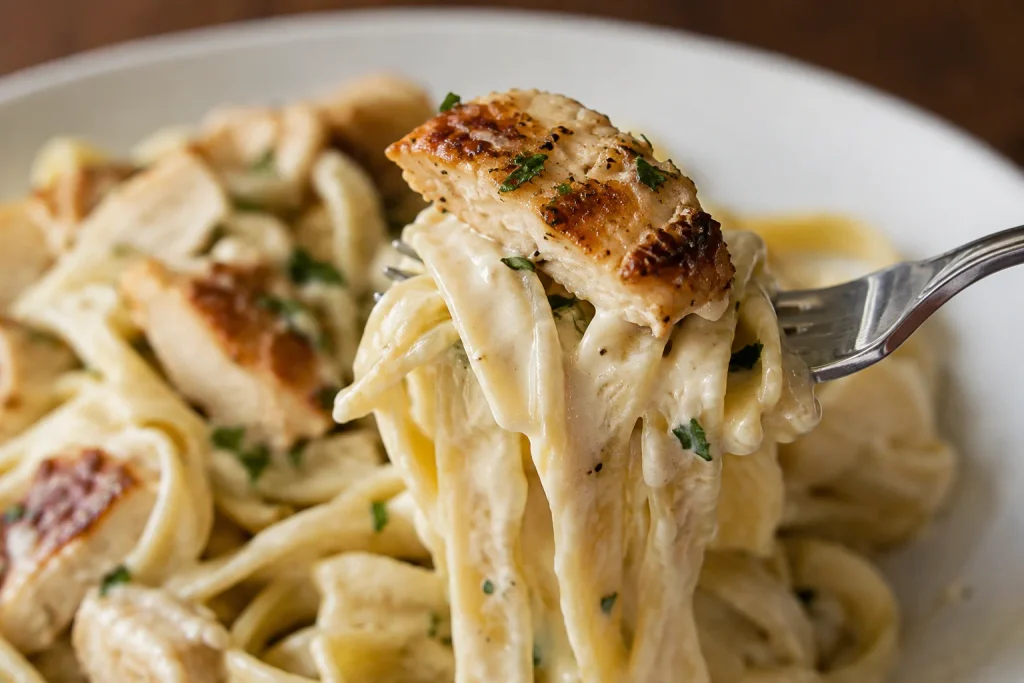
The fix isn’t a different cheese or a fancier pan. It’s timing. Pull the skillet off the burner before the parmesan goes in, then add it in two separate additions instead of one, and the proteins in the cheese never seize up the way they do over direct heat. That single change is the difference between a sauce that clings to the pasta and one that pools underneath.
This version gets you seared chicken, a from scratch sauce, and dinner on the table in about thirty minutes, without the pre-shredded cheese or jarred sauce shortcuts that leave things tasting flat. Fettuccine is traditional, but the sauce works just as well over penne or rigatoni if that’s what’s in the pantry.
Why You’ll Love This Chicken Alfredo
- The sauce won’t break on you. Off heat, two-addition cheese does the job constant whisking over low flame usually does, so a first timer gets the same silky result as someone who’s made this fifty times.
- One skillet handles everything. Sear, build the sauce, and toss the pasta in the same pan, so the browned bits become the sauce instead of going in the sink.
- Ready in about the time it takes to boil water and cook pasta, so weeknight timing stops being a math problem.
- Real parmesan, finely grated, melts into the cream instead of clumping. Pre-shredded cheese carries a starch coating that stops this.
- Reheats without splitting, as long as it goes back over low heat with a splash of milk. Rare for a cream sauce.
Quick Snapshot
- Prep time: 10 minutes
- Cook time: 20 minutes
- Total time: 30 minutes
- Servings: 4
- Difficulty: Easy
- Calories: 640 per serving
- The ingredient that decides the outcome: finely grated parmesan, added off heat
- Best for: a weeknight chicken alfredo dinner, or a low effort night in
Nutrition Information
| Nutrient | Amount Per Serving |
| Serving Size | 1.5 cups (350 g) |
| Servings Per Recipe | 4 |
| Calories | 640 |
| Protein | 38 g |
| Carbohydrates | 42 g |
| Fat | 34 g |
| Fiber | 2 g |
| Sugar | 3 g |
| Sodium | 680 mg |
Most of chicken alfredo’s protein comes from the chicken and parmesan, while the fat is almost entirely dairy, not the meat. Carbohydrates come from the pasta, so a smaller portion changes this number most. Sodium climbs from the parmesan and pasta water.
These numbers are estimates and will shift with the brands you use, how you measure, and any substitutions you make.
Ingredients for Chicken Alfredo
For the Chicken
- 2 boneless, skinless chicken breasts (about 1.5 lb / 680 g), sliced horizontally into thin cutlets
- 1 tsp salt
- 1/2 tsp black pepper
- 1 tsp garlic powder
- 2 tbsp olive oil (30 ml)
For the Sauce
- 4 tbsp unsalted butter (56 g), the sauce’s base
- 4 cloves garlic, minced
- 1.5 cups heavy cream (360 ml); half and half breaks under this sauce’s heat
- 1.5 cups parmesan, finely grated off the block (120 g), plus extra for serving
- 1/4 tsp ground nutmeg, optional
- Salt and black pepper, to taste
- 1/2 cup reserved pasta water (120 ml)
For the Pasta
- 12 oz fettuccine (340 g)
- Salt, for the pasta water
- Fresh parsley, chopped, for serving
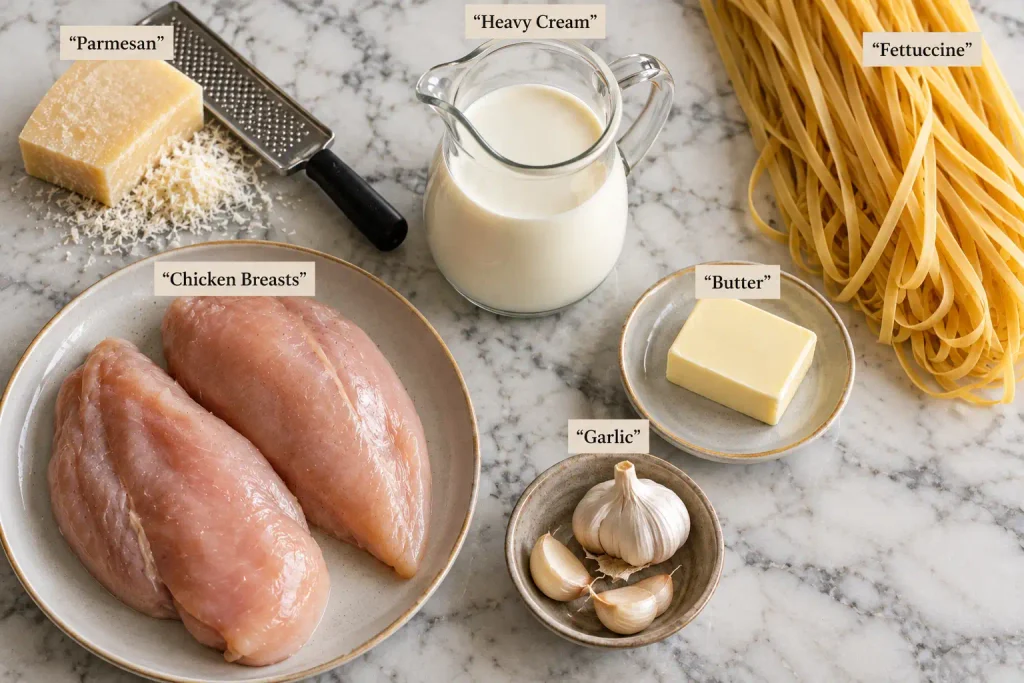
Boneless thighs can replace the breast, with an extra minute or two per side. Gluten free fettuccine swaps in without changing the sauce.
A three ounce wedge of parmesan grates into almost a full cup, enough for this whole recipe with a little left over for the plates. It costs more than the shaker version but melts far better.
Allergen and Dietary Disclosure
This recipe contains milk, from the butter, cream, and parmesan, and wheat, from the fettuccine. Most dried fettuccine is also made with egg, so check the box.
As written, chicken alfredo is halal. It is not vegetarian, dairy free, or gluten free.
Swap in gluten free fettuccine and the sauce needs no change, though keep extra pasta water on hand since these noodles release less starch. Dairy free isn’t a clean swap here; the cream and cheese carry too much of the dish’s texture.
The ingredient most likely to hide a surprise is the parmesan. Pre-shredded bags sometimes include wheat starch as an anti-caking agent, worth checking if wheat is the concern.
Equipment Needed
- A wide, heavy bottomed skillet, 12 inches across. It holds enough heat to sear two cutlets without crowding, and crowding steams chicken instead of browning.
- An instant read thermometer. Chicken breast goes from juicy to dry across a narrow band, and pulling it at 165°F (74°C) saves the dish.
- A Microplane grater. It shreds parmesan into fine ribbons that melt into hot cream in seconds, unlike a box grater’s thick shreds.
- A large pot with a strainer insert, so saving a cup of starchy water happens in one motion.
- A whisk. Off the heat, whisking keeps the fat and cheese moving together.
Before You Start
Slice each chicken breast horizontally into two thinner cutlets before anything touches heat. Thinner pieces cook through in the same four minutes per side it takes to build real color.
Grate the parmesan now, straight off the block, and keep it within reach of the stove. Cheese sitting out more than twenty minutes starts drying at the edges, which changes how it melts.
Get a large pot of water boiling before the chicken goes in the pan. Salt it until it tastes like the sea, so the pasta and chicken alfredo sauce finish within a minute of each other.
How to Make Chicken Alfredo, Step by Step
Step 1. Season and slice the chicken
Halve each breast into two even cutlets, then season with salt, pepper, and garlic powder. Uneven thickness is the top reason chicken alfredo ends up dry on one end, underdone on the other.
Step 2. Sear the chicken
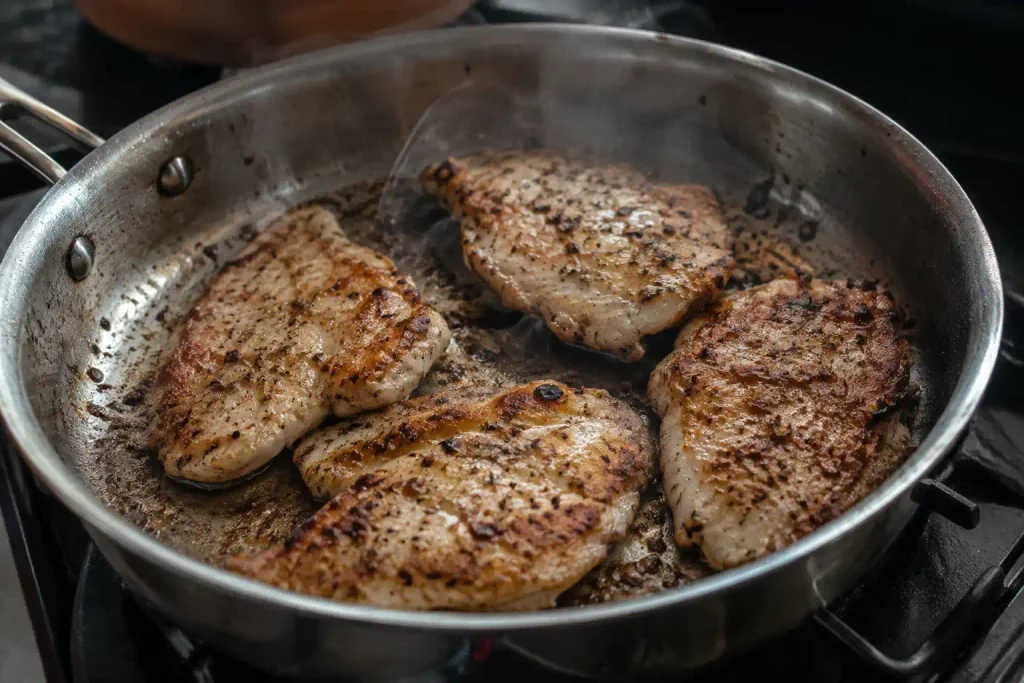
Heat the oil over medium high until it shimmers, then add the cutlets without crowding. Four minutes on the first side builds a deep gold crust; flip, cook three to four minutes more, then check with the thermometer. Pull at 165°F (74°C) and rest, tented with foil.
Chef’s Note: A dry, scorched pan after searing is fine; those browned bits are the start of the sauce.
Step 3. Cook the pasta
Pull the fettuccine one minute short of package time, since it finishes cooking in the sauce. Scoop out a cup of starchy water before draining; it saves a sauce that turns thick later.
Step 4. Build the sauce base
With the heat down to medium, melt the butter into the pan drippings, add the garlic, and stir thirty seconds until fragrant and gold. Garlic past that point turns bitter.
Step 5. Add the cream
Pour in the cream and bring it to a gentle simmer, small bubbles at the edges rather than a rolling boil. Three minutes of reduction coats the back of a spoon.
Chef’s Note: A hard simmer here reduces the cream before the cheese goes in, forcing you to thin it back out later.
Step 6. Melt in the cheese off the heat
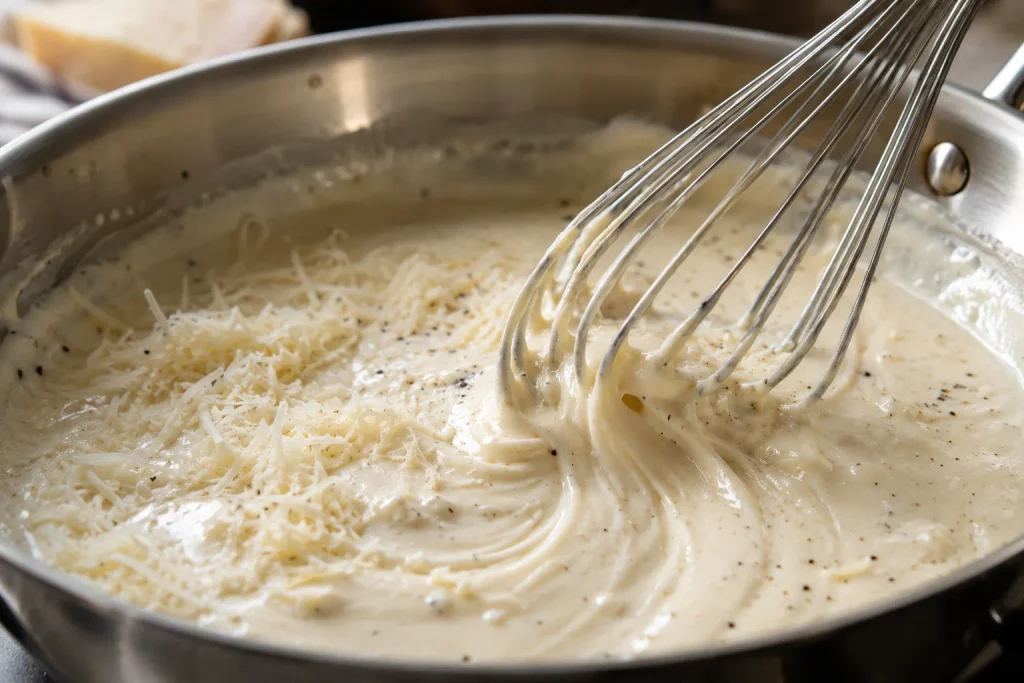
This step decides whether the sauce turns silky or grainy. Take the skillet fully off the burner, let the bubbling stop for thirty seconds, then whisk in half the parmesan. Once it disappears, whisk in the rest; adding it all at once, or over live heat, separates the fat from the protein.
Chef’s Note: A thin sauce firms up within thirty seconds off heat. Don’t rush in more cheese.
Step 7. Toss and finish
Back over low heat, add the drained pasta and toss with tongs until coated. Loosen with reserved pasta water, a tablespoon at a time, until it coats a spoon.
Step 8. Slice the chicken and serve
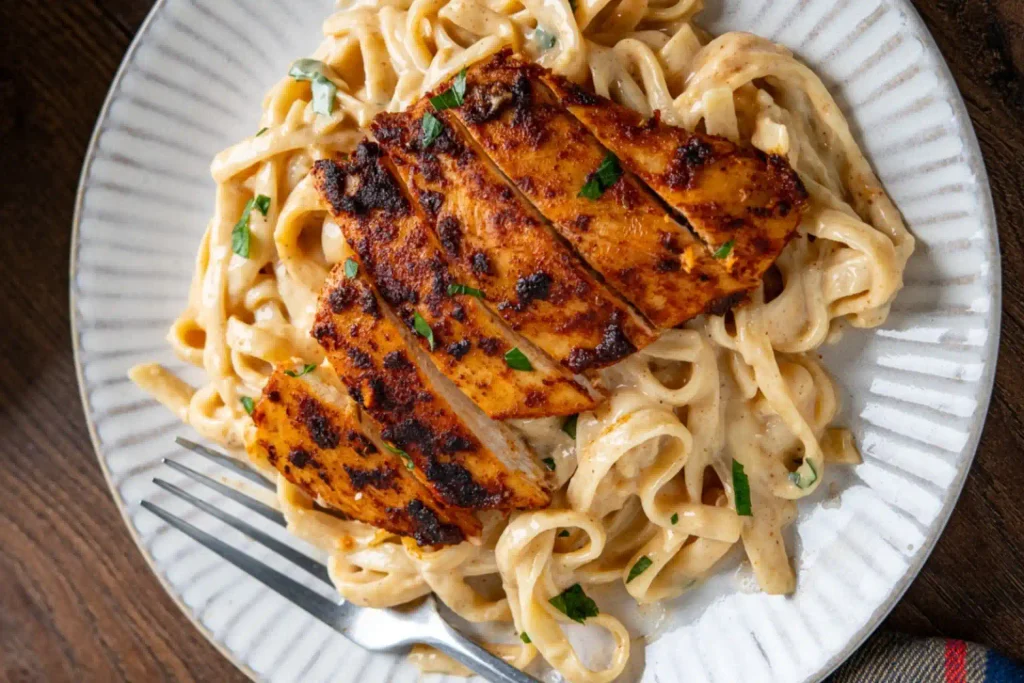
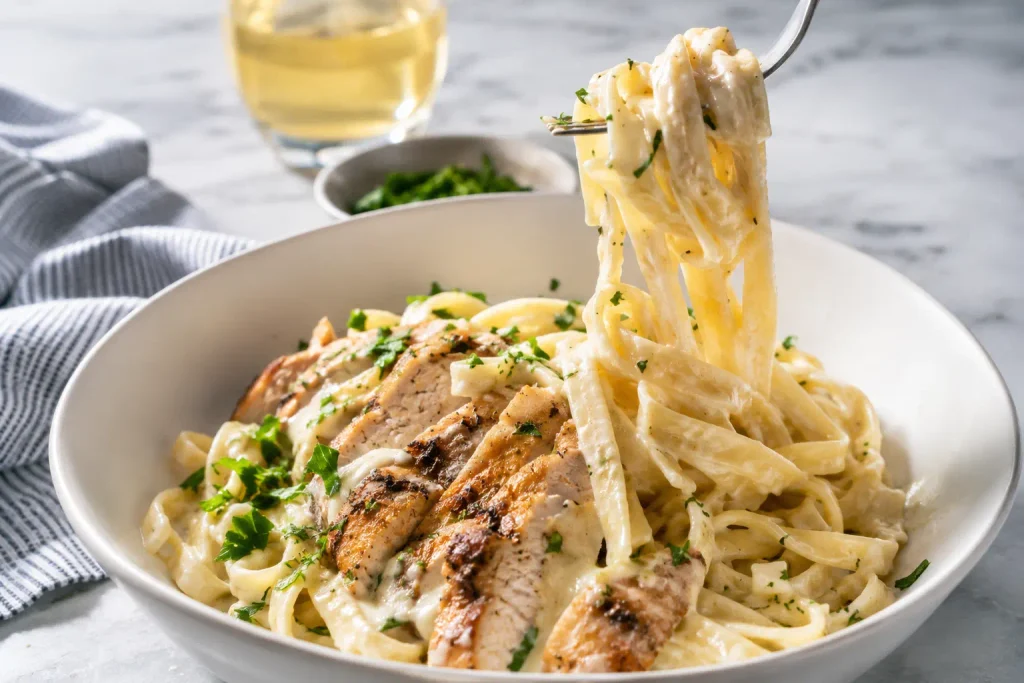
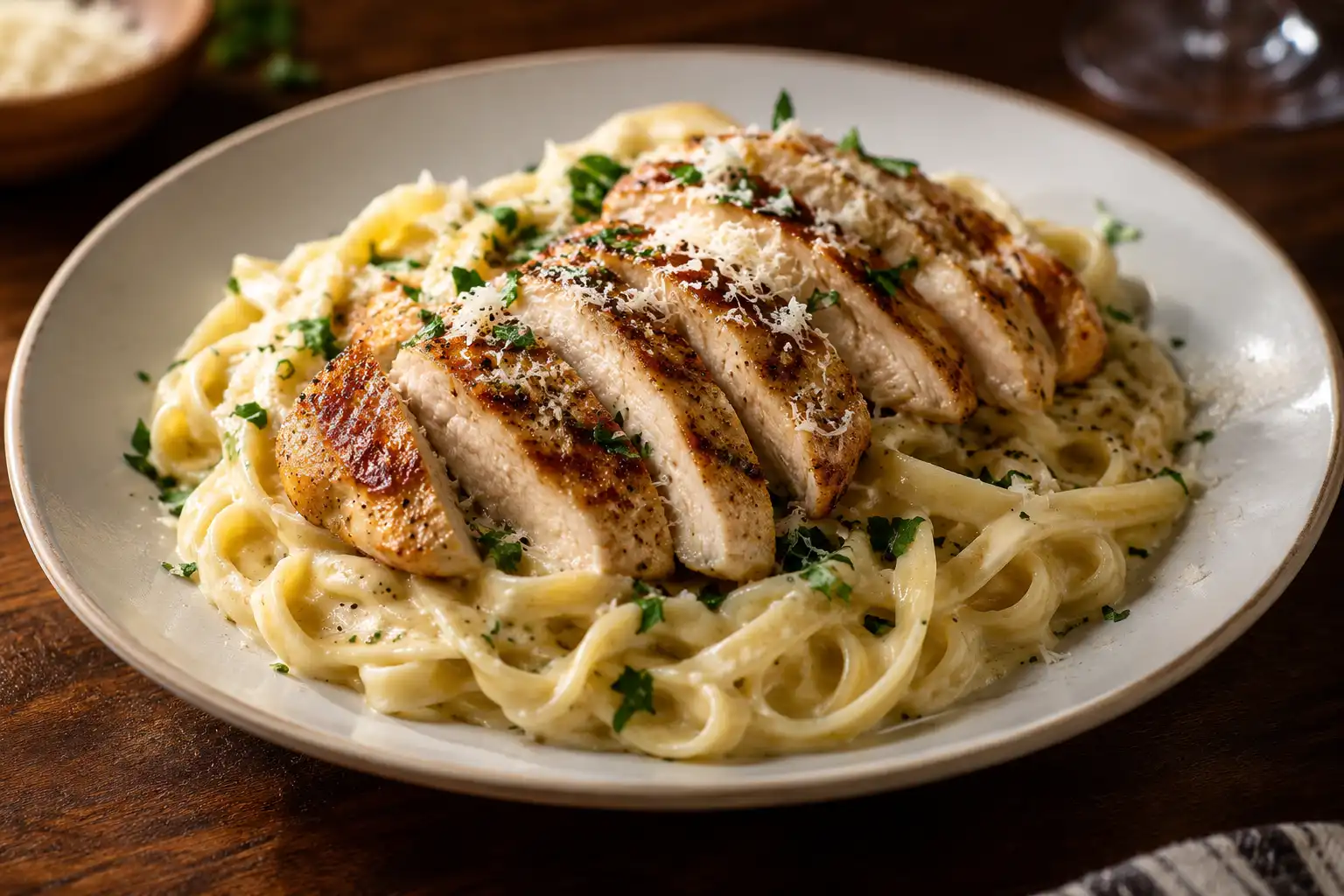
Rest the chicken five minutes before slicing, so the juice settles into the meat, not the board. Slice against the grain, fan it over the pasta, and finish with parsley and a last pass of the Microplane.
Expert Tips and Tricks
Grate the cheese fresh, every time. Pre-shredded parmesan carries starch to stop clumping, and that coating stops smooth melting.
Make the sauce a day ahead for guests, then reheat gently with a splash of cream before tossing with fresh pasta.
Don’t walk away from the garlic. Thirty seconds is the window between fragrant and burnt, and scorched garlic can’t be fixed.
Slice the cutlets to an even thickness. A cutlet thick on one end cooks unevenly no matter how closely you watch the clock.
Get the pasta water boiling before you season the chicken. It takes longer to boil than the chicken takes to sear.
Judge the sauce’s thickness early, not late; it keeps firming up after it leaves the heat. Cream sauces thicken more from cooling than reduction.
Reheat chicken alfredo leftovers low and slow, with liquid. A microwave on high pushes the fat and protein apart the same way a too hot pan does.
Common Chicken Alfredo Mistakes and How to Fix Them
| Problem | Cause | Solution |
| The sauce turns grainy or separates into little curds | The parmesan went in over direct heat, or all at once instead of two additions | Pull the pan off the heat, wait thirty seconds, then whisk in cold cream and the cheese |
| Sauce is too thin to coat the noodles | Not enough reduction time, or too much reserved pasta water | Simmer two to three more minutes over low heat, and hold off on more water |
| Chicken is dry outside and underdone near the center | Uneven cutlet thickness, or the pan wasn’t hot enough | Slice cutlets to a consistent thickness, and finish undercooked pieces in sauce |
| Sauce tastes flat despite the cream and cheese | Under salted pasta water | Salt the water like the sea, and salt the sauce before the cheese goes in |
| Reheated leftovers look broken and oily | Fast, high heat, usually a microwave on full power | Reheat over low heat with a splash of milk, stirring until smooth |
A chicken alfredo sauce break almost always starts the same way: cheese meets a pan that’s still bubbling, and within about ten seconds the sauce turns oily with little grains through it. It looks ruined, but it isn’t. Pull the pan off the burner, let it sit thirty seconds, then whisk in cold cream a tablespoon at a time until the fat pulls back in.
How to Store Chicken Alfredo
This isn’t a dish to leave on the counter. Cream sauce and cooked chicken sit inside the danger zone within two hours, so the fridge is the only option.
Refrigerator
Cooked chicken alfredo keeps three to four days in an airtight container. The sauce thickens overnight as the fat solidifies, which is normal.
Freezer
Cream sauces don’t freeze cleanly on their own; the fat and dairy solids separate as they thaw. Freeze the sauce separately from the chicken and pasta for better texture. It holds about two months.
Reheating
Low heat on the stove, not the microwave, keeps this from turning oily on day two. A splash of milk loosens it back to sauce.
Make Ahead
The sauce holds up better made a few hours ahead than the assembled dish. Cook it, cool it, refrigerate separately, then reheat before serving.
If sauce separates slightly in the fridge overnight, a slow reheat with an extra splash of cream almost always brings it back. Sauce broken by a hot microwave usually doesn’t recover as cleanly.
Chicken Alfredo Variations and Substitutions
Spicy: Add a quarter teaspoon of red pepper flakes with the garlic, or hot sauce at the table. Pull a kid’s portion first.
Mild or kid friendly: Skip the nutmeg and cut the garlic to two cloves. The sauce turns milder, though it loses depth.
Vegetarian: Swap the chicken for sauteed mushrooms or roasted broccoli, and pair it with white beans for protein.
Gluten free: Use gluten free fettuccine and check the parmesan’s label for wheat based anti-caking agents. These noodles release less starch, so keep extra water handy.
Lighter version: Swap half the cream for whole milk. It won’t reduce as thick and likely needs a cornstarch slurry, but it cuts real fat.
Extra vegetable: Wilt spinach into the sauce after the cream goes in. It adds color, though the water it releases can thin the sauce.
Serving Suggestions
Garlic bread on the side soaks up the sauce pooling at the bottom of the bowl, which a fork alone never quite catches.
A sharp, acidic side salad on lemon vinaigrette cuts through the richness instead of adding more of it.
Steamed or roasted broccoli brings a texture the pasta lacks, and its slight bitterness balances the fat.
For a full chicken alfredo meal, pair it with a light soup starter rather than another rich dish; two heavy courses back to back mute the sauce instead of complementing it.
Frequently Asked Questions
Why does my chicken alfredo sauce always turn out grainy?
Grainy sauce almost always means the cheese met heat that was still too aggressive, either a pan still on the burner or cream that hadn’t cooled from a hard simmer. Parmesan proteins tighten up fast above a certain temperature and squeeze the fat out into curds. Pull the pan off the heat before the cheese goes in, and add it in two batches.
Can I make chicken alfredo ahead of time?
Chicken alfredo’s sauce holds up better on its own than the assembled dish does for a day or two. Cook it and refrigerate separately from the pasta and chicken, then reheat gently with a splash of cream before tossing everything together. Assembled and stored as one dish, the pasta keeps soaking up sauce overnight and turns noticeably drier and stiffer by the next day.
Can I use milk instead of heavy cream?
Milk lacks the fat content that keeps chicken alfredo’s sauce from breaking, so a straight swap usually ends in a thin, separated mess rather than something silky. Half and half gets closer, though it won’t reduce to quite the same body. If milk is what’s on hand, a teaspoon of cornstarch whisked with cold water helps it cling to the noodles.
How do I know when the chicken is fully cooked?
An instant read thermometer reading 165°F (74°C) at the thickest part is the only reliable check, since color alone can look done on the outside while the center stays underdone. The juices should run clear rather than pink when the cutlet is pressed, and the center should feel firm rather than springy under a finger, not soft or squishy in the middle.
What pasta works best besides fettuccine?
Fettuccine is traditional because its flat, wide shape holds more sauce per bite than a round noodle does, but penne, rigatoni, or a wide egg noodle work fine. Anything with ridges or a hollow center catches sauce in places fettuccine can’t, which is a fair trade rather than a downgrade. Thin noodles like angel hair get lost under a chicken alfredo sauce this rich.
Conclusion
Thirty seconds is a strange amount of time to hinge an entire dinner on, but that’s genuinely the gap between a sauce that holds together and one that doesn’t. Once the two addition, off heat habit sticks, it carries into other cream sauces too.
What this method doesn’t fix is a sauce that’s already cooled and separated on the counter for an hour; that one needs rebuilding from scratch, not a rescue in place. Everything short of that comes back with patience and low heat.
Chicken alfredo rewards attention more than skill, and timing matters more here than any cut of chicken. Pin this one so the two addition trick is easy to find next time cream and cheese meet a hot pan.
Chicken Alfredo
Ingredients
Method
- Season and slice the chicken into even cutlets.
- Sear the cutlets 4 minutes per side in olive oil until 165°F (74°C).
- Cook fettuccine 1 minute under package time; reserve 1 cup pasta water.
- Melt butter in the same pan, add garlic, cook 30 seconds.
- Pour in cream, simmer 3 minutes until it coats a spoon.
- Off the heat, whisk in parmesan in two additions.
- Toss in the pasta over low heat, loosening with reserved water as needed.
- Rest the chicken 5 minutes, slice, and serve over the pasta.

One Comment
Comments are closed.