Butter Chicken Recipe: Creamy 60 Minute Restaurant Style Dinner
Most recipes have you simmer marinated chicken straight in the tomato sauce until it’s cooked through. That’s the shortcut, and it’s why homemade butter chicken usually tastes flat next to the version from a restaurant with a tandoor running in the back. The chicken goes in raw, steams gently for twenty minutes, and comes out fine. Just never charred, never smoky.
This one fixes that with a single extra step: the marinated chicken spends six to eight minutes under the broiler before it ever touches the sauce. You lose a little time and gain the char a tandoor gives for free, plus a sauce reduced until it holds a spoon coating instead of running off it. The first time I built it this way, the chicken went under a broiler that hadn’t fully preheated, and it came out pale and steamed instead of charred. Four extra minutes of real heat fixed it, and that wait is just part of the process now.
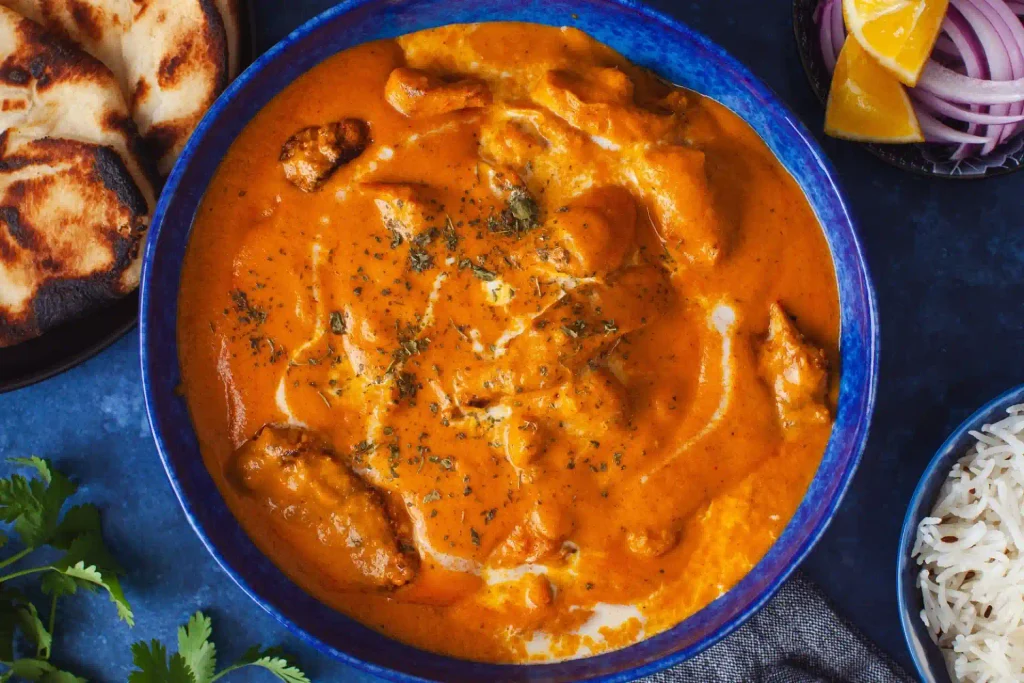
Why You’ll Love This Butter Chicken
- Real char, no tandoor. Six to eight broiler minutes give this butter chicken blistered edges a gentle simmer alone can’t produce.
- The sauce holds for four days in the fridge, and the flavor rounds out by day two as the spices settle into the cream.
- One pan for the sauce. Onion, tomato base, and the finished simmer all happen in the same skillet, less to wash by the time dinner’s ready.
- Freezes cleanly for up to three months, sauce and chicken together, a real make ahead dinner instead of a same day project.
- Heat adjusts per bowl. Pull a cup of sauce before the chili goes in heavier, and a mild portion sits right next to a spicier one without a second batch.
Quick Butter Chicken Snapshot
- Prep: 25 minutes active, plus 30 minutes to overnight marinating
- Cook: 35 minutes
- Servings: 4, Difficulty: Medium
- Calories: about 480 per serving
- Ingredient that decides the outcome: Kashmiri chili powder, for color and a gentle heat
- Best for: a weekend dinner, or a Sunday batch that carries into two weeknights
Nutrition Information
| Nutrient | Amount Per Serving |
| Serving Size | 1 cup (240 g) |
| Servings Per Recipe | 4 |
| Calories | 480 |
| Protein | 32 g |
| Carbohydrates | 14 g |
| Fat | 34 g |
| Fiber | 2 g |
| Sugar | 7 g |
| Sodium | 640 mg |
Most of the protein comes from the chicken thighs, and the fat splits between the butter in the sauce and the cream and cashews stirred in at the end. Sodium climbs from the marinade salt plus what’s already in canned tomato puree, so taste this butter chicken before adding more at the table. Values are estimates that vary with brands, measuring, and substitutions.
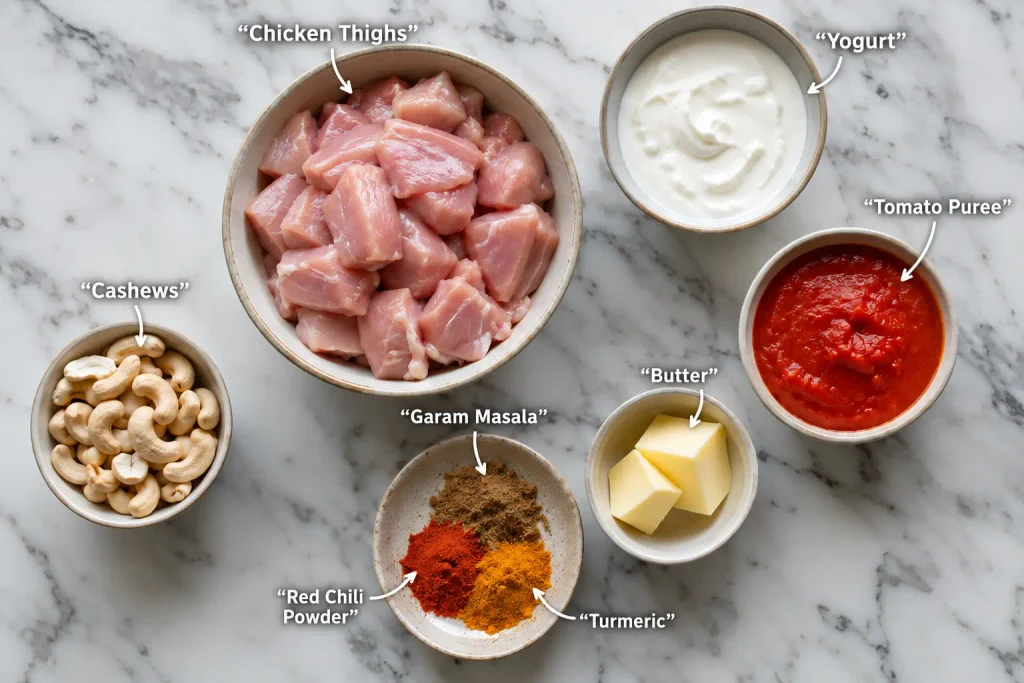
Ingredients
For the Chicken and Marinade
- 2 lbs (900 g) boneless, skinless chicken thighs, cut into 1.5 inch pieces. Thighs stay juicy through two rounds of heat, the broiler and then the simmer.
- 1/2 cup (120 g) plain whole milk yogurt
- 2 tablespoons (30 ml) fresh lemon juice
- 1 tablespoon (15 g) ginger paste
- 1 tablespoon (15 g) garlic paste
- 1 teaspoon ground turmeric
- 1 teaspoon Kashmiri chili powder, milder and redder than standard chili powder
- 1 teaspoon garam masala
- 1 teaspoon salt
For the Sauce
- 4 tablespoons (57 g) butter, divided
- 1 tablespoon (15 ml) neutral oil, keeps the butter from browning too fast
- 1 medium yellow onion, finely diced
- 1 tablespoon ginger paste
- 1 tablespoon garlic paste
- 1 can (28 oz / 794 g) tomato puree
- 1/4 cup (35 g) raw cashews, soaked 15 minutes and blended smooth, for body
- 1 teaspoon Kashmiri chili powder
- 1 teaspoon ground cumin
- 1 teaspoon ground coriander
- 1 teaspoon sugar, to balance the acidity
- 1/2 cup (120 ml) heavy cream
- 1 tablespoon (4 g) kasoori methi (dried fenugreek leaves), crushed between your palms
- Salt, to taste, plus chopped cilantro for serving
No cashews for this butter chicken, or a nut allergy at the table? Soaked sunflower seeds, blended the same way, get you most of the way there, in a slightly thinner sauce.
Allergen and Dietary Information
As written, this butter chicken carries milk from the yogurt, butter, and cream, and tree nuts from the cashews blended into the sauce. Check store bought garam masala or ginger garlic paste too; some brands add fillers you wouldn’t expect.
Dietary status as written: halal, gluten free, egg free. Not vegetarian, not dairy free, not nut free.
For the nut allergy, swap the cashews for soaked sunflower seeds; the sauce loses a little sweetness and runs slightly thinner. Dairy is harder to work around, since the yogurt, butter, and cream carry most of the flavor, though coconut milk works in place of the cream.
Equipment Needed
- Rimmed baking sheet or broiler pan. Charring works because juices drain away instead of pooling and steaming the meat.
- Broiler, or a hot cast iron grill pan if your oven’s broiler runs weak.
- Large heavy bottomed skillet, at least 12 inches. Enough surface lets the onion actually brown instead of steaming in its own moisture.
- Blender or immersion blender, to take the tomato base from chunky to silky before the cream goes in.
- Fine mesh sieve. Optional, but it strains out skin and spice grit for a completely smooth sauce.
- Instant read thermometer, the only reliable way to confirm this butter chicken hits 165°F (74°C) once the chicken’s back in the pan.
Prep Work Before You Turn On the Stove
Soak the cashews in hot water while you handle everything else; they need 15 minutes to soften enough to blend smooth. Dice the onion fine, since a rough chop won’t fully break down while the sauce reduces. Measure the cumin, coriander, chili powder, and garam masala into one bowl before anything hits heat, since there’s no time to read labels once the pan’s going.
Position an oven rack 6 inches from the broiler element and line a baking sheet with foil, shiny side up.
Step by Step Directions
Step 1. Marinate the chicken
Combine the yogurt, lemon juice, ginger paste, garlic paste, turmeric, chili powder, garam masala, and salt, then fold in the chicken until coated. Thirty minutes on the counter is the minimum for this butter chicken’s marinade to do its job; overnight in the fridge gets noticeably deeper flavor.
Step 2. Char it under the broiler
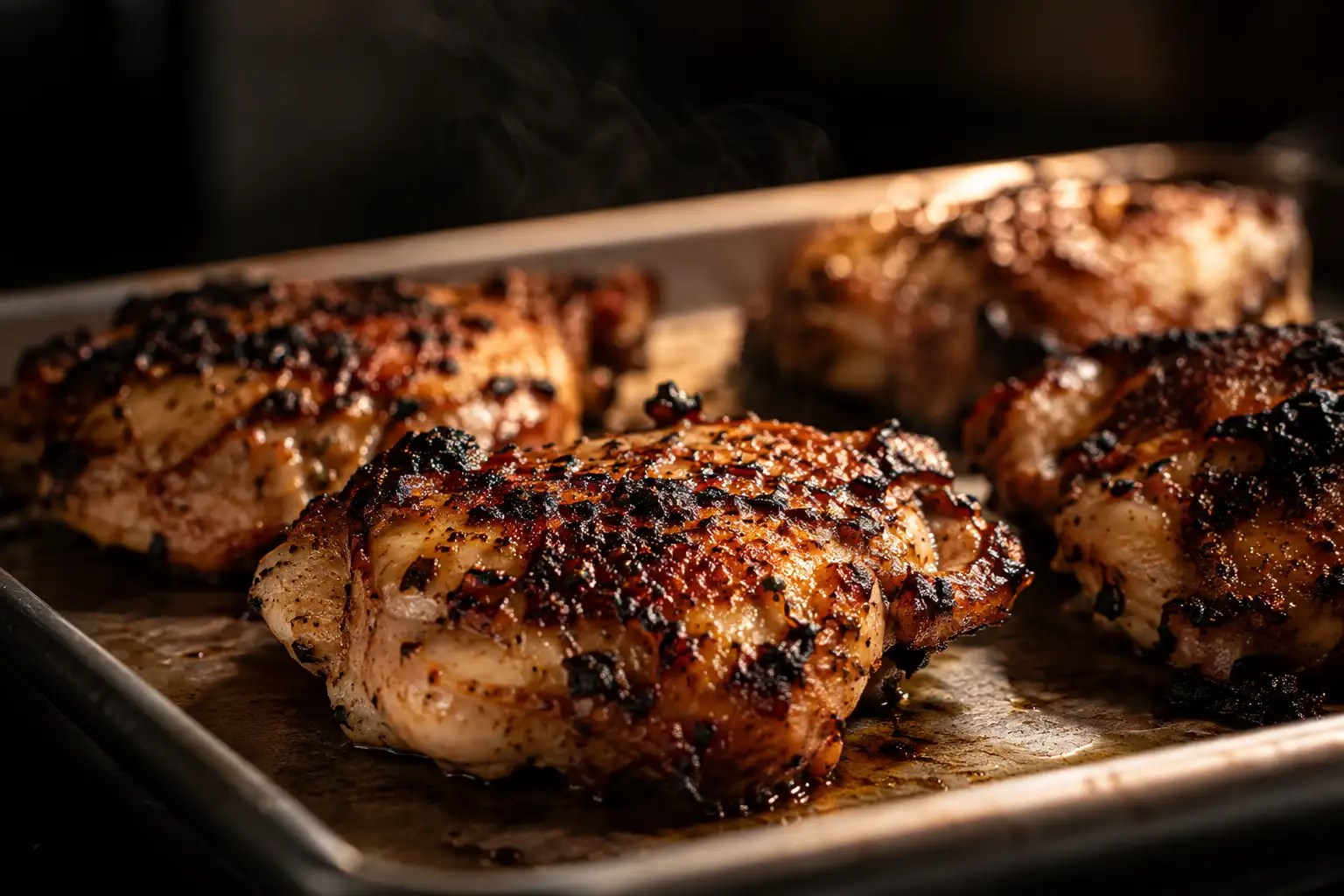
Spread the chicken in a single layer on the lined sheet, leaving space so the pieces char instead of steam. Broil 6 to 8 minutes, watching after minute 5. Edges should go blistered and dark at the corners while centers stay slightly underdone; that’s intentional, it finishes in the sauce.
Chef’s Note: Broiler running weak and the chicken’s still pale after 8 minutes? Move the rack 2 inches closer instead of adding time. More heat, not more time, is what chars it.
Step 3. Bloom the aromatics
Melt 2 tablespoons butter with the oil over medium heat. Cook the onion, stirring occasionally, 8 to 10 minutes until deep golden, not just translucent. Stir in ginger and garlic paste a minute, until the raw smell fades, then add cumin, coriander, and chili powder and stir 30 seconds until toasted, not burnt.
Step 4. Cook down the tomato base
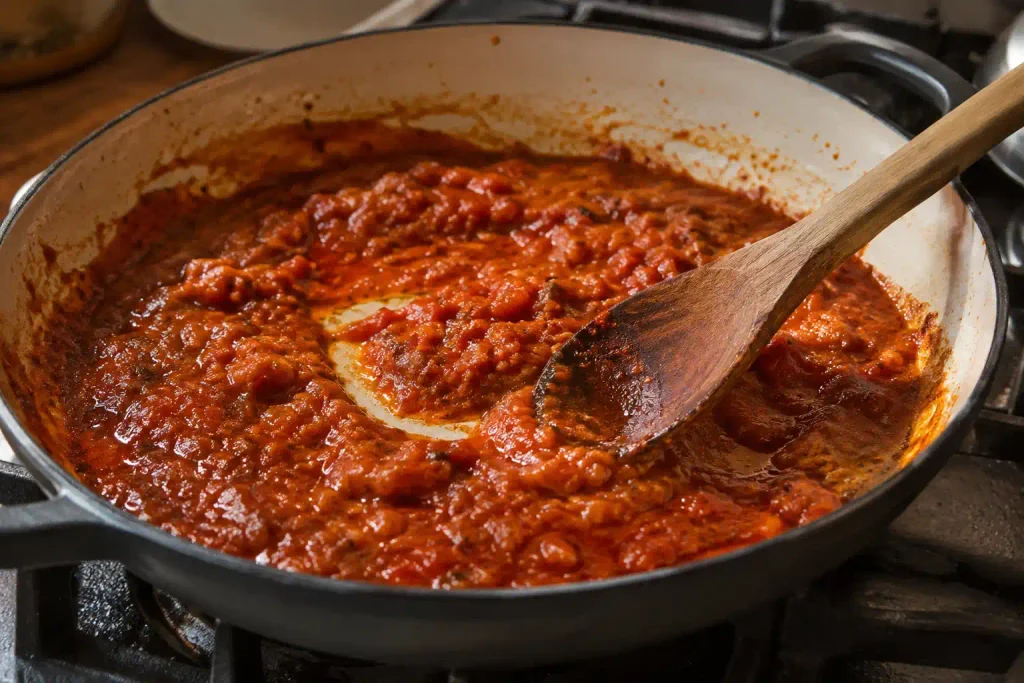
Pour in the tomato puree, bring to a low simmer, and reduce 18 to 20 minutes, stirring every few minutes so the bottom doesn’t catch. It’s ready when the color deepens from bright red to brick, and small pools of butter separate at the edges.
Chef’s Note: This is the step most home versions rush, and it’s the difference between raw canned tomato flavor and something cooked down and rounded. Eighteen minutes is the floor, not a suggestion.
Step 5. Blend the sauce smooth
Stir the blended cashew paste into the pan, cool 5 minutes off heat, then blend smooth with an immersion blender in the pan, or in batches in a blender. Push it through a fine mesh sieve for a completely silky finish.
Step 6. Simmer the chicken back in
Return the sauce to low heat and add the charred chicken with any juices left on the sheet. Simmer gently 8 to 10 minutes, until an instant read thermometer reads 165°F (74°C) at the thickest piece and the sauce coats the back of a spoon.
If the sauce looks grainy or broken at any point, it’s not ruined. Pull the pan off the heat, whisk in a tablespoon of cold cream, and keep whisking from the center outward until it comes back together before it goes near heat again.
Step 7. Mount with butter and cream
Take the pan off the heat entirely. Stir in the remaining butter, the cream, and the sugar until glossy and a shade lighter. Crush the kasoori methi between your palms over the pan, stir it in, then taste for salt.
Kasoori methi loses its aroma if it boils. Crush it between your palms to wake up the oils, then stir it in only after the pan is off the heat, never before.
Chef’s Note: Adding cream and butter off heat keeps this glossy instead of separated. If it looks thin right after mounting, it tightens as it sits, so resist the burner.
Expert Tips and Tricks
Don’t skip the char. Poaching the chicken directly in the sauce is the single biggest reason homemade butter chicken tastes one note, and the broiler step only adds eight minutes.
Make the sauce up to two days ahead. Keep it apart from the chicken, then reheat gently and simmer the chicken in on serving day.
Cool it fast for storage. Split leftovers into two shallow containers, so this butter chicken drops below 40°F within two hours rather than cooling slowly in a tall pot.
Blend before the cream goes in, never after. A finished, cream based sauce turns foamy and thin if you blend it a second time.
Toast the cashews dry for two minutes before soaking. It adds a rounder, nutty note that raw soaked cashews alone don’t give.
Canned tomato puree instead of blending fresh tomatoes saves about 15 minutes, and it tastes just as good given the full reduction time.
Common Mistakes and Troubleshooting
| Problem | Cause | Solution |
| Sauce tastes sharp or sour after cooking | Tomato puree didn’t reduce long enough, or the tomatoes ran unusually acidic | Simmer 5 to 10 minutes longer until oil beads at the edges, then add a pinch of sugar before tasting again |
| Sauce turns grainy or separates into flecks | Cream or yogurt hit a hard boiling pan | Pull the pan off heat, whisk in cold cream a tablespoon at a time, and skip the hard boil after |
| Chicken tastes rubbery instead of restaurant style | It went into the sauce raw and simmered the whole time rather than being charred first | Broil the chicken until edges blister, then finish gently in the simmer |
| Sauce won’t coat a spoon | The tomato base was blended before it actually reduced down | Reduce until it darkens and pulls into a thick trail before blending smooth |
| Sauce tastes flat despite plenty of spice | Ground spices went in but were never bloomed in fat | Toast the cumin, coriander, and chili powder in butter 30 seconds before any liquid goes in |
This is the failure that panics people most with butter chicken, and it’s almost always fixable. It happens the moment cold cream meets a pan still at a rolling simmer: the fat and proteins seize up and squeeze apart from the liquid, leaving pale flecks in what should be smooth. Heat off, a splash of cold cream whisked in from the center outward, thirty seconds of patience, and it pulls back together almost every time.
Storage Instructions
This butter chicken contains dairy and cooked chicken, so it isn’t safe to leave out past the standard two hour window most kitchens already follow.
Refrigerator
Keep this butter chicken sealed in the fridge up to 4 days. Flavor rounds out by day two as spices settle into the cream, though the chicken firms up slightly each day.
Freezer
Freezes well up to 3 months in a freezer safe container, with about an inch of headspace for expansion. Thaw overnight in the fridge, not at room temperature.
Reheating
Reheat on the stovetop over low heat, stirring often, until it returns to a simmer. Cream sauces blasted on high heat or full microwave power tend to break.
Make Ahead
Build the sauce through Step 5 up to two days ahead and refrigerate it apart from the chicken. On serving day, reheat the sauce, char the chicken fresh, and pick up at Step 6.
Variations and Substitutions
Spicier version: double the Kashmiri chili powder and add one green chili, slit lengthwise, while the sauce simmers. It costs the kid friendly version, so pull a mild portion first.
Mild version: drop the chili powder for sweet paprika, just for color. You lose the warmth but keep the tomato’s natural sweetness.
Vegetarian version: swap the chicken for cubed, pressed paneer or extra firm tofu, added at Step 6 just long enough to warm through, since either turns rubbery under longer heat. This skips the broiler and the char with it, a plainer dish than the butter chicken this recipe is built around.
Gluten free: naturally gluten free as written; check your ginger garlic paste, since a few brands use a wheat based stabilizer.
No heavy cream? Coconut milk thickens the sauce well, though it pushes the flavor toward coconut curry rather than the tomato forward original. Out of canned puree, blend two pounds ripe tomatoes and simmer 10 minutes longer to cook off the extra water.
Serving Suggestions
Warm garlic naan is the natural partner for this butter chicken, thick enough to scoop the sauce rather than needing a spoon, and the char on the bread echoes the char on the chicken.
Basmati rice works just as well; long dry grains stay separate instead of turning to mush the way a shorter grain would.
A simple cucumber and red onion salad with a splash of vinegar cuts through the cream’s richness, more than it would with a thinner curry.
A cold mango lassi does the same job in drink form, worth having if you went heavy on the chili.
Frequently Asked Questions
Can I make butter chicken ahead of time?
The sauce keeps better made ahead than the finished dish does. Build it through the blending step up to two days before serving, then refrigerate it on its own. Char the chicken and simmer it in fresh on the day you’re eating, since chicken that sits in sauce for two days softens noticeably even though the flavor holds up fine on reheat.
Why did my sauce turn out sour instead of rich?
An undercooked tomato base is almost always the cause behind a sour result. Canned tomato puree needs a genuine 18 to 20 minute simmer to lose its raw, tinny edge, and rushing that step is the most common reason a sauce tastes sharp instead of rounded. A pinch of sugar helps at the end, but treat it as a patch rather than a real fix.
Can I make butter chicken without cream?
Full fat coconut milk swaps in at the same amount and thickens the sauce fine, though it shifts the flavor toward coconut curry territory rather than the tomato forward original. For something closer to the classic, extra blended cashews plus a splash of whole milk gets most of the richness back without any coconut flavor showing up in the final bowl at all.
Do I really need to broil the chicken before it goes in the sauce?
Skipping it is fine if you’re short on time; the dish stays fully safe to eat and still tastes like butter chicken in the broad sense. What you lose is the smoky, blistered edge that’s the entire point of this version, since chicken simmered directly in liquid just steams through and never develops any real color along the way, no matter how long it simmers.
Why doesn’t my homemade version taste like the restaurant one?
Restaurant butter chicken usually starts as chicken cooked in a tandoor, which hits temperatures a home oven can’t reach and gives the meat genuine smoke character throughout. Broiling six to eight minutes before the chicken goes into the sauce is the closest a home kitchen gets to that same effect, and for most people it closes nearly all of the gap between the two versions.
A charred edge is what separates this from a version that tastes like tomato soup with chicken floating in it. Once you’ve made it with that extra broiler step, going back to simmering raw chicken straight in the sauce feels like skipping the one part that mattered. The technique costs eight extra minutes and one more pan to wash, but nothing else about a weeknight version of butter chicken changes because of it. Leftovers hold up for a reheat too, since the char stays put even after a day in the fridge under the sauce. Save this one before the tab closes, you’ll want the ingredient list again the next time takeout sounds tempting.
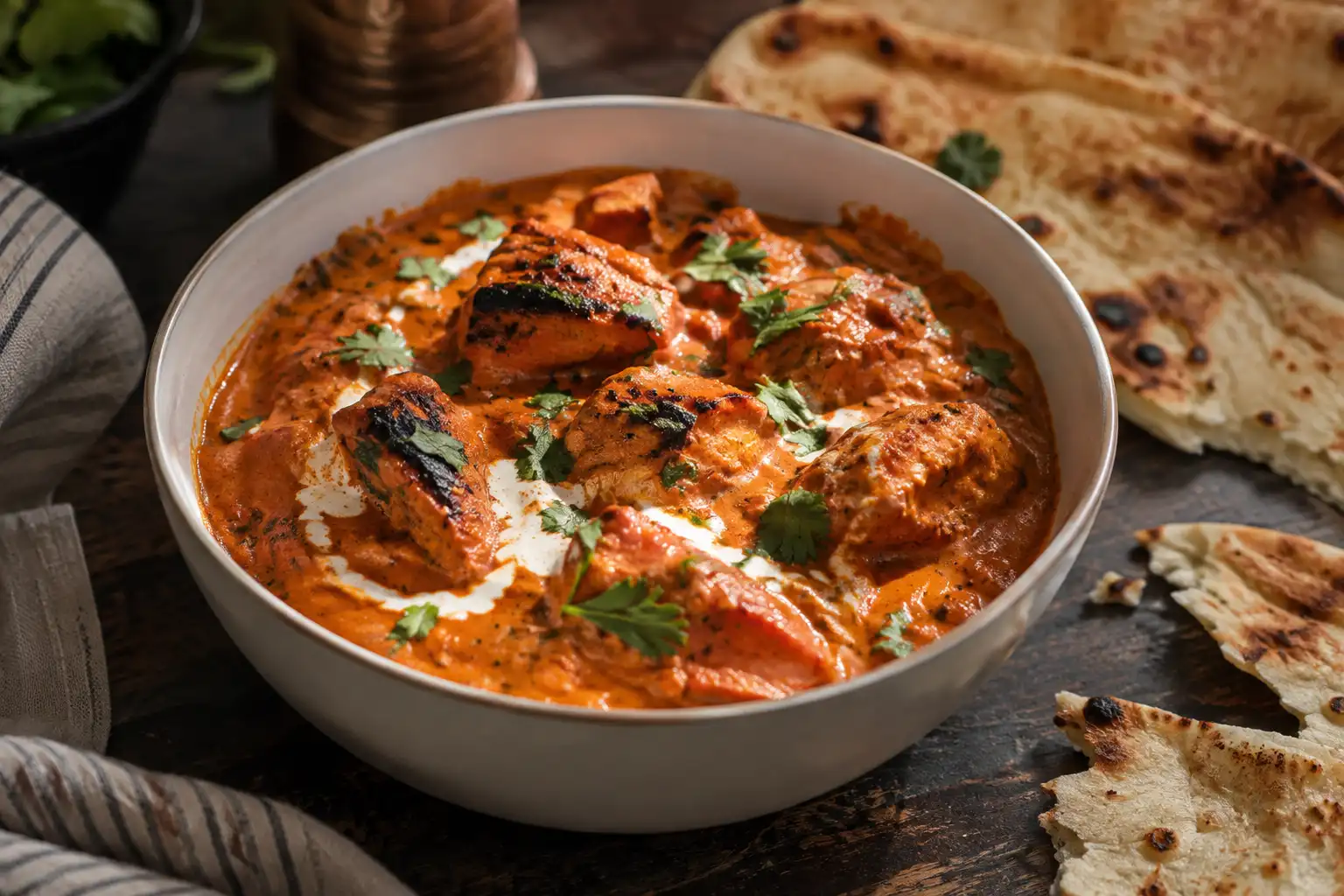
Butter Chicken
Ingredients
Method
- Mix the marinade ingredients and coat the chicken, then rest 30 minutes to overnight.
- Broil the chicken on a lined sheet 6 to 8 minutes until charred at the edges.
- Cook the onion in butter and oil until deep golden, then add ginger, garlic, and spices.
- Stir in the tomato puree and simmer 18 to 20 minutes until darkened and oil beads at the edges.
- Cool slightly, blend the sauce smooth, and strain for a silky texture if wanted.
- Return the sauce to low heat, add the charred chicken, and simmer to 165°F (74°C).
- Off heat, stir in the remaining butter, cream, sugar, and crushed kasoori methi.

2 Comments
Comments are closed.