Oatmeal Raisin Cookies Recipe: Golden, Chewy, and Ready in 30 Minutes
The dough tells you everything before the oven does. Rush it onto the tray straight from the bowl and the oats hit warm butter as loose batter, not a firm dough, and you end up with the thin, greasy, overly crisp version of oatmeal raisin cookies that nobody asks for twice.
Give the dough fifteen minutes on the counter first. That’s the whole difference. The oats and the flour pull moisture out of the mixture during that rest, so the dough firms up enough to hold the scoop’s shape, and the cookie domes slightly in the oven instead of spreading into a puddle.
This batch runs on old fashioned rolled oats, not the instant kind, plus enough brown sugar to keep the centers soft three days later. The raisins get a short soak before they go in, so they finish plump instead of turning into hard little pebbles. Nothing here needs a stand mixer or an overnight chill, just the one short rest that changes how the cookie bakes.
Why You’ll Love This Oatmeal Raisin Cookies Recipe
- Stays chewy for days. Brown sugar and the raisin soak both add moisture the crumb holds onto.
- One bowl, no mixer required. A wooden spoon creams the butter and sugar fine in a couple minutes.
- Freezes as raw dough. Scoop, freeze the balls solid, then bag them and bake straight from frozen.
- Kid lunchbox ready. No nuts in the base recipe and nothing that melts in a warm backpack.
- Plump raisins, not pebbles. A five minute soak solves the one thing that ruins most oatmeal raisin cookies: dried out fruit baked into pebbles.
- Twenty four cookies from pantry basics. Butter, oats, flour, and raisins are already in most kitchens.
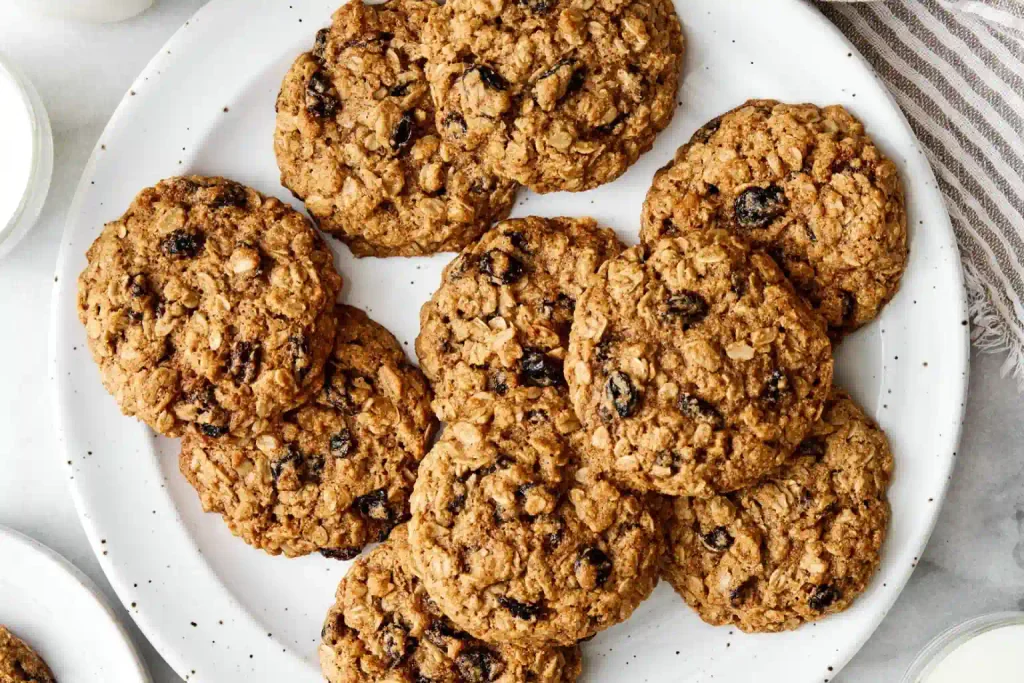
Rushed dough is the number one reason oatmeal raisin cookies turn thin and greasy instead of chewy. Give it fifteen minutes before it ever touches the tray.
Oatmeal Raisin Cookies at a Glance
- Prep time: 15 minutes
- Cook time: 12 minutes per batch
- Total time: about 30 minutes for the first tray
- Servings: 24 cookies
- Difficulty: Easy
- Calories: about 145 per cookie
- The ingredient that decides the outcome: old fashioned rolled oats, since instant oats turn the cookie cakey instead of chewy
- Best use: lunchboxes, cookie trays, and freezer stashes for the next oatmeal raisin cookies craving
Nutrition Information
| Nutrient | Amount Per Serving |
| Serving Size | 1 cookie (35 g) |
| Servings Per Recipe | 24 |
| Calories | 145 |
| Protein | 2 g |
| Carbohydrates | 22 g |
| Fat | 6 g |
| Fiber | 1 g |
| Sugar | 13 g |
| Sodium | 95 mg |
Most of the protein in these oatmeal raisin cookies comes from the eggs and oats, while the butter carries almost all of the fat. The sugar total reflects both sugars in the dough plus the natural sugar in the raisins, and the sodium comes mostly from the baking soda and salt.
These values are estimates and will shift with the exact brands, measuring habits, and any substitutions you make.
Oatmeal Raisin Cookies Ingredients
Dry Ingredients
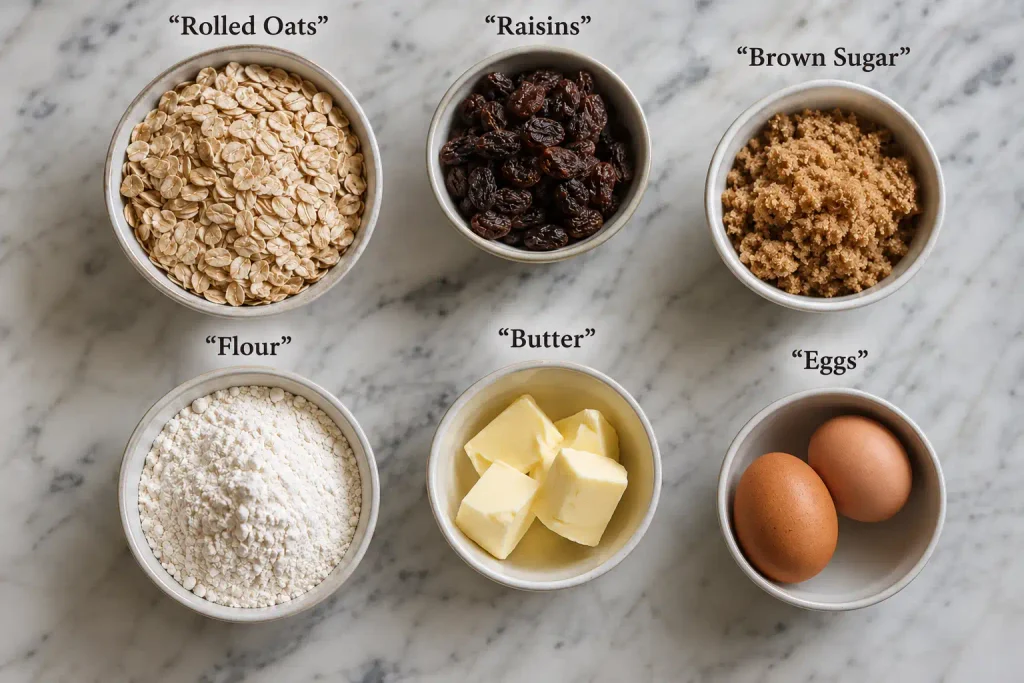
- 1 1/2 cups all purpose flour (190 g), the structure holding everything together
- 1 teaspoon baking soda, the riser behind the slight dome
- 1 teaspoon ground cinnamon
- 1/2 teaspoon salt, keeps the brown sugar from reading as one flat note
- 3 cups old fashioned rolled oats (270 g), not instant, which bakes closer to cake than cookie
Wet Ingredients
- 1 cup unsalted butter, softened (225 g)
- 1 cup packed brown sugar (200 g), responsible for most of the chewy center
- 1/2 cup granulated sugar (100 g)
- 2 large eggs, room temperature
- 1 teaspoon vanilla extract
Add In
- 1 1/2 cups raisins (225 g), soaked in warm water for five minutes and drained well before they go into the dough
Allergen and Dietary Information
This recipe contains wheat from the flour, egg from the two whole eggs, and dairy from the butter. Oats are naturally gluten free, but most rolled oats are milled alongside wheat, so anyone avoiding gluten strictly needs a bag labeled certified gluten free.
As written, these cookies are vegetarian, halal, nut free, soy free, and sesame free. They are not dairy free, egg free, or vegan.
Swap the butter for a plant based block and use a flax egg in place of the eggs, and the cookies still bake, though the edges brown less and the dough spreads more without the dairy fat.
Check packaged raisins for added sulfites, since some brands treat dried fruit with them.
Equipment Needed
None of the tools below are unusual, but a couple matter more than they look for oatmeal raisin cookies that hold their shape.
- Hand mixer or stand mixer. Creams the butter and sugar in about two minutes so the cookies rise instead of sitting flat.
- Two half sheet baking pans. Rotating between pans means raw dough never sits on a hot surface before it hits the oven.
- Parchment paper or a silicone mat. Bare metal browns the bottoms faster than the tops finish.
- A 1.5 tablespoon cookie scoop. Consistent size means consistent bake time.
- Wire cooling rack. Air underneath stops the bottom from steaming against a plate.
No cookie scoop on hand? Two spoons, one to scoop and one to push the dough off, get you close enough on size that the bake time barely changes.
Before You Start
Getting each part ready before the mixer starts keeps oatmeal raisin cookies from turning into a rushed, uneven batch.
Pull the butter and eggs out of the fridge about an hour ahead. Cold butter won’t cream properly, leaving dense flecks of unmixed fat in the dough.
Measure the oats by scooping the cup and leveling it with a knife rather than packing it down, since packed oats dry the dough out.
Soak the raisins in warm water for five minutes, then drain them well. Wet raisins add moisture you didn’t measure for.
Line two baking sheets with parchment and get the oven to 350°F (175°C) before you start mixing.
Step by Step Directions
Step 1. Cream the butter and sugars
Beat the softened butter with both sugars for about two minutes on medium speed. The mixture turns from a dense yellow lump to a lighter, fluffy tan, and that color shift is the real cue.
Step 2. Work in the eggs and vanilla
Add the eggs one at a time, letting each disappear before the next goes in, then mix in the vanilla. If the batter looks curdled, keep mixing until it comes back together.
Chef’s Note: Cold eggs are the usual reason the batter looks curdled. Warm them in hot tap water for a minute if you forgot to set them out.
Step 3. Combine the dry ingredients
In a second bowl, stir the flour, baking soda, cinnamon, and salt until no white streaks remain.
Step 4. Bring the dough together
Add the dry mixture to the butter mixture in two additions, mixing on low until the flour disappears. Overmixing builds gluten and turns the cookie tough.
Step 5. Fold in the oats and raisins
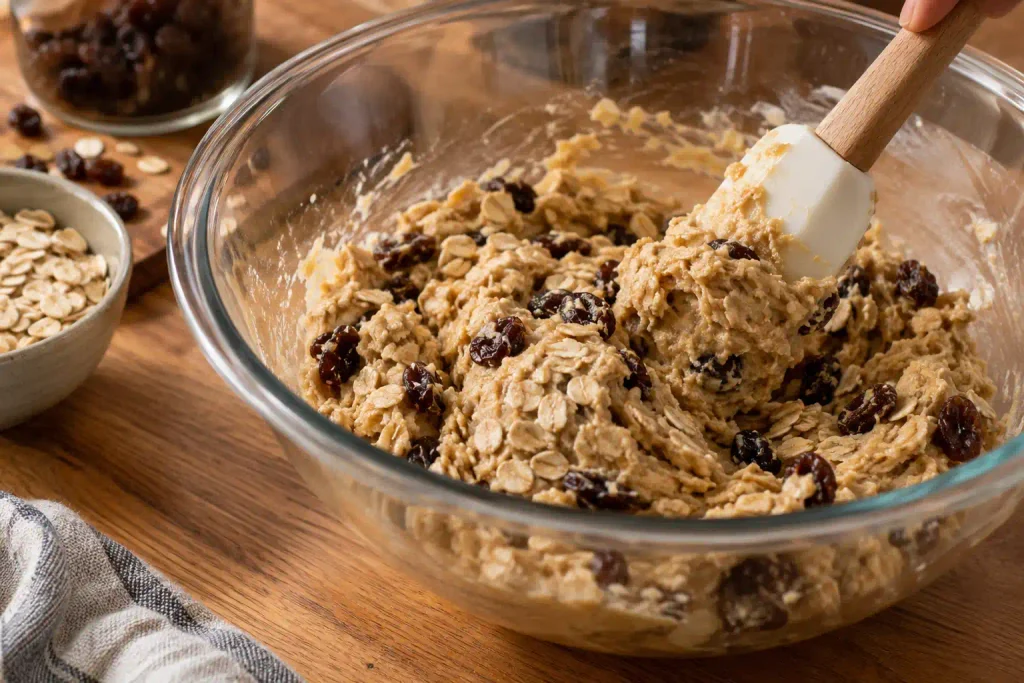
Switch to a spatula and fold in the oats, then the drained raisins. The dough turns heavy and shaggy here. A spoon standing upright in the bowl shouldn’t fall over.
Step 6. Let the dough rest
Cover the bowl and let it sit on the counter for fifteen minutes. This is the step most recipes skip, and it’s why so many oatmeal raisin cookies come out thin and greasy. The oats pull moisture from the dough during this rest, firming it enough to hold a scoop’s shape instead of melting flat.
Chef’s Note: Short on time? Ten minutes in the fridge does almost the same job, though the dough will be a touch firmer to scoop.
Step 7. Portion and space the dough
Scoop rounded portions of about 1.5 tablespoons onto the lined sheets, spaced two inches apart. They’ll spread to nearly double that width.
Step 8. Bake until the edges set
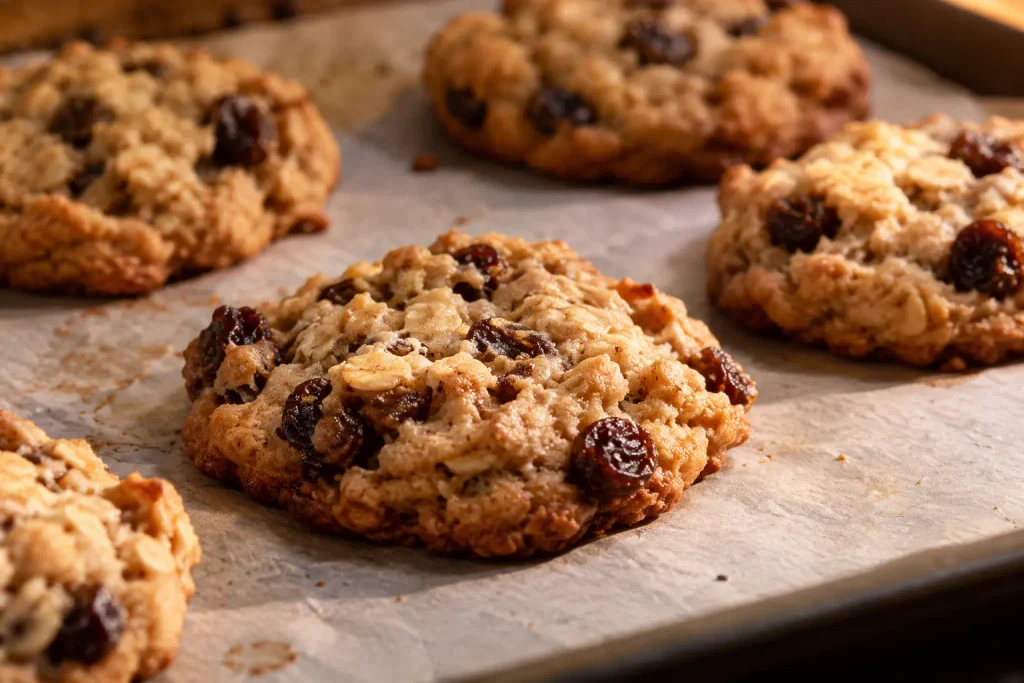
Bake at 350°F (175°C) for 11 to 13 minutes, rotating the pan halfway through. Pull the tray when the edges turn golden and just set but the centers still look pale and slightly underdone. A cookie that looks fully done in the oven is already overbaked by the time it cools on the counter.
Chef’s Note: Every oven runs a little different. Treat the first tray as a test batch, and if the bottoms darken before the tops set, drop the temperature by 15°F (about 8°C).
Step 9. Cool before you move them
Let the tray sit for five minutes before moving the cookies to a wire rack. They’re too soft to lift straight off the hot pan and will fall apart otherwise.
Expert Tips and Tricks
The oats are where most oatmeal raisin cookies actually go wrong. Dipping the cup straight into the container packs in extra oats and dries the dough out. Scoop the oats into the cup with a spoon, then level it off.
Make the dough up to three days ahead and keep it covered in the fridge. Cold dough bakes a slightly thicker, chewier cookie, since the fat has more time to firm back up.
Baked cookies keep well in an airtight container for about five days. A slice of plain bread inside keeps them from drying out.
Underbake by a full minute compared to what looks right. The centers should look pale and slightly wet when the tray comes out. Carryover heat finishes the middle as it cools.
Brown sugar does more work here than white sugar could. The extra moisture and acidity keep this cookie soft three days later instead of turning into a hard disk.
Freeze raw dough in individual portions if you only want two or three cookies at a time. Bake straight from the freezer and add about two minutes to the bake time.
Common Mistakes and Troubleshooting
| Problem | Cause | Solution |
| Cookies spread into thin, greasy discs | The oats never absorbed moisture, or the butter was too soft when creamed | Rest the dough 15 minutes, and use butter that’s cool room temperature |
| Centers taste dry and cakey | Instant oats were used instead of old fashioned, or the flour was packed into the cup | Switch to old fashioned oats and spoon flour into the cup instead of scooping |
| Raisins turn hard and unpleasant to chew | Dry raisins went in and lost more moisture in the oven’s heat | Soak the raisins in warm water for five minutes and drain well |
| Bottoms burn before the tops finish | The sheet has no liner, or it’s a dark pan that absorbs more heat | Line the pan with parchment, and drop the temperature by 15°F (about 8°C) for dark pans |
| Cookies taste flat or slightly bitter | Too much baking soda was measured, or it’s gone stale in the pantry | Measure with a proper spoon and replace it past six months old |
The spreading problem shows up most in messages about oatmeal raisin cookies gone wrong. It starts with dough that never rested: the butter is still soft, the oats haven’t pulled in moisture, and the tray goes straight into a hot oven. The cookie melts outward before the structure sets, and the edges turn greasy and thin. Fifteen minutes on the counter fixes the next batch.
How to Store Oatmeal Raisin Cookies
Room Temperature
Keep baked cookies in an airtight container for up to five days. The edges lose their snap by day three while the centers stay soft, so a slightly stale cookie is still a chewy one here.
Refrigerator
Refrigeration isn’t necessary and actually speeds up staling, since the starches firm up faster in the cold. Skip it unless the kitchen runs warm and humid.
Freezer
Baked cookies freeze well for up to three months in a sealed bag with the air pressed out. Thaw at room temperature for twenty minutes, or warm ten seconds in the microwave straight from frozen.
Make Ahead
Scoop the raw dough onto a tray, freeze until solid, about two hours, then bag the balls. Bake straight from frozen at the same 350°F (175°C), adding two extra minutes. It’s the easiest way to have oatmeal raisin cookies within twenty minutes of wanting one.
Variations and Substitutions
A few tweaks change the character of oatmeal raisin cookies without touching the technique that keeps them chewy.
Spiced version. Double the cinnamon and add a quarter teaspoon each of nutmeg and ginger. The extra warmth holds up once the cookie cools, though it competes a little with the vanilla.
Kid friendly version. Swap the raisins for the same amount of mini chocolate chips and cut the cinnamon in half. It reads less like an oatmeal cookie to a picky eater.
Egg free and dairy light. Replace each egg with a flax egg (one tablespoon ground flaxseed in three tablespoons water) and swap the butter for a plant based block. The cookies spread a bit more and brown lighter.
Gluten free version. Use a cup for cup gluten free flour blend and certified gluten free oats. The dough is stickier, and the edges turn a touch more crumbly, though the center still holds a chewy bite.
A few more swaps. Walnuts or pecans can replace up to half the raisins for crunch. Dark brown sugar instead of light pushes the flavor toward molasses. Coconut oil can stand in for the butter, though the cookie loses some browning.
What to Serve with Oatmeal Raisin Cookies
Cold milk is the obvious match for oatmeal raisin cookies, but black coffee cuts the sweetness better and lets the cinnamon come through more.
For a heavier dessert, sandwich a scoop of vanilla ice cream between two warm cookies. The residual heat softens the ice cream just enough to press the sandwich together.
On a holiday cookie tray, these hold their texture next to shortbread and thumbprint cookies better than most soft cookies, since the oats give them structure the others lack.
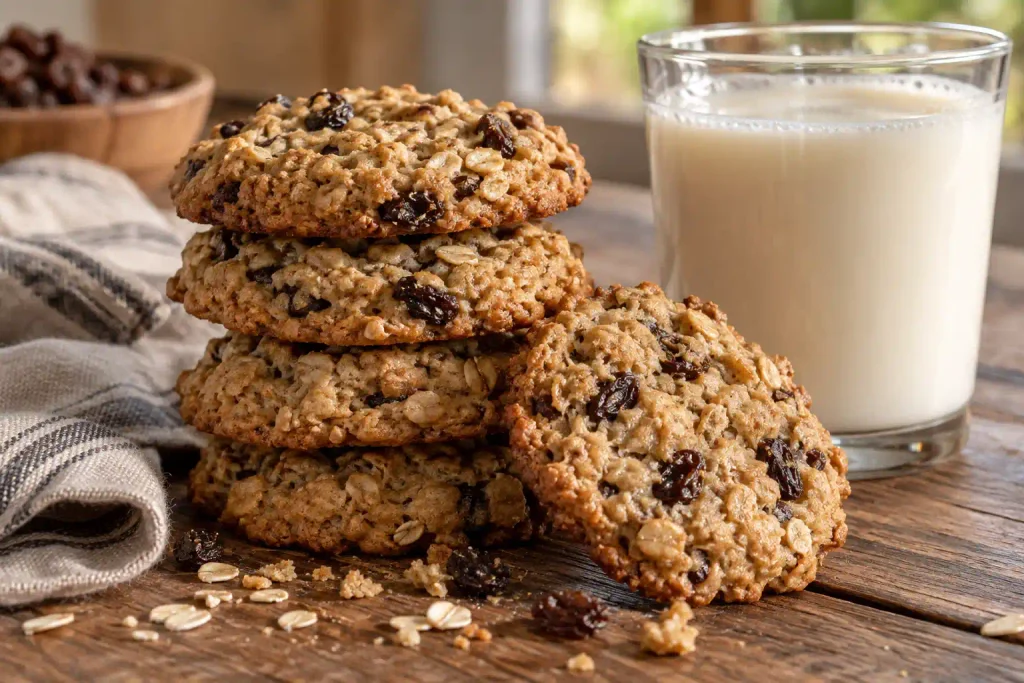
Frequently Asked Questions
Can I make the dough ahead of time?
The dough for oatmeal raisin cookies holds in the fridge for up to three days, covered tightly so it doesn’t dry out. Cold dough bakes a slightly thicker cookie than same day dough, since the butter has more time to firm back up. Let it sit at room temperature for ten minutes before scooping if it’s too firm to portion.
Why did my cookies turn out flat and greasy?
Flat, greasy oatmeal raisin cookies almost always mean the dough went into the oven right after mixing, before the oats had a chance to absorb the melted butter’s moisture. The fix is a fifteen minute rest on the counter, or ten minutes in the fridge if you’re pressed for time. Butter that’s too soft when it goes into the mixer causes the same problem.
What can I use instead of raisins?
Dried cranberries, chopped dried apricots, or mini chocolate chips all swap into oatmeal raisin cookies at the same amount called for in the raisins. Chocolate chips melt slightly and pool at the edges, so pull the tray a minute early if you go that route. Dried cranberries add more tartness than raisins do, which some people prefer against the brown sugar.
How do I know when the cookies are actually done?
Golden, just set edges are the real cue, not a timer. The center will still look pale and a little shiny when you pull the tray, and that’s correct rather than undercooked. Residual heat from the hot pan finishes the middle over the next five minutes. A cookie evenly browned all the way to the center has already passed the chewy stage.
Is it normal for the dough to look this thick and shaggy?
Thick and shaggy is exactly right for this dough, especially right after the oats and raisins get folded in. It should be dense enough that a spoon standing upright in the bowl doesn’t tip over. If it looks more like smooth cake batter, something’s off, usually too much liquid or oats that got measured light. The dough firms up even more during the fifteen minute rest.
Fifteen minutes decides more about this cookie than any single ingredient on the list. Rest the dough, and the oats do quiet work you can’t see: pulling in moisture, setting the stage for a dome instead of a puddle. Skip that rest once and you’ll notice the difference before you even taste it.
Keep a batch of frozen dough balls on hand and there’s a fresh batch of oatmeal raisin cookies eight minutes away more nights than there should probably be.
Pin this recipe now so it’s easy to find the next time the craving hits.
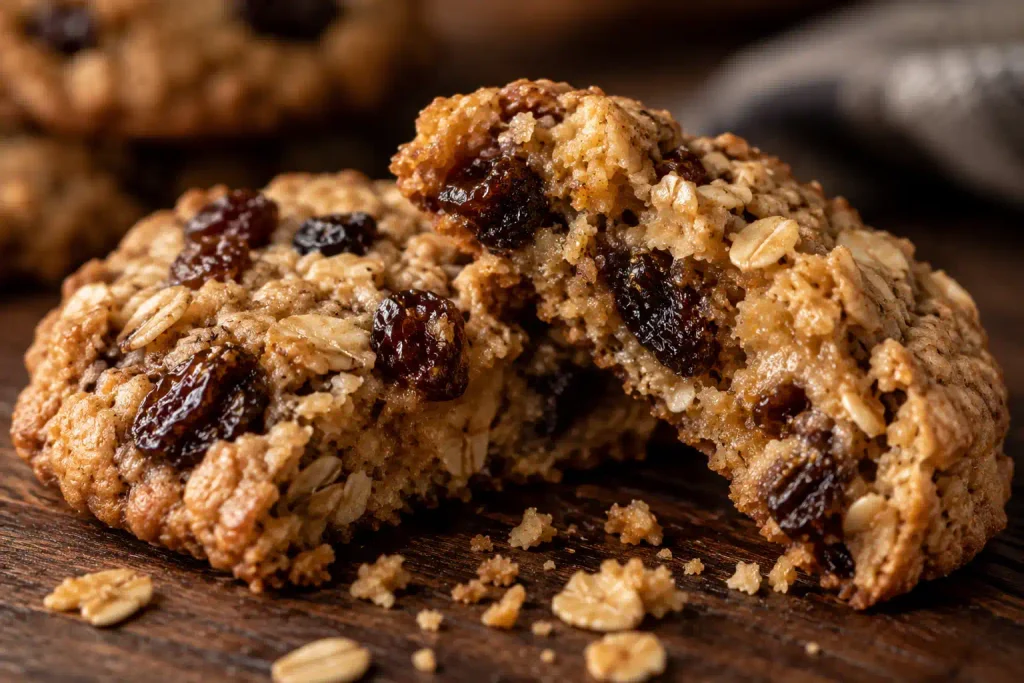
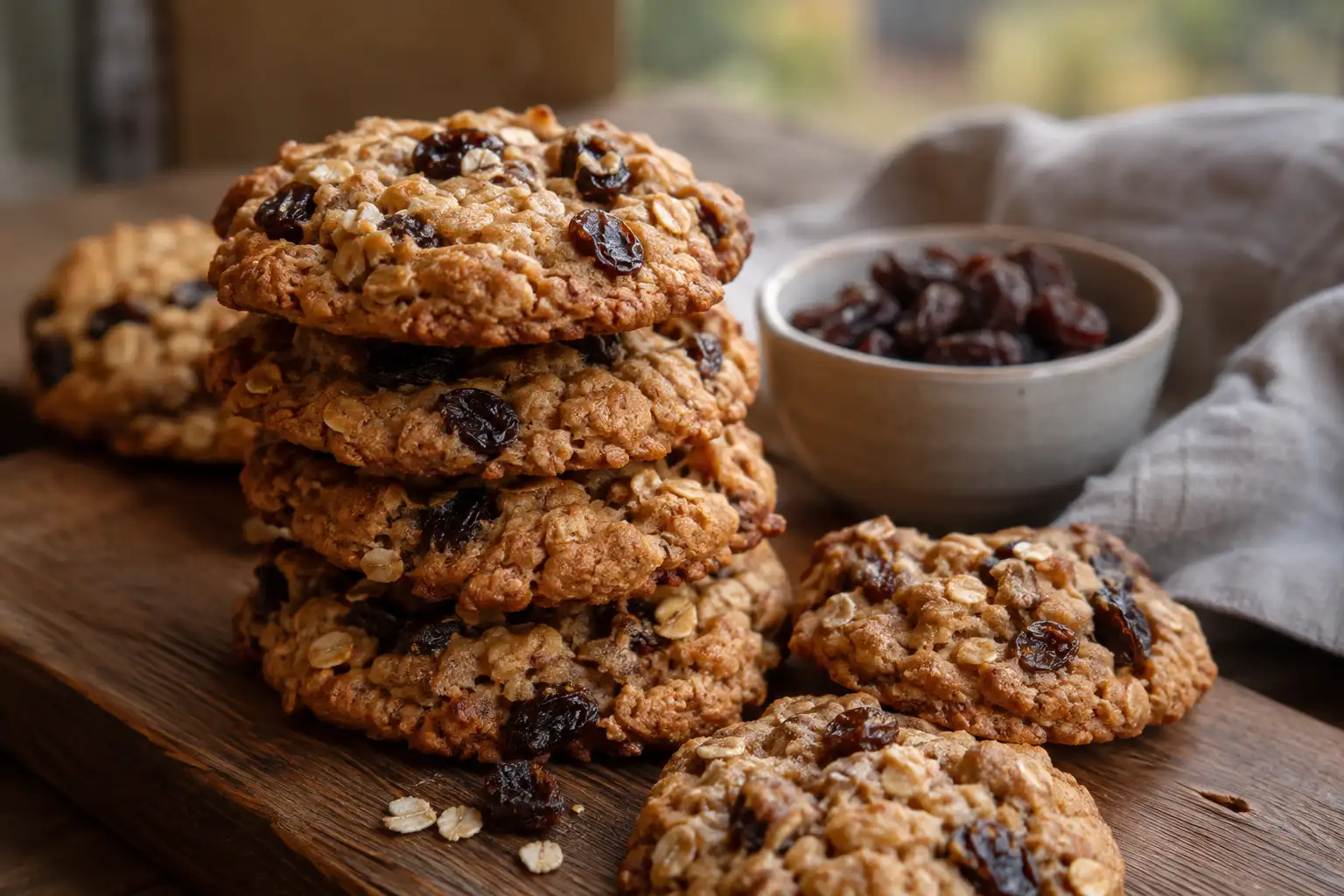
Golden Oatmeal Raisin Cookies
Ingredients
Method
- Cream the butter, brown sugar, and granulated sugar until light and pale.
- Beat in the eggs one at a time, then mix in the vanilla.
- Stir the flour, baking soda, cinnamon, and salt together in a separate bowl.
- Add the dry mixture to the wet mixture in two additions, mixing until just combined.
- Fold in the oats and drained raisins with a spatula.
- Rest the dough on the counter for 15 minutes.
- Scoop 1.5 tablespoon portions onto lined baking sheets, spaced 2 inches apart.
- Bake at 350°F (175°C) for 11 to 13 minutes, until edges are golden and centers look slightly underdone.
- Cool on the tray for 5 minutes, then move to a wire rack.


2 Comments
Comments are closed.