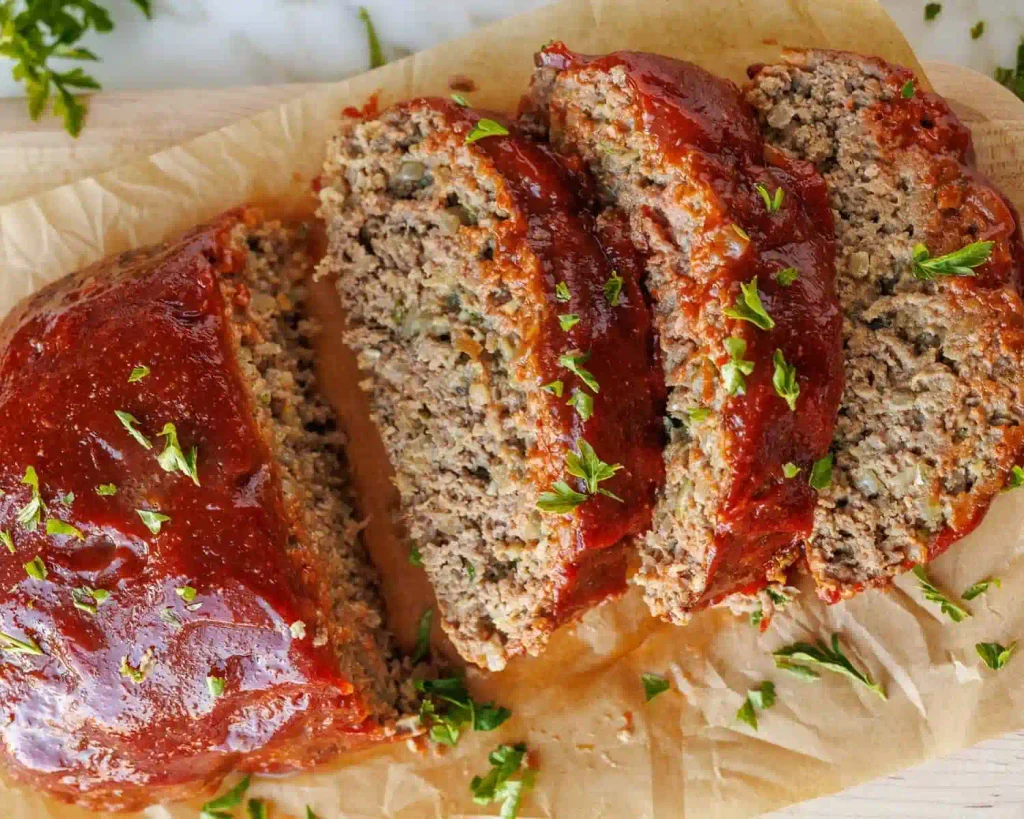
Meatloaf Recipe: A Juicy, 9 Ingredient Classic That Holds Together
Meatloaf goes wrong in the first five minutes, not the last twenty. The panade, that mix of breadcrumbs and milk, needs time to turn to paste before the meat goes in. Dump everything into the bowl at once and you get dry pockets of breadcrumb sitting inside an otherwise wet mix, which is the difference between a loaf that slices clean and one that crumbles on the plate.
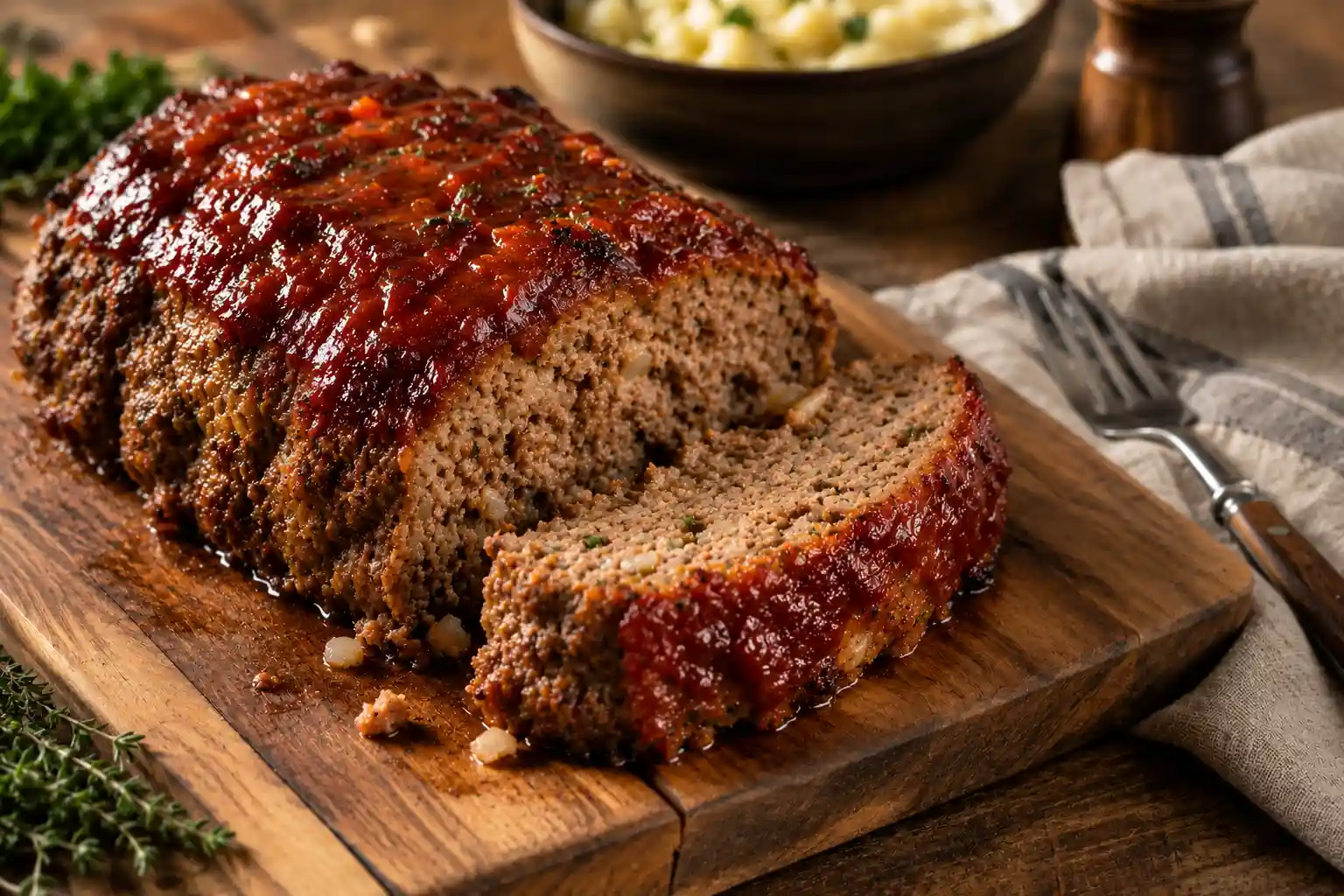
This version keeps the ground beef at 80/20, which sounds like a lot of fat until you remember there’s no marbling in ground meat the way there is in a steak, so the fat is the only thing standing between you and a dry meatloaf. The glaze is ketchup based but cut with vinegar and brown sugar so it actually caramelizes instead of sitting there flat. And the part most recipes skip: the exact temperature to pull it at, and the ten minutes after that decide whether the first slice holds its shape.
Why You’ll Love This
- Slices clean, not crumbly. Pull it at 155°F and give it ten minutes under foil, and the proteins finish setting off the heat instead of getting cut into while still loose.
- The glaze actually caramelizes. Vinegar cuts the ketchup’s sweetness enough that the sugar browns in the oven’s last ten minutes instead of just sitting glossy.
- One bowl, one pan. The whole meatloaf mixes in the bowl the panade sat in and bakes on a rimmed sheet.
- Freezes before or after baking. Shape it raw and freeze it solid, or slice the cooked loaf and freeze portions flat.
- Leftovers taste better than the first night. Onion and garlic settle into the meat overnight, so a cold slice the next day reads more seasoned than a warm one straight from the oven.
At a Glance
- Prep: 15 minutes
- Cook: 65 minutes
- Total: 90 minutes, including a 10 minute rest
- Servings: 6
- Difficulty: Easy
- Calories: 320 per slice
- The ingredient that decides the outcome: the milk soaked panko. Skip the soak and the loaf turns dense.
- Best for: Sunday dinner with leftovers planned for sandwiches
Nutrition Information
| Nutrient | Amount Per Serving |
| Serving Size | 1 slice (150 g) |
| Servings Per Recipe | 6 |
| Calories | 320 |
| Protein | 22 g |
| Carbohydrates | 14 g |
| Fat | 20 g |
| Fiber | 1 g |
| Sugar | 7 g |
| Sodium | 540 mg |
Most of the protein in this meatloaf comes straight from the beef, with the egg adding a smaller amount. Fat is almost entirely from the 80/20 blend, since the recipe adds no extra oil. Sodium climbs mostly from the glaze and the Worcestershire sauce rather than the meat mixture, so cutting the glaze back is the fastest way to bring that number down.
These values are estimates and vary with brands, measuring, and substitutions.
Ingredients
For the Meatloaf
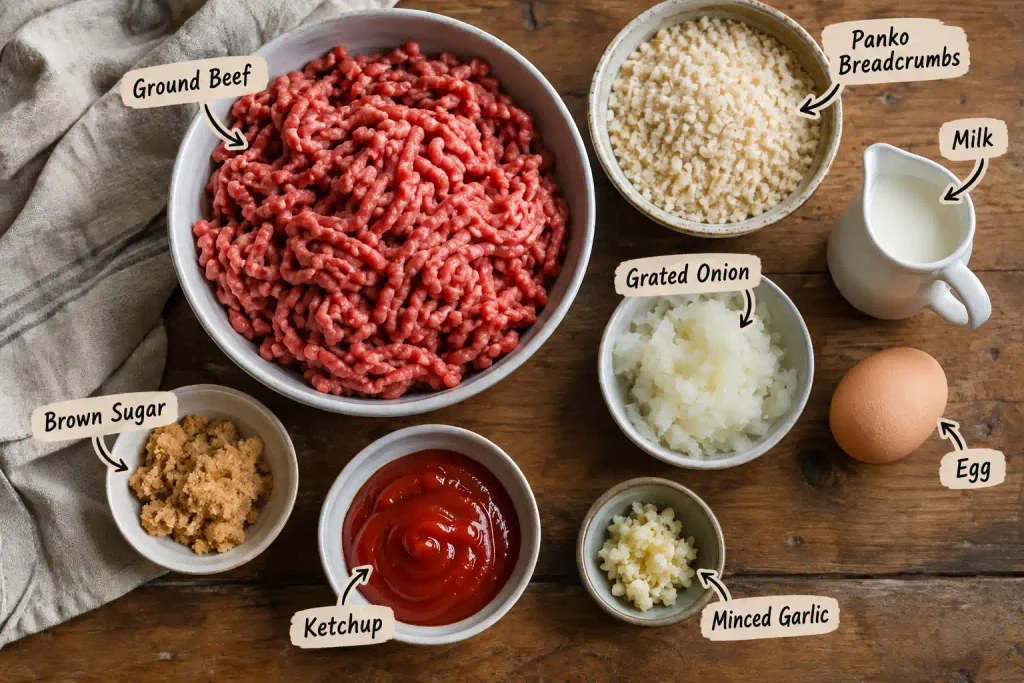
- 2 lbs (900 g) ground beef, 80/20: the fat ratio is what keeps the center from drying out over an hour in the oven
- 1 cup (60 g) panko breadcrumbs
- ⅔ cup (160 ml) whole milk, soaks into the panko to form the panade, the paste that holds moisture inside the loaf instead of letting it cook out
- 1 large egg, at room temperature
- 1 small yellow onion, grated on the large holes of a box grater (about 1 cup / 150 g). Grating instead of dicing means no raw crunchy bite in the finished slice
- 3 cloves garlic, minced
- 2 tsp (10 ml) Worcestershire sauce
- 1½ tsp (9 g) kosher salt
- ½ tsp (2 g) black pepper
For the Glaze
- ½ cup (120 g) ketchup
- 3 tbsp (45 g) packed brown sugar
- 1 tbsp (15 ml) apple cider vinegar, cuts the sweetness enough for the sugar to actually caramelize instead of staying glossy
- 1 tsp (5 ml) Worcestershire sauce
Out of panko, crushed saltine crackers work in the same amount, though the crumb turns slightly denser. No cider vinegar, white vinegar or lemon juice sub in at the same amount.
Allergen and Dietary Disclosure
As written, this meatloaf contains milk from the panade, egg binding the mixture, and gluten from the panko and the Worcestershire sauce, often thickened with wheat. It’s halal, provided the Worcestershire lists no alcohol, since some brands ferment it with malt vinegar and others with wine. It is not gluten free or dairy free as written. Swap the panko for a gluten free breadcrumb and the milk for oat milk, and it holds together the same way, though the crumb turns slightly softer. Ketchup brands vary too, some carry wheat, others don’t.
Equipment Needed
- Instant read thermometer. Ground beef goes from safely cooked to overcooked across about ten degrees, and no visual cue catches that window.
- Rimmed baking sheet. Baking the meatloaf free form instead of packed into a loaf pan lets the sides brown, since a loaf pan traps steam and keeps the crust pale.
- Box grater. Used on the onion, not the cheese setting, it breaks the onion down small enough to disappear into the mix.
- Small saucepan. Warms the glaze so the sugar dissolves before it goes on.
- Foil. Tents the meatloaf during the rest without steaming the glaze soft.
Before You Start
Pull the ground beef out of the fridge about 15 minutes before you start so it isn’t ice cold when it hits the panade, cold meat resists mixing and you end up working it longer than you should. Combine the panko and milk first and let it sit a full 5 minutes, it needs to look like wet paste, not damp crumbs.
Heat the oven to 350°F (177°C) and let it come fully up to temperature before the meatloaf goes in. A half heated oven cooks the first twenty minutes at the wrong rate. Line the rimmed baking sheet with foil, the glaze bubbles over the edges as it bakes.
How to Make Meatloaf Step by Step
Step 1. Build the panade
Combine the panko and whole milk in a large bowl and let it sit undisturbed for 5 minutes. It goes from loose crumbs to a thick paste, and that texture change is the sign it’s ready.
Step 2. Mix the meat
Add the ground beef, egg, grated onion, garlic, Worcestershire sauce, salt, and pepper to the bowl with the panade. Mix with your hands just until the ingredients disappear into each other, about 30 seconds.
Chef’s Note: Stop as soon as you can’t see streaks of egg or loose panko anymore. Every extra turn presses more air out and packs the proteins tighter, and a tightly packed loaf turns dense instead of tender.
Step 3. Shape the loaf
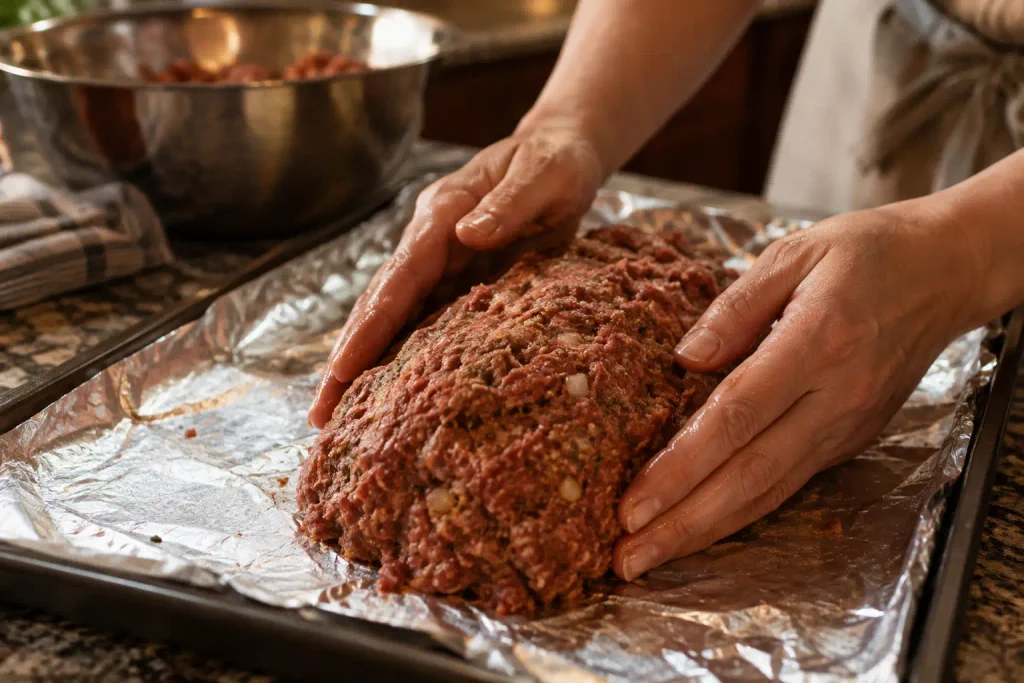
Turn the mixture onto the lined sheet and shape it into a loaf about 8 inches long and 4 inches wide, patting the top smooth but not pressing hard. A taller, narrower shape holds its center juicier than a flat one, since less surface faces direct heat.
Shape the raw loaf on a sheet of parchment first, then slide the parchment and all onto the baking sheet. It saves you from trying to lift a loose meat mixture into shape directly on the pan.
Step 4. Bake without the glaze
Slide the sheet into the 350°F (177°C) oven and bake 40 minutes before touching the glaze. The surface should look matte and slightly darkened at the edges, with juices pooling faintly around the base.
Step 5. Glaze and finish
Warm the ketchup, brown sugar, vinegar, and Worcestershire in the saucepan over low heat for 2 minutes, just until the sugar dissolves, then brush half over the top. Return it to the oven another 20 to 25 minutes.
Chef’s Note: Brush on a second thin coat in the last 5 minutes rather than piling it all on at once. One thick layer slides off in wet clumps, two thin ones bake into the surface and hold on.
Step 6. Check the temperature
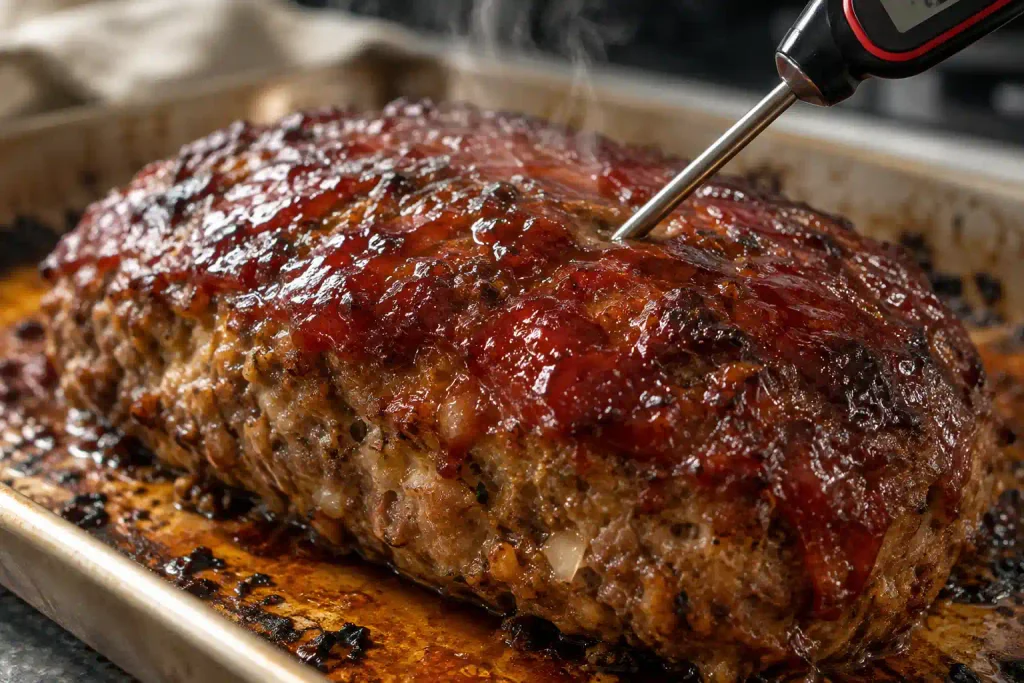
Insert the thermometer into the center of the loaf, the point furthest from any edge. Pull it the moment it reads 155°F (68°C), not 160°F (71°C). Carryover heat, the residual cooking that continues after food leaves direct heat, carries it the rest of the way.
If the thermometer reads under 155°F (68°C) after 65 minutes, give it another 10 minutes rather than cranking the oven temperature up. A hotter oven at this stage dries the outside before the center catches up.
Step 7. Rest before slicing
Tent the loaf loosely with foil and let it sit 10 minutes without cutting in.
Chef’s Note: This step decides whether the first slice holds together. Cut in early and the juices that haven’t finished redistributing run straight onto the board, leaving a drier slice behind.
Step 8. Slice and serve
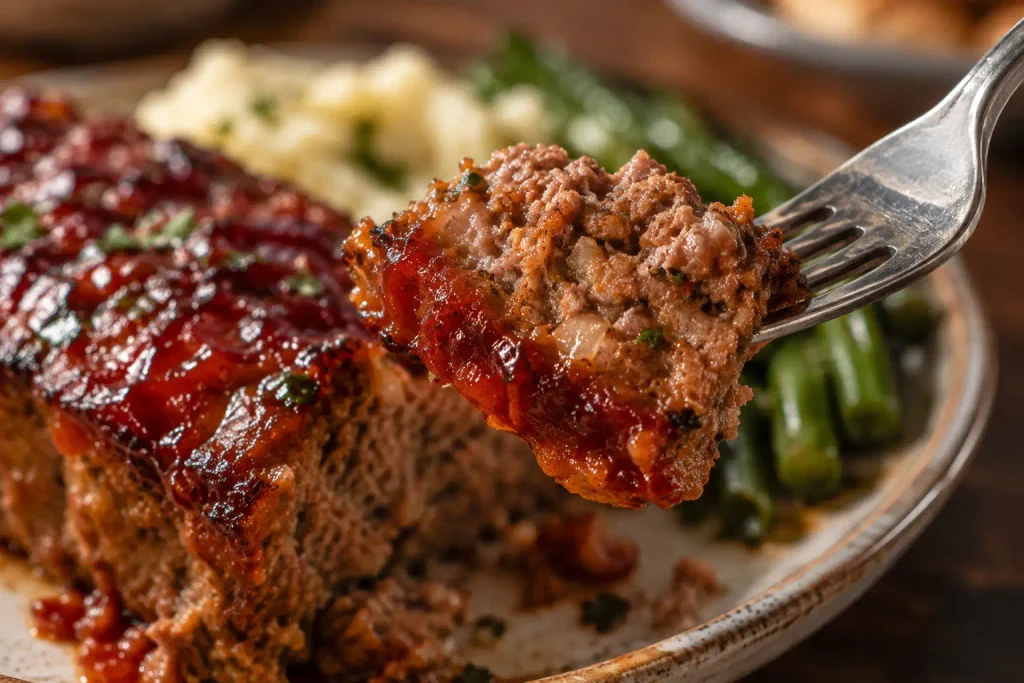
Cut the meatloaf into slices about ¾ inch thick with a sharp knife in one smooth motion rather than sawing back and forth, which tears the crumb instead of cutting it clean.
Expert Tips and Tricks
The easiest mistake here is packing the mix into a loaf pan. A pan traps rendered fat around the sides instead of letting it drain, so the loaf steams instead of roasts.
Make it a day ahead. Shape the raw meatloaf, wrap it tightly, and refrigerate up to 24 hours before baking, the panade actually firms up better cold.
Storage tip: cooked and cooled slices keep in the fridge for up to 4 days in a sealed container.
The grated onion matters more than the diced kind. Diced onion holds moisture inside its cell walls until the heat breaks it down mid bake, right when the structure is trying to set, leaving small wet pockets in the slice. Grated onion breaks down before it ever goes in.
Texture tip: if the mix feels tacky and won’t hold a shape when you pat it, give it another minute of resting, not more panko.
Save time by doubling the glaze and freezing half. The next loaf just needs a reheat and a brush.
Common Mistakes and Troubleshooting
| Problem | Cause | Solution |
| The loaf falls apart when sliced | Cut before the rest, so juices hadn’t finished redistributing and ran out onto the board | Rest a full 10 minutes under foil, then slice with one clean motion instead of sawing |
| The center stays pink past the safe temperature reading | The thermometer probe landed in a pocket of fat, which reads cooler than the meat around it | Move the probe half an inch over and check again |
| The glaze slides off in one sheet | It went on cold and thick in a single coat before the surface had a chance to set | Warm the glaze first and brush it on in two thin layers, five minutes apart |
| The texture turns dense and heavy | The mix got worked too long after the meat went in, squeezing out the air pockets that keep it tender | Mix only until everything disappears into each other, about 30 seconds by hand |
| The bottom stays pale and greasy | Baking it packed into a loaf pan trapped rendered fat against the sides | Shape it free form on a rimmed sheet so the fat runs off |
The collapse usually starts the second the knife goes into the meatloaf too early. Warm juices pool out fast, leaving a slice that looks fine on top but breaks apart the moment a fork touches it. If that happens, spoon the pooled juices back over the pieces and let them sit five more minutes, they reabsorb enough to firm the texture back up.
How to Store Meatloaf
It isn’t safe to leave out past two hours, since cooked ground beef sits in the same food safety danger zone as any other cooked meat, so refrigerate leftovers as soon as the meal winds down.
Refrigerator
Sliced or whole, cooled completely first, it keeps in a sealed container for up to 4 days. Press plastic against the cut surface if already sliced, that exposed edge dries out first.
Freezer
Wrap individual slices in plastic, then foil, and freeze up to 3 months. The raw shaped meatloaf freezes too, and can bake straight from frozen adding about 25 extra minutes, checking temperature rather than trusting the clock.
Reheating
Reheat slices covered in a 300°F (150°C) oven for about 15 minutes, or until the center reads 165°F (74°C) again. A microwave works in a pinch, but the glaze turns rubbery.
Make Ahead
Shape the raw meatloaf up to a day ahead and keep it covered in the fridge, unbaked. The panade firms up further overnight, so it slices even cleaner than one baked the same day it’s mixed.
Variations and Substitutions
- Spicy variation: stir in a tablespoon of hot sauce and a diced jalapeño, and hold back a tablespoon of milk to offset the added moisture.
- Mild or kid friendly variation: skip the black pepper and swap the glaze’s ketchup for a milder barbecue sauce, trading tang for the sweetness kids want.
- Vegetarian variation: swap the beef for an equal weight of plant based ground substitute. The crust won’t brown the same without real fat rendering out.
- Gluten free variation: use certified gluten free breadcrumbs for the panko and confirm the Worcestershire sauce is labeled gluten free.
- Ground turkey swap: works in the same quantity, but turkey runs leaner, so add an extra tablespoon of milk or the loaf dries out.
- Smoky variation: stir in a teaspoon of smoked paprika, without changing the texture at all.
Serving Suggestions
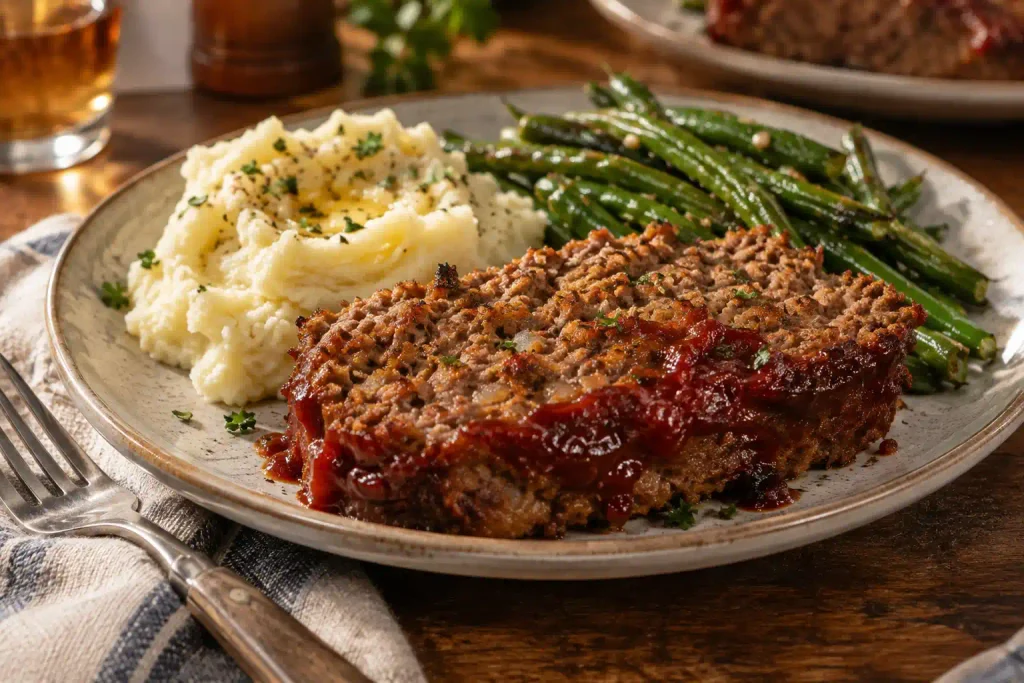
Mashed potatoes are the obvious pairing, and a good one, they soak up the extra glaze that pools off the slices.
Roasted green beans or a side salad cut through the richness with something crisp, since the loaf itself has no crunch built in.
A slice tucked into toast with extra glaze the next day turns into a better sandwich than the plate it came from.
For a full dinner, add a simple gravy for the potatoes rather than doubling the glaze, since a second sweet element on the plate flattens the contrast that makes the meal work.
Frequently Asked Questions
Why does my meatloaf fall apart when I slice it?
A collapsing slice almost always traces back to cutting too soon. Juices need the full 10 minute rest to redistribute through the meat instead of pooling loose in the center, and a knife dragged through before that releases everything at once. Overmixing the raw meat causes the same problem from a different angle, since it squeezes out the fat holding the crumb together. Rest it, and mix for 30 seconds, not longer.
Can I make meatloaf ahead of time?
Shaping the raw loaf a day ahead and keeping it covered in the fridge actually improves it, since the panade firms up further overnight and the meatloaf holds its shape better once baked. Add about 5 extra minutes to the baking time if it goes into the oven cold rather than sitting out first. The finished, baked loaf keeps just as well reheated the next day.
What can I use instead of breadcrumbs?
Crushed saltine crackers replace the panko in the same amount and do the same job of soaking up the milk to form the panade, though the crumb turns a touch denser. Rolled oats work too, ground slightly in a blender first so they don’t stay chewy. Skipping the binder isn’t an option, without it there’s nothing holding the fat and juice in place as it bakes.
How long does meatloaf take to cook, and how do I know it’s done?
A standard 2 pound meatloaf shaped free form on a sheet takes about 65 minutes total at 350°F (177°C), not counting the rest. The clock is a guide, not the actual answer. An instant read thermometer reading 155°F (68°C) at the center is what actually tells you it’s ready to come out, since carryover heat during the rest finishes the last few degrees on its own.
Can I just mix it with my hands, or is there a better way?
Hands are the better tool here, not a lesser one. A spoon or paddle attachment tends to overwork the mixture without you noticing, while hands can feel exactly when the panade and meat have come together. Wash up, mix for about 30 seconds, and stop the moment you can’t see streaks of egg or loose panko. Longer than that presses out the texture that separates tender from dense.
The Last Word
The rest matters more than any other step here, more than the glaze, more than the exact ratio of milk to panko. Skip it once and you’ll see the difference immediately: a puddle on the cutting board and a slice that won’t hold its edge. Give the loaf those ten minutes and meatloaf goes from something you eat with a fork because it falls apart to something you can pick up in one piece off a sandwich the next day. The one place this method comes up short is speed: a smaller, flatter loaf would cook faster, but it trades away the taller shape that keeps the center from drying out, and that’s not a trade worth making for twenty saved minutes. Pin this one so it’s there the next time ground beef is on sale and dinner needs to happen fast.
Classic Meatloaf
Ingredients
Method
- Soak the panko in the milk for 5 minutes until it forms a thick paste.
- Add the beef, egg, onion, garlic, Worcestershire, salt, and pepper. Mix by hand 30 seconds, no longer.
- Shape into an 8 by 4 inch loaf on a foil lined, rimmed baking sheet.
- Bake at 350°F (177°C) for 40 minutes.
- Warm the glaze ingredients in a saucepan 2 minutes and brush half over the loaf.
- Bake another 20 to 25 minutes, adding a second thin glaze coat in the last 5 minutes.
- Pull at an internal temperature of 155°F (68°C).
- Rest 10 minutes under foil before slicing.