Tuna Noodle Casserole Recipe: A Creamy Bake Ready in 45 Minutes
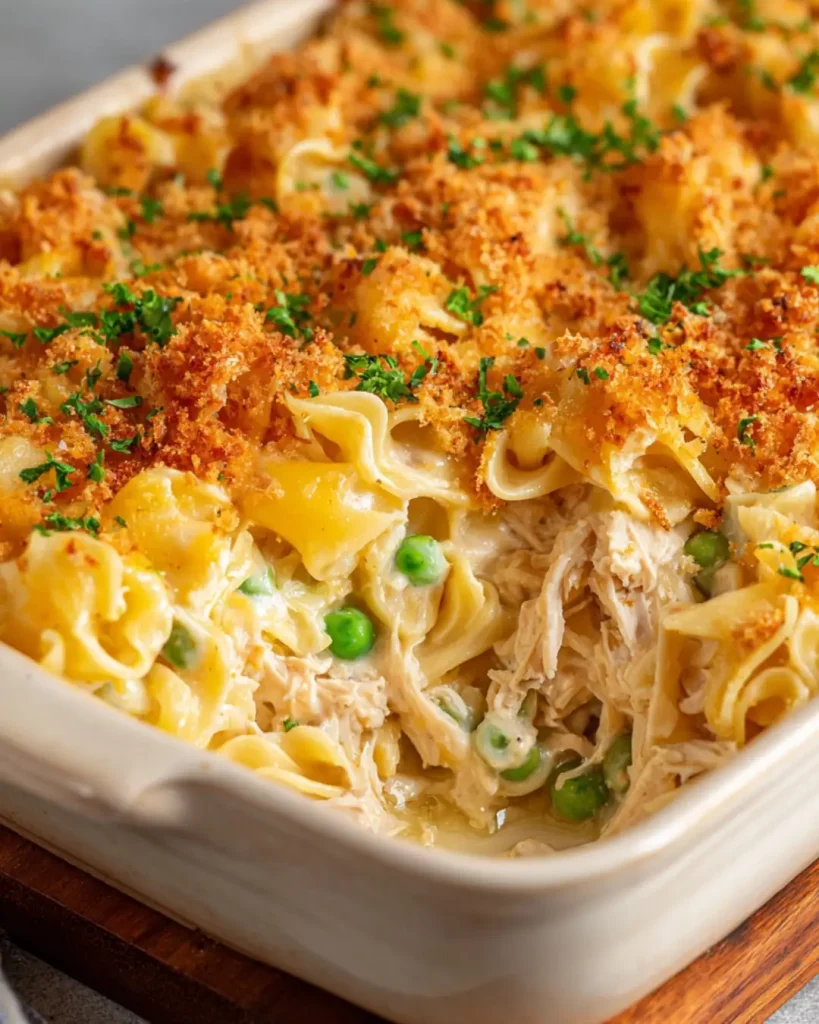
The noodles are the part that ruins tuna noodle casserole, not the tuna and not the sauce. Boil them until they’re fully tender on the stovetop, and by the time the dish comes out of the oven twenty minutes later, they’ve gone soft enough to fall apart on the fork. This version pulls the noodles two minutes before they’d normally be done, while they still have a little resistance left in the center, because that resistance is exactly what carries them through the bake.
The sauce here isn’t canned. It’s a five-minute roux: butter and flour cooked together, then loosened with milk and finished with sharp cheddar, so it has more going on than salt alone. Canned cream of mushroom soup still works on a rushed Tuesday, and there’s a swap for it further down, but the roux costs five extra minutes and gives back a sauce that coats the noodles instead of pooling under them.
Get the noodles right and the rest of this tuna noodle casserole is forgiving.
Why You’ll Love This
- One pan, one dish. The sauce and the assembly happen in the same saucepan, so it’s one pot and one dish between you and dinner.
- It reheats without drying out. The roux holds moisture better than a can of soup, so day-two leftovers come out of the microwave creamy, not gluey.
- You can freeze it raw. Assemble it, skip the oven, and freeze it covered. It goes from freezer to table in under an hour.
- Picky eaters can opt out. Peas and tuna are both easy to hold back on one plate.
- One can feeds six, since the sauce carries the volume, making this tuna noodle casserole one of the cheaper hot dinners around.
Quick Recipe Snapshot
- Prep time: 15 minutes
- Cook time: 30 minutes
- Total time: 45 minutes
- Servings: 6
- Difficulty: Easy
- Calories: About 430 per serving
- The detail that decides the outcome: how long the noodles boil before they hit the sauce
- Best for: a weeknight dinner that reheats well enough to pack for lunch the next day
Nutrition Information
| Nutrient | Amount Per Serving |
| Serving Size | 1 cup (240 g) |
| Servings Per Recipe | 6 |
| Calories | 430 |
| Protein | 28 g |
| Carbohydrates | 38 g |
| Fat | 18 g |
| Fiber | 2 g |
| Sugar | 4 g |
| Sodium | 680 mg |
Most of the protein comes from the tuna and cheddar, not the noodles. The fat sits mostly in the butter and cheese, and the sodium climbs mostly from the tuna and broth, not added salt.
Values are estimates that vary with measuring and substitutions.
Ingredients for Tuna Noodle Casserole
For the Noodles and Filling
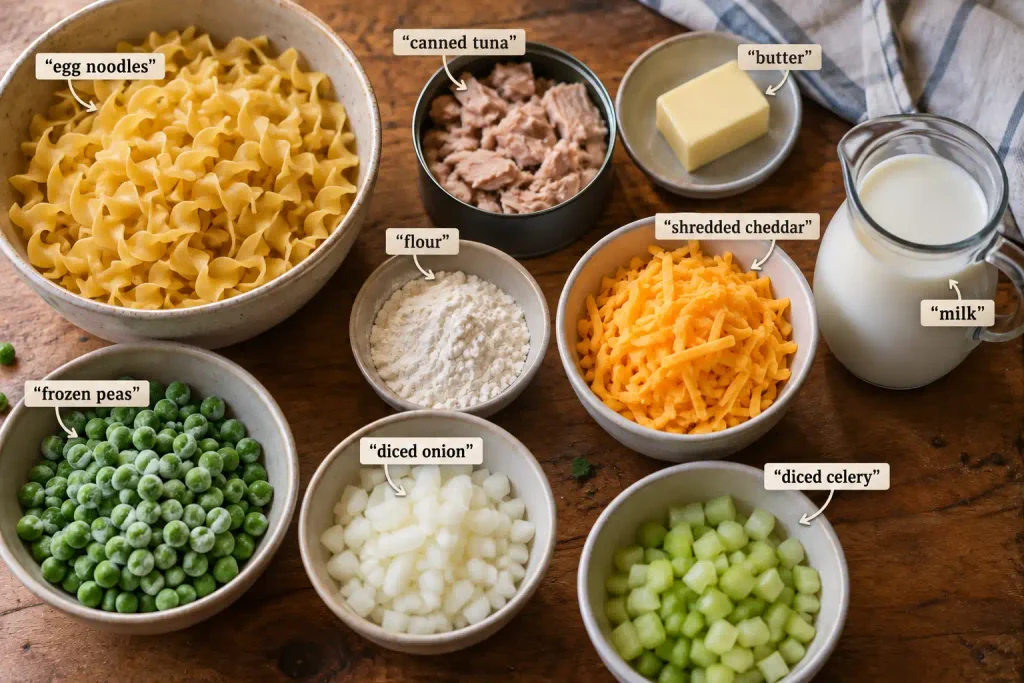
- 12 oz (340 g) wide egg noodles, boiled 2 minutes under package time (see Step 1)
- 2 cans (5 oz / 142 g each) tuna in water, drained well: press the water out, or the sauce thins
- 1 cup (150 g) frozen peas, added straight from the freezer
- 1 small yellow onion, diced (about 3/4 cup)
- 2 celery stalks, diced: carries more savory backbone than the onion does
- 2 cloves garlic, minced
For the Sauce
- 4 tbsp (55 g) unsalted butter
- 4 tbsp (30 g) all purpose flour: with the butter, this forms a roux, a paste of fat and starch that thickens milk without lumps
- 2 1/2 cups (600 ml) whole milk, warmed
- 1 cup (240 ml) chicken broth
- 1 1/2 cups (170 g) sharp cheddar cheese, shredded off the block: bagged shredded cheese carries a starch that leaves sauce grainy
- 1/2 tsp garlic powder
- 1/2 tsp black pepper
- 1/2 tsp salt, plus more to taste
For the Topping
- 1 cup (60 g) panko breadcrumbs
- 2 tbsp (28 g) butter, melted
- 2 tbsp (5 g) fresh parsley, chopped, for serving
No panko? Crushed butter-style crackers work, though denser. Out of celery, diced green bell pepper keeps the crunch but skips the anise note.
Allergen and Dietary Disclosure
As written, this tuna noodle casserole contains milk (butter, whole milk, and cheddar in the sauce), wheat (the egg noodles, the roux, and the panko), and fish (the tuna). It is not vegetarian, not vegan, and not gluten free as written. It is halal, egg free in the sauce itself, and nut free.
To make it gluten free, swap the noodles for a rice-based short pasta and use a 1:1 gluten free flour blend in the roux; it thickens the same way, but the panko needs a certified gluten free version. Watch the broth too: some brands thicken with wheat starch even though the label never mentions bread.
Equipment Needed
- Large pot. Gives the noodles room to move while they boil; crowded noodles cook unevenly.
- 9×13 inch baking dish. Gives the topping enough surface area to crisp across instead of staying soft in the middle.
- Medium saucepan, heavy bottomed. A thin pan scorches the milk before it has a chance to thicken.
- Whisk. Breaks up the flour as it hits the milk so the sauce comes together smooth, not lumpy.
- Colander. For draining fast, since the two-minute head start only works if the noodles stop cooking the moment they’re pulled.
Preparation
Get the oven to 375°F (190°C) before touching the noodles; a half-heated oven bakes tuna noodle casserole unevenly, with a pale center and edges that brown too fast.
Dice the onion and celery first so they’re ready when the butter melts, since a roux scorches if it sits with nothing added. Drain the tuna and press the water out against the lid: this is the difference between a sauce that coats the noodles and one that turns watery. Shred the cheddar off the block instead of the bag, and butter the dish.
Step by Step Directions
Step 1. Boil the noodles short
Salt the water until it tastes like the sea, then add the noodles. Pull them 2 minutes before package time, while the center still has a firm, chalky bite, not a fully cooked noodle’s soft give. Drain right away; residual steam keeps cooking them in the hot pot.
Chef’s Note: package says 8 minutes, so pull at 6. Go by the clock, not the pot.
Step 2. Make the sauce
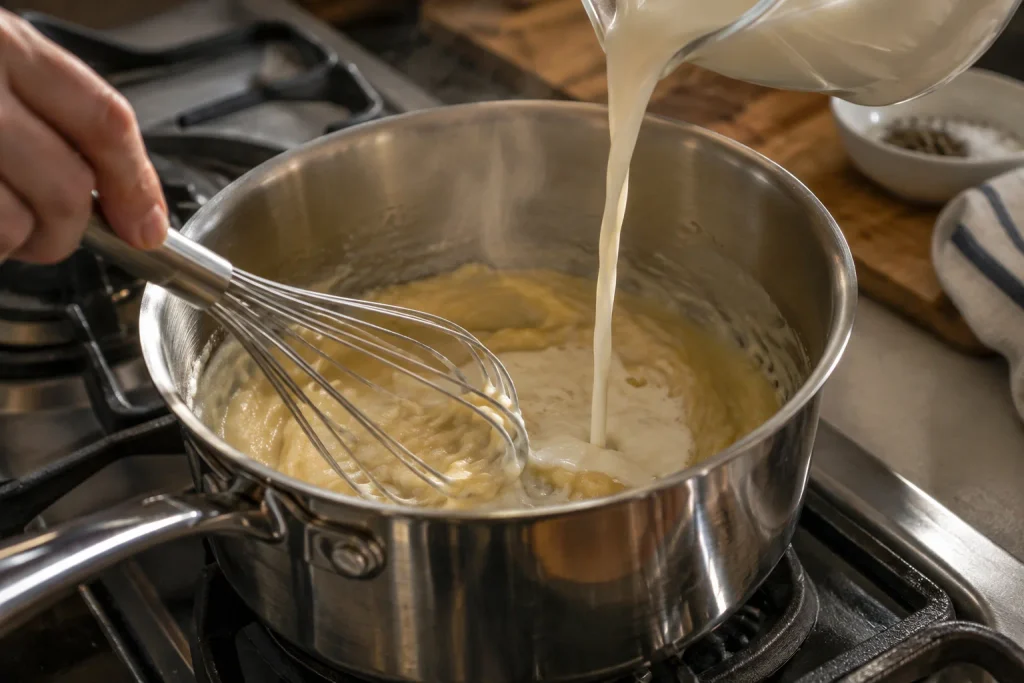
Once the butter melts over medium heat and the foam dies down, whisk in the flour for about 90 seconds, until the raw smell fades and the mixture turns pale sandy. Whisk in the broth, then the milk in a slow stream, and simmer about 5 minutes until the sauce coats a spoon. Off the heat, stir in the cheddar a handful at a time; direct heat turns it grainy as proteins squeeze out fat. Season with the garlic powder and pepper, then salt to taste.
Chef’s Note: if the sauce looks thin before the cheese goes in, give it 2 more minutes on the heat rather than adding flour raw, which clumps instead of cooking out.
Step 3. Fold everything together
In the pot the noodles boiled in, combine the noodles, tuna, peas, onion, celery, and garlic. Pour the sauce over the top and fold until coated.
If the peas are still icy, run them under warm water for ten seconds first. Frozen clumps won’t distribute evenly and can leave cold spots in the bake.
Step 4. Top and bake
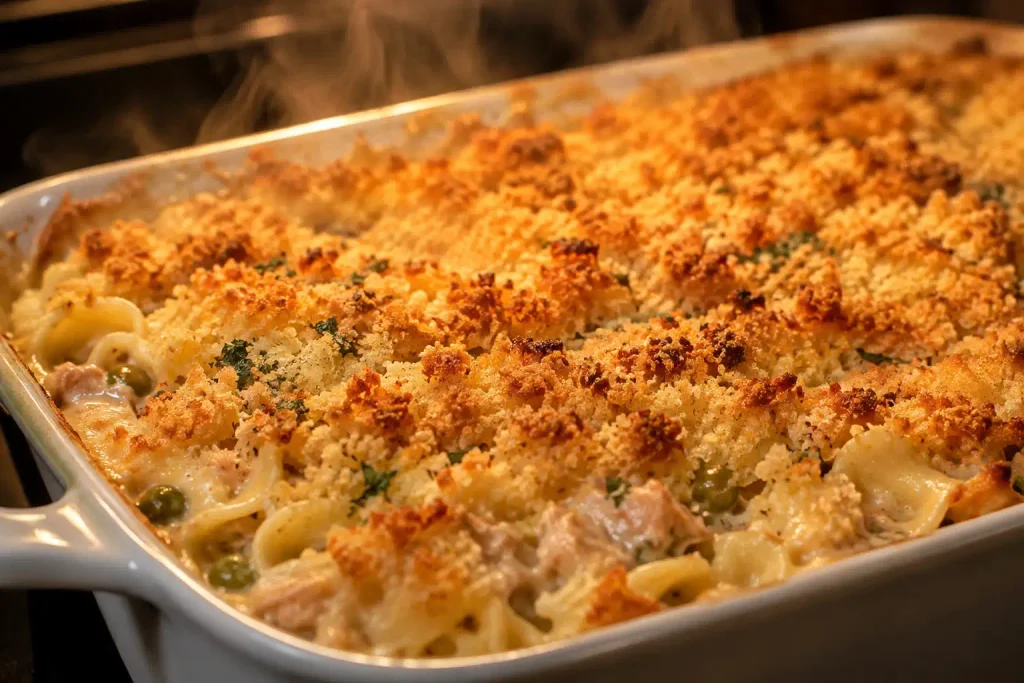
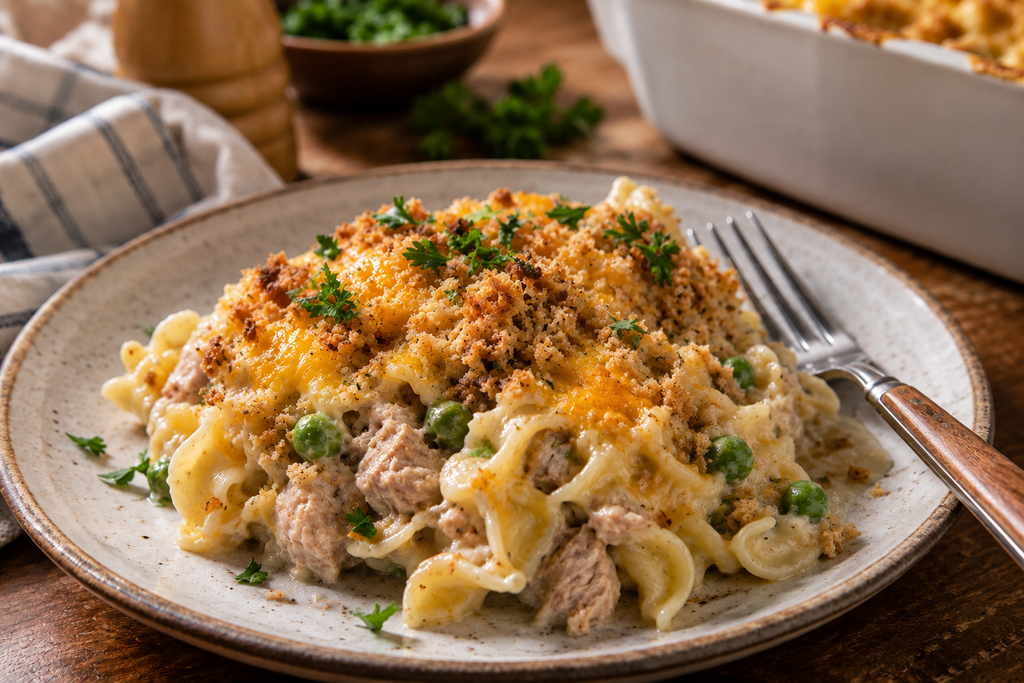
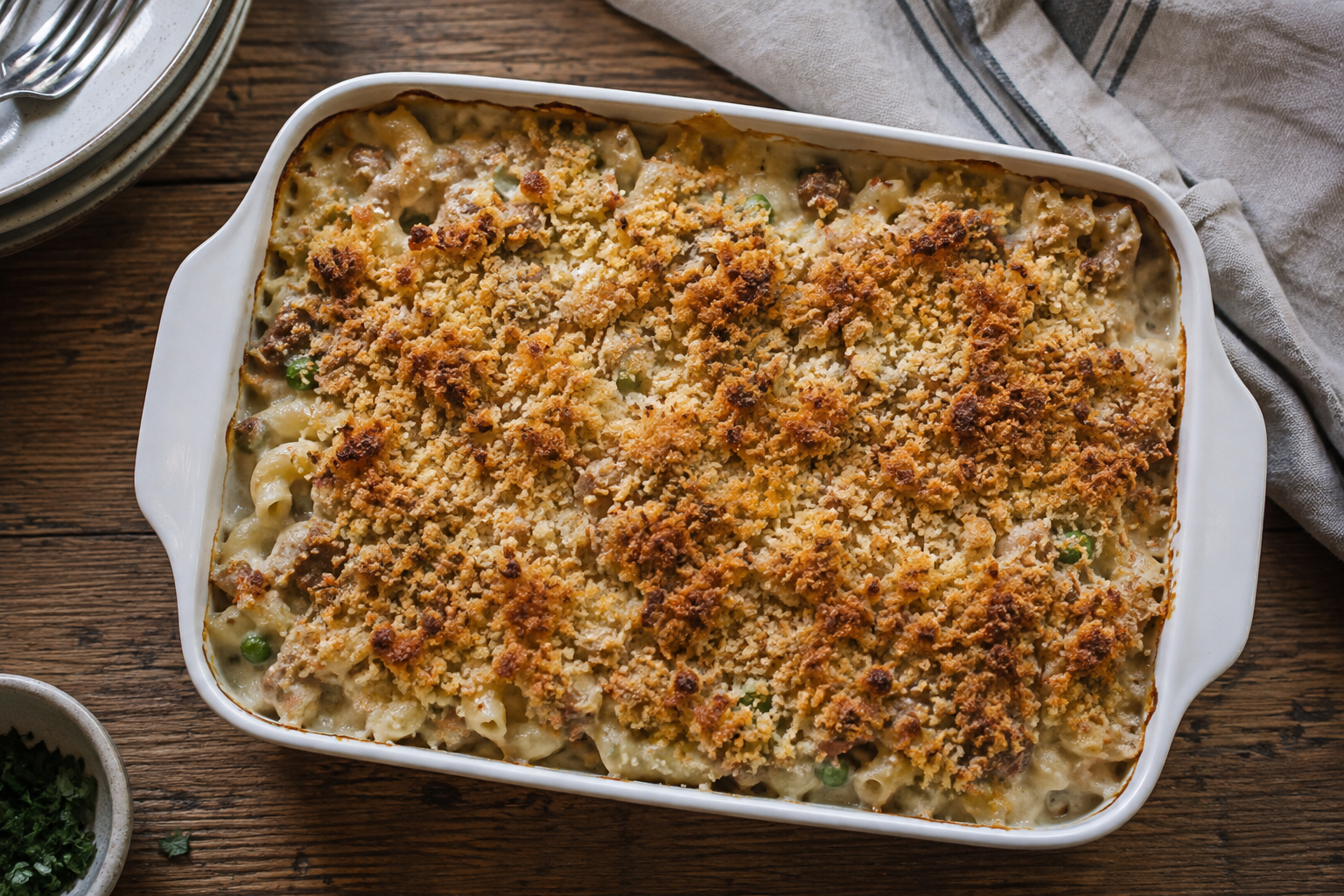
Spread the mixture into the buttered dish. Mix the panko with the melted butter, then scatter it on top. Bake at 375°F (190°C) for 20 to 22 minutes, until the sauce bubbles at the edges and the panko turns deep golden, not tan.
Chef’s Note: if the topping browns faster than the center bubbles, tent the tuna noodle casserole loosely with foil for the last 5 minutes. That usually means the oven runs hot.
Step 5. Rest before serving
Five minutes of rest separates a scoop that holds its shape from one that runs across the plate. The sauce is loose straight from the oven and firms as it sits. Scatter the parsley on top just before serving.
Expert Tips and Tricks
The easy mistake is salting the pasta water but forgetting the sauce needs its own seasoning. Canned tuna carries some salt, but not enough for six servings, so taste the filling before it goes in the tuna noodle casserole.
The sauce alone can be made 2 days ahead, cooled, and refrigerated in a jar. It thickens as it chills, so thin it with a splash of milk before combining with the noodles.
A shallow container cools leftovers faster than a deep one, getting them below 40°F quicker, which matters more with a dairy sauce than a dry side.
The technique that matters most is the two-minute pull on the noodles, covered in Step 1. It’s the one step most tuna noodle casserole recipes skip.
For texture, shred your own cheese. Pre-shredded cheese carries an anti-caking coating that keeps it from melting smoothly, leaving grainy flecks instead of a silky finish.
To save time, boil the noodles and build the sauce at once on two burners. They finish within a minute of each other if the sauce starts once the water boils.
Common Mistakes and Troubleshooting
| Problem | Cause | Solution |
| Noodles turn to mush after baking | Boiled fully tender, then kept cooking with nowhere left to go | Pull them 2 minutes before package time, or pull once edges bubble |
| Sauce looks broken or grainy | Cheese went into a pan still over direct heat and squeezed out its fat | Pan off heat first; a splash of warm milk whisked in smooths it out |
| Dish is watery at the bottom | Tuna wasn’t drained well, or noodles were still dripping going in | Press tuna against the lid, and let drained noodles sit a minute first |
| Topping stays pale instead of browning | Not enough butter mixed in, or rack sat too low | Coat every crumb in butter, and move the rack to the middle position |
The mushy noodle is the failure that shows up most, since the noodles keep absorbing liquid the whole time they’re in the oven, not just while boiling. A fully tender noodle going in has nowhere left to go but soft and broken. Pulled 2 minutes early, it still has a slightly firm center that finishes as the oven heat catches up, landing tender instead of collapsed.
How to Store Tuna Noodle Casserole
Room temperature storage isn’t safe here, since the dairy and tuna need refrigeration within two hours of coming out of the oven.
Refrigerator
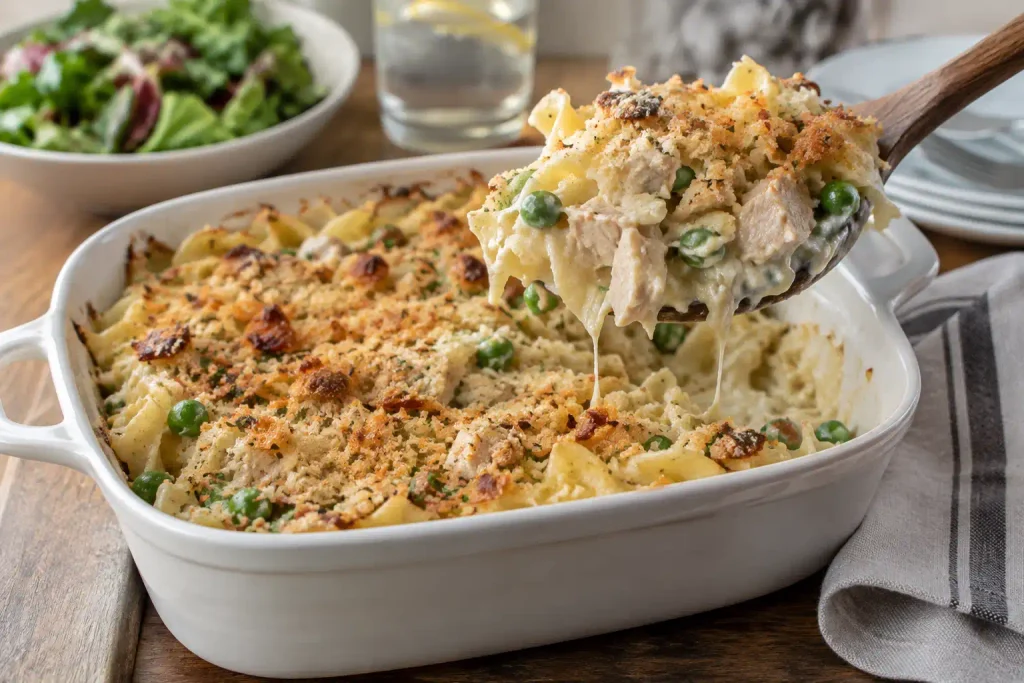
Cover the dish tightly or move leftovers to a sealed container. It keeps for up to 4 days. The topping softens by day two, but the tuna noodle casserole underneath stays just as creamy.
Freezer
Assemble up to the point of baking, wrap tightly in plastic and foil, and freeze up to 3 months. Bake straight from frozen at 375°F (190°C) for 55 to 60 minutes, covered for the first 40.
Reheating
In the oven, cover with foil and warm at 350°F (175°C) for about 15 minutes, until the center reaches 165°F (74°C). The microwave works too, in 60 second bursts, though the topping won’t recrisp.
Stir a splash of milk into leftovers before microwaving. The sauce tightens up more in the fridge than expected, and the milk loosens it back toward its fresh-baked texture.
Make Ahead
Assemble the tuna noodle casserole up to a day before baking, minus the panko, which goes on right before the oven so it doesn’t turn soggy overnight.
Variations and Substitutions
Spicy: stir a diced jalapeno in with the onion and celery, plus a pinch of cayenne. The heat builds slowly since it’s cooked in, not added raw at the end.
Mild and kid friendly: skip the garlic and pepper, and use mild cheddar. The trade off is a flatter sauce, so add a little extra salt to compensate.
Vegetarian: swap the tuna for a drained can of white beans and use vegetable broth. It loses the brininess tuna brings, so lemon juice stands in.
Gluten free: use a rice-based short pasta, a 1:1 gluten free flour blend, and certified gluten free panko. The sauce thickens slower, so give it an extra minute before judging it thin.
Canned soup shortcut: one 10.5 oz (298 g) can of condensed cream of mushroom soup, thinned with a half cup of milk, stands in for the whole sauce, trading cheddar flavor for speed.
No peas on hand: diced carrots or corn work in the same quantity. Corn brings a sweetness the peas didn’t have.
Serving Suggestions
A simple green salad with a sharp vinaigrette cuts through the richness of the sauce, since the acid resets your palate between bites.
Steamed green beans or roasted broccoli add a vegetable that isn’t already folded in, since peas are the only one inside this tuna noodle casserole.
Garlic bread on the side gives you something to drag through the sauce pooling at the edges, crust side down where it soaks the most.
For a full retro dinner, pair it with a wedge salad and iced tea; the cold, crisp textures balance the hot, creamy bake.
Frequently Asked Questions
Can I make tuna noodle casserole ahead of time?
Assemble the tuna noodle casserole a day ahead and refrigerate it unbaked, but hold the buttered panko back until right before it goes in the oven, or it turns soft instead of staying crisp. Add about 5 extra minutes to the bake time for starting from cold, and check the edges for bubbling before pulling it out of the oven.
Why did my tuna noodle casserole turn out mushy?
The noodles were boiled fully tender before they went into the oven, so they had nothing left to give once the sauce and bake heat kept working on them. Pull them about 2 minutes before the package time calls for, while the center still has a slight bite. That resistance is what survives the bake and keeps the texture from collapsing.
Can I use a different pasta instead of egg noodles?
Rotini, penne, or shells all work in the same quantity, and each holds the sauce a little differently: ridged shapes trap more sauce in the grooves, while shells cup it inside their curve. Whatever shape gets used, boil it 2 minutes under package time the same way as the egg noodles, since a fully tender noodle turns soft in this bake no matter its shape.
How do I know when tuna noodle casserole is done baking?
The sauce should be visibly bubbling at the edges, not just warm, and the panko should have gone a deep golden brown rather than the pale tan it starts out as. At 375°F (190°C), that combination usually lands between 20 and 22 minutes, though a fuller dish or a cooler oven can run a few minutes past that, so check the edges rather than the clock.
Does tuna noodle casserole actually freeze well or does it get watery?
It holds up fine frozen, as long as it goes in before baking rather than after. Baked-then-frozen tuna noodle casserole tends to separate a little on thawing, since the sauce has already set once and doesn’t fully recombine the second time around. Assemble it raw, wrap tightly, and bake straight from frozen at 375°F (190°C) for 55 to 60 minutes, covered for the first 40.
Tuna Noodle Casserole Worth Making Again
The two-minute pull on the noodles is a small thing to remember, but it’s the difference between tuna noodle casserole that holds together on the fork and one that turns to paste by the second day in the fridge. It becomes a habit fast, the same way you’d pull a steak off the grill a minute early and let carryover heat finish it. The roux takes five extra minutes over canned soup, and on a night when five minutes doesn’t exist, the shortcut in the variations section still gets dinner on the table.
Pin this one now so it’s easy to find the next time a single can of tuna needs to stretch across six plates.
Tuna Noodle Casserole
Ingredients
Method
- Boil the egg noodles 2 minutes under package time, then drain.
- Melt the butter and whisk in the flour to build a roux.
- Whisk in the broth, then the milk, and simmer until thickened.
- Off the heat, stir in the cheddar, garlic powder, pepper, and salt.
- Combine the noodles, tuna, peas, onion, celery, and garlic with the sauce.
- Spread into a buttered 9×13 dish and top with buttered panko.
- Bake at 375°F (190°C) for 20 to 22 minutes until bubbling and golden.
- Rest 5 minutes before serving.
2 Comments
Comments are closed.