Pickled Red Onions Recipe: Zesty 5 Ingredient Pickle for Everything
Red onion straight off the cutting board can flatten a whole taco. Pickled red onions fix that in fifteen minutes, no canning pot, no water bath, just a saucepan and a jar.
The part that trips people up is heat. Pour a brine still at a rolling boil over the slices and you get soft, half cooked onion instead of the crisp bite you’re after. The fix is small: bring the vinegar and water just to the point where sugar and salt dissolve, then pull the pan off. That one adjustment is the difference between onion that still crunches on day five and onion gone limp by day two.
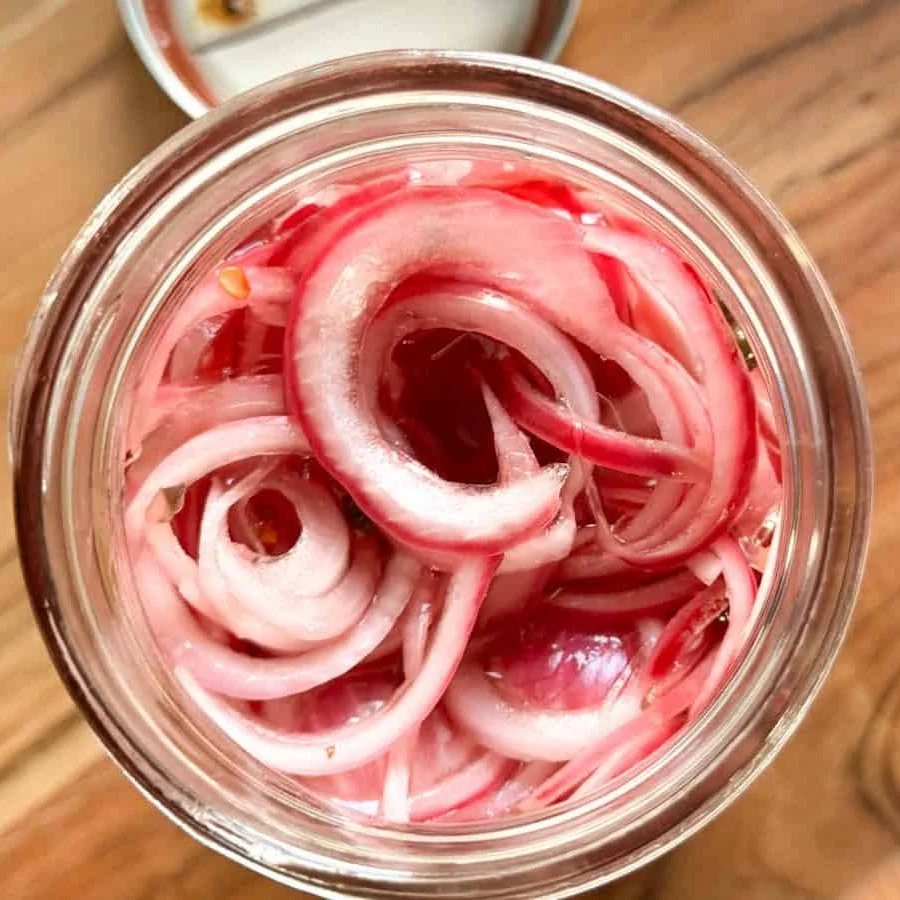
This method skips canning entirely. Five ingredients, one pot, one jar, a fridge shelf. Raw red onion leans purple, and within about fifteen minutes in the brine it starts shifting toward the hot pink you see on taco trucks. That shift keeps going for hours, so a batch of pickled red onions pulled at the thirty minute mark tastes and looks different from one left overnight.
Why You’ll Love This
- Ready before the rice finishes. Fifteen minutes of hands on work gets a jar onto the counter before anything else on the plate is close to done.
- Holds its crunch for two weeks. Kept cold and fully submerged, pickled red onions stay snappy far longer than most quick pickles get credit for.
- One brine, a dozen uses. Tacos, burgers, grain bowls, a plain green salad: the same jar covers all of it.
- Softens the sting, keeps the crunch. The vinegar mellows the sulfur compounds that make raw red onion bite back, so the texture stays but the burn doesn’t.
- No canning gear required. A saucepan and a jar already in the cupboard do the whole job.
- Scales for free. Double the brine, add a second onion, and the ratio still holds.
At a Glance
- Prep: 10 min. Cook: 5 min. Total: 15 min active, plus 30 min to chill.
- Servings: 8, about 2 cups of pickled red onions. Difficulty: Easy.
- What decides the outcome: brine temperature when it hits the onion.
- Best for: tacos, sandwiches, grain bowls, and salads.
Nutrition Information
| Nutrient | Amount Per Serving |
| Serving Size | 2 tablespoons (30 g) |
| Servings Per Recipe | 8 |
| Calories | 15 |
| Protein | 0 g |
| Carbohydrates | 3 g |
| Fat | 0 g |
| Fiber | 0 g |
| Sugar | 2 g |
| Sodium | 110 mg |
Most of the calories in pickled red onions come from the sugar dissolved into the brine, not from the onion itself. Sodium comes entirely from the salt, so a lighter hand there cuts the number directly.
Values are estimates that vary with brands, measuring, and substitutions.
Ingredients
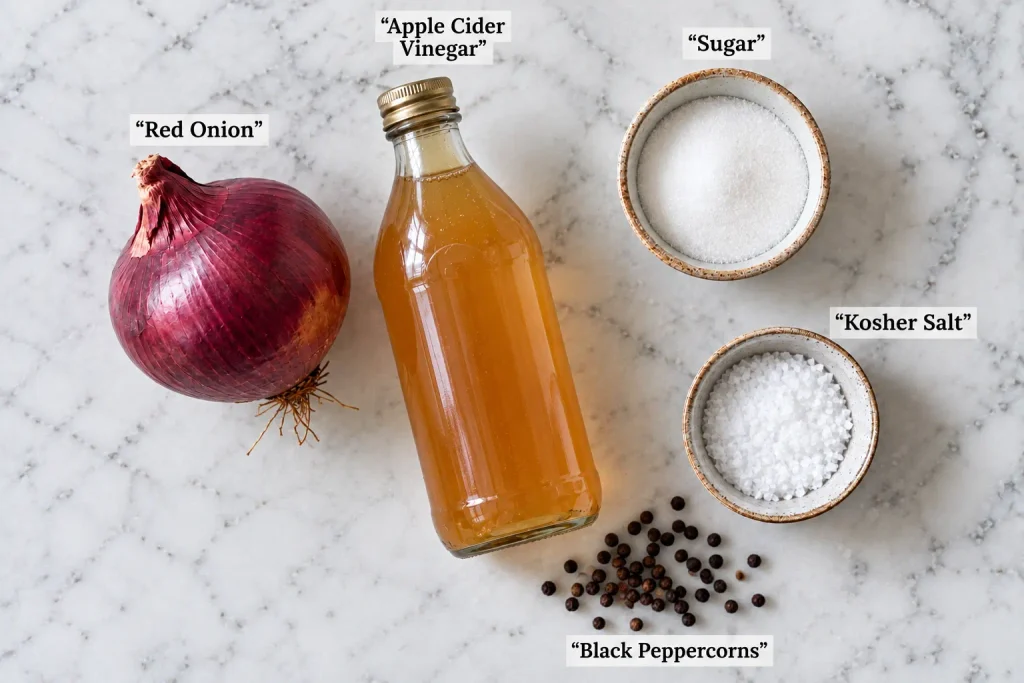
- 1 large red onion (about 280 g / 10 oz), thinly sliced into half moons. The fresher and firmer it is, the crisper the finished pickled red onions stay.
- 1 cup (240 ml) vinegar, apple cider or plain white. Carries the acid that flavors and preserves everything in the jar.
- 1 cup (240 ml) water. Cuts the vinegar’s sharpness so the brine tastes balanced, not puckering.
- 2 tablespoons (25 g) granulated sugar. Rounds off the acid’s edge without tasting sweet.
- 1 1/2 teaspoons (9 g) kosher salt. Draws moisture out through osmosis, water leaving the onion’s cells for the brine, which is what lets the acid reach every layer.
Optional flavor add ins
1 teaspoon black peppercorns, 1 bay leaf, 1 smashed garlic clove, a pinch of red pepper flakes for heat.
Allergen and Dietary Disclosure
As written, this recipe carries none of the major allergens: no milk, eggs, tree nuts, peanuts, wheat, soy, sesame, fish, or shellfish. Every ingredient, onion, vinegar, water, sugar, and salt, comes from a plant or mineral source.
That makes pickled red onions halal, vegetarian, vegan, gluten free, dairy free, nut free, and egg free as written.
The one place to double check is the vinegar. Distilled and cider vinegars are almost always gluten free, but a malt vinegar substitute carries barley, so read the label if you swap.
Equipment Needed
- Small saucepan. Heats the brine for pickled red onions just enough to dissolve the sugar and salt without a full boil.
- Sharp chef’s knife or mandoline. Even, thin slices pickle at the same rate, so a mandoline set to about 1/8 inch keeps every piece crisp together instead of some staying raw tasting.
- Pint size glass jar with a lid. Glass won’t react with the vinegar, and a straight sided jar lets you pack the slices down tight.
- Heatproof measuring cup. Makes pouring hot brine over the onion controlled instead of a splash.
- Fork or tongs. Presses the onion down under the brine line so nothing sits exposed to air and discolors.
Prep Before You Pickle
Slice the onion into thin, even half moons, about 1/8 inch, before touching the stove. Uniform thickness matters more here than knife skill; a few thick pieces in an otherwise thin pile will still taste raw after everything around them has pickled.
Measure the vinegar, water, sugar, and salt into the saucepan before turning on the heat. The whole process from stove to jar takes under five minutes once it starts.
Rinse the jar and let it dry, since a wet jar dilutes the first pour of brine. Pack it loosely rather than jammed tight; good pickled red onions need brine moving around every slice, not just soaking the top layer.
Step by Step Directions
Step 1. Slice the Onion Thin
Halve the onion pole to pole, peel it, then lay each half flat and cut across into slices about the thickness of a nickel. Thinner slices pickle faster and end up more pliable, closer to a taco topping than a chunky ring.
Step 2. Warm the Brine
Combine the vinegar, water, sugar, and salt in the saucepan over medium heat. Stir now and then until the sugar and salt disappear, usually two to three minutes, and pull the pan off the second small bubbles show at the edge. A full rolling boil isn’t the goal; it just softens the onion faster than you want once it hits the jar.
Chef’s Note: If the brine boils hard, let it sit off heat a minute before pouring. Onion meeting a cooler brine still pickles fully, it just keeps more bite.
A pinch of salt dissolves faster in warm liquid than cold, so add it before the vinegar cools if you’re working straight from a bottle stored in the fridge.
Step 3. Pack the Jar
Pile the sliced onion into the jar, pressing down gently so pickled red onions settle rather than mound above the rim. Leave about half an inch of space at the top.
Chef’s Note: Overlapping slices trap little pockets of air that keep brine from reaching every surface. A few taps of the jar against the counter close most gaps before the liquid goes in.
Step 4. Pour and Submerge
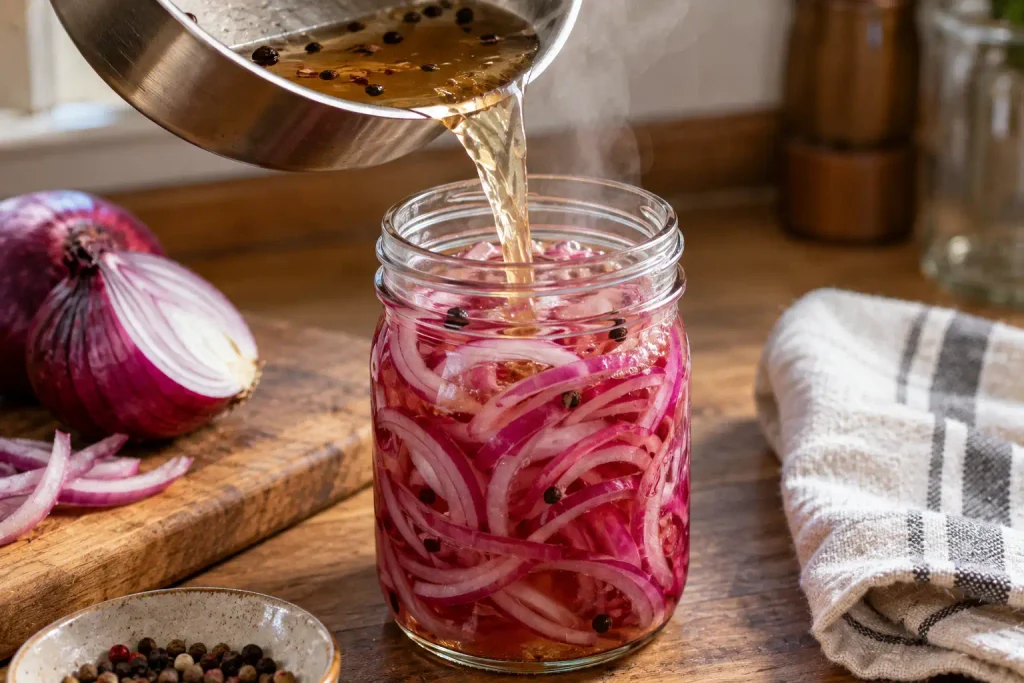
Pour the warm brine over the onion until fully covered, tucking in any peppercorns or the bay leaf as you go. Push the top layer down with a fork.
Step 5. Cool and Chill
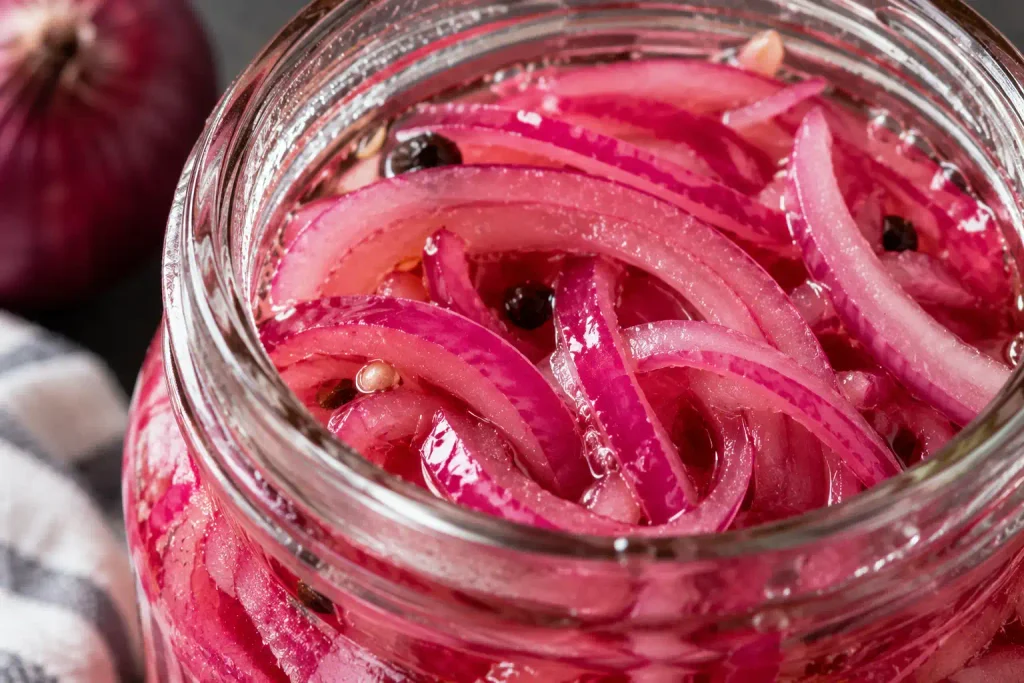
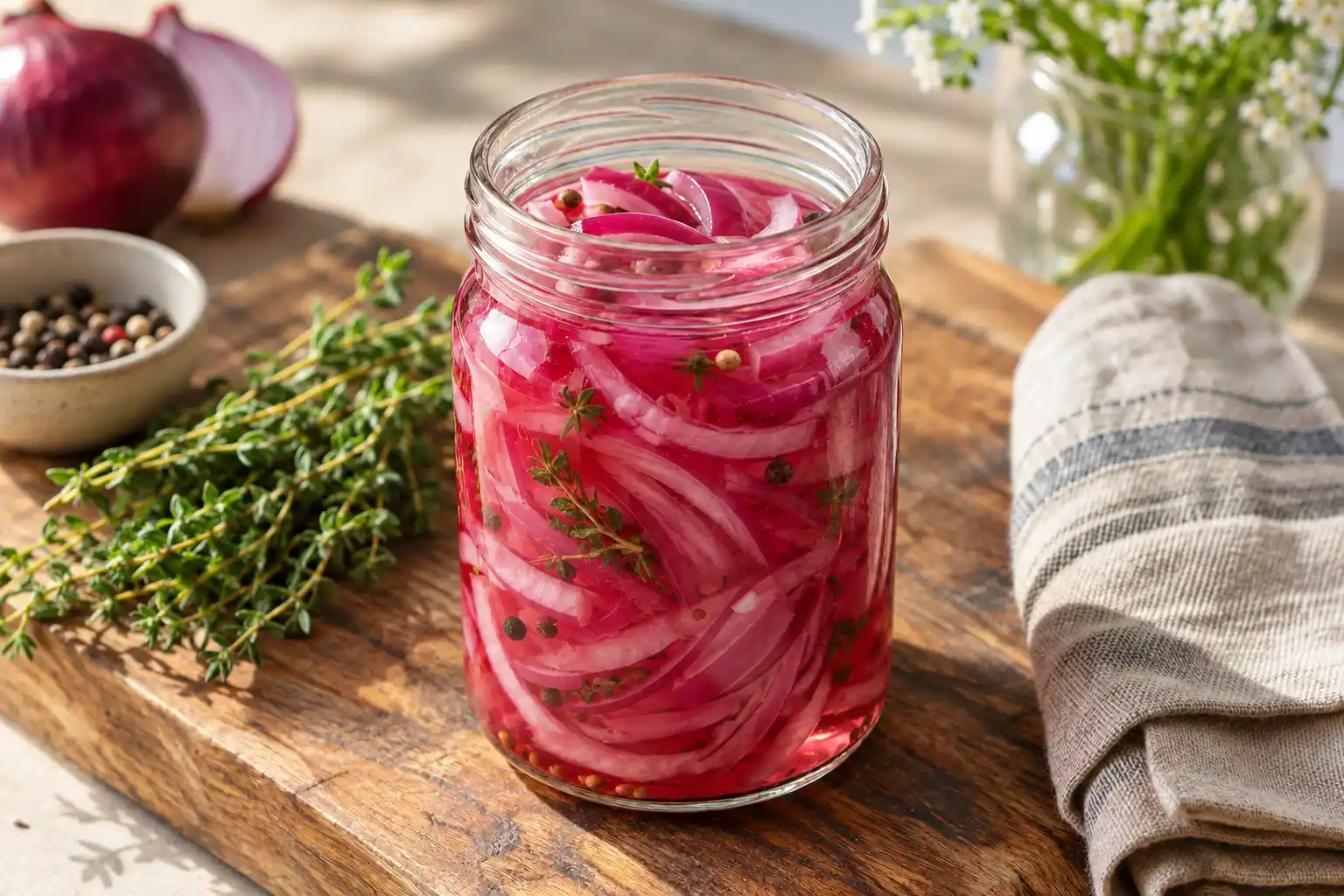
Let the jar sit on the counter, lid off, until cool enough to touch, about fifteen minutes. That’s also when the color starts to turn, going from dull purplish red to brighter pink at the edges. Screw the lid on and refrigerate at least another thirty minutes before serving.
Chef’s Note: Fifteen minutes gives pickled red onions with some raw crunch left. An hour gets the balanced version most recipes are built around. Left overnight, the color deepens to magenta and the onion softens slightly, trading crunch for a rounder flavor. None of those points is wrong, it depends what you’re putting it on.
Expert Tips and Tricks
Use kosher or pickling salt, not iodized table salt. Table salt can cloud the brine and leave a faint metallic aftertaste.
Slice with the onion’s natural lines for a crunchier finish. Cutting into half moons along the root keeps the fibers longer, and longer fibers hold their snap further into the pickling time.
Make it up to five days ahead. Pickled red onions keep improving for the first two days in the fridge, so this is one part of a meal that’s genuinely better made early.
Keep every slice under the brine line. Anything poking above the liquid dries out and browns within a day.
Warm the brine while you slice. Get the vinegar mixture on the stove first, then work through the onion, and both jobs finish together.
A cold jar meeting hot brine can split. Run it under warm tap water for a few seconds first if it’s been sitting in a cold cupboard.
The brine works twice. Once the first batch is gone, the leftover liquid still has enough acid for a second, smaller batch, though the color comes out a shade paler.
Common Mistakes and Troubleshooting
| Problem | Cause | Solution |
| Onion still tastes sharp and raw after a full day | Slices were cut too thick, so brine never reached the center | Slice closer to an eighth of an inch. Press rings back under the brine; thinner contact speeds it up |
| Brine looks cloudy, onion tastes faintly metallic | Iodized table salt was used, and its additives react with vinegar | Switch to kosher or pickling salt. The current batch is still safe, just less clean tasting |
| Onion turned soft and mushy within a day | Brine was poured in at a hard rolling boil, partly cooking the onion first | Pull the brine off heat the moment small bubbles appear, well short of a boil |
| Color stayed pale instead of deep magenta | Not enough time passed, or slices were packed too tightly to circulate | Give it longer; color keeps deepening for up to 24 hours. Loosen the pack |
| A slice turned brown or slimy near the top | Exposure to air, since it sat above the brine line | Press it back under the liquid and top off with equal parts vinegar and water |
The mushy batch is the one people run into most with pickled red onions, and it always traces back to the same moment: a rolling boil meeting cold onion. The surface layer cooks in seconds, turning translucent before the jar even reaches the fridge. It isn’t ruined; it still works fine on a taco where texture matters less. But if crunch is the point, pull the brine off heat the instant bubbles show, not after.
Storage Instructions
This is a refrigerator pickle, not a canned one, so it needs to stay cold the entire time; room temperature storage isn’t safe here.
Refrigerator
Kept sealed and fully submerged, pickled red onions hold their crunch for up to two weeks, and the flavor is better after the second day than at the fifteen minute mark.
Freezer
Freezing isn’t recommended. Onion carries so much water that the crunch collapses into a limp, watery mess once thawed. If a batch is about to go unused, strain it out and freeze just the flavored brine for a future dressing.
Make Ahead
Pickled red onions want to be made ahead. Build a batch up to five days before you need it and the texture and color will be better for the wait, not worse.
Save the empty jar once it’s finished. A rinsed pickle jar is exactly the right size for the next batch, no extra purchase needed.
Variations and Substitutions
Spicy. Add a sliced jalapeño or a teaspoon of red pepper flakes to the brine. Pull the jalapeño out after the first day so the color stays bright instead of the seeds bleeding orange through the jar.
Mild or kid friendly. Cut the sugar to a tablespoon and add a splash more water in place of vinegar. It softens the sting, though the crunch won’t hold quite as long.
Vegetarian and vegan. Already covered as written, since the recipe is onion, vinegar, water, sugar, and salt with nothing animal derived in it.
Gluten free. Already gluten free as long as the vinegar is plain distilled or apple cider rather than a malt vinegar, which carries barley.
White onion instead of red. Works for flavor, but pickled red onions get their pink shift from anthocyanin, the plant pigment behind red and purple coloring in produce, which brightens under acid. White onion has none of it.
Rice vinegar instead of cider. A milder, slightly sweeter brine, good for rice bowls, though noticeably less sharp than cider on a taco.
Serving Suggestions
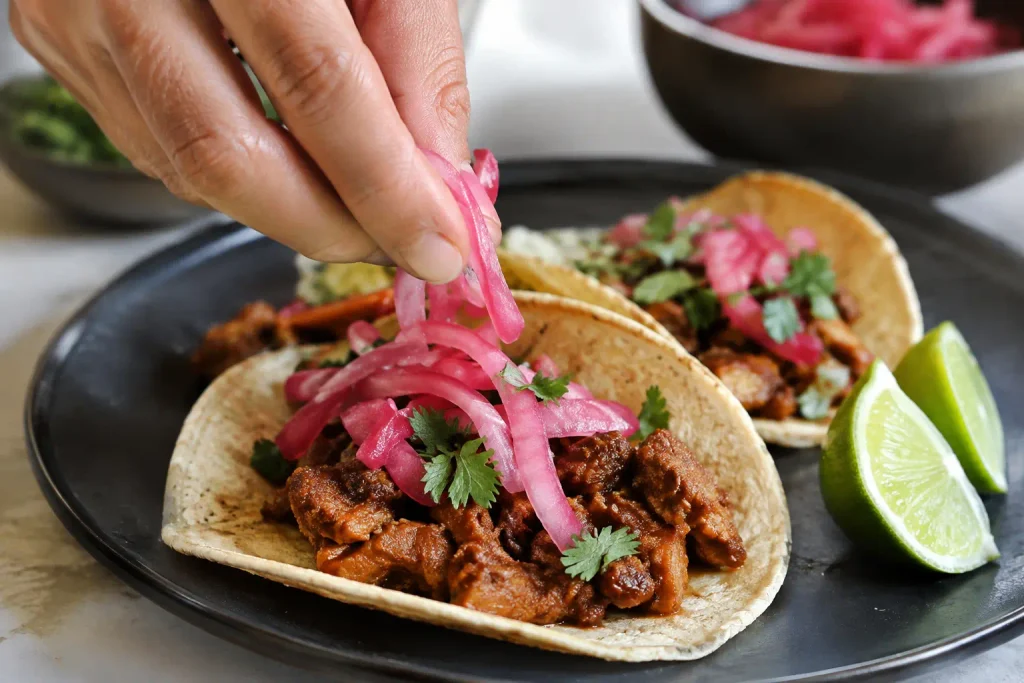
- Tacos. Pickled red onions cut straight through richer fillings like carnitas, so the fat doesn’t sit heavy by the third bite.
- Sandwiches and burgers. A layer on a smash burger adds crunch and tang in the exact spot a slice of raw onion usually falls flat.
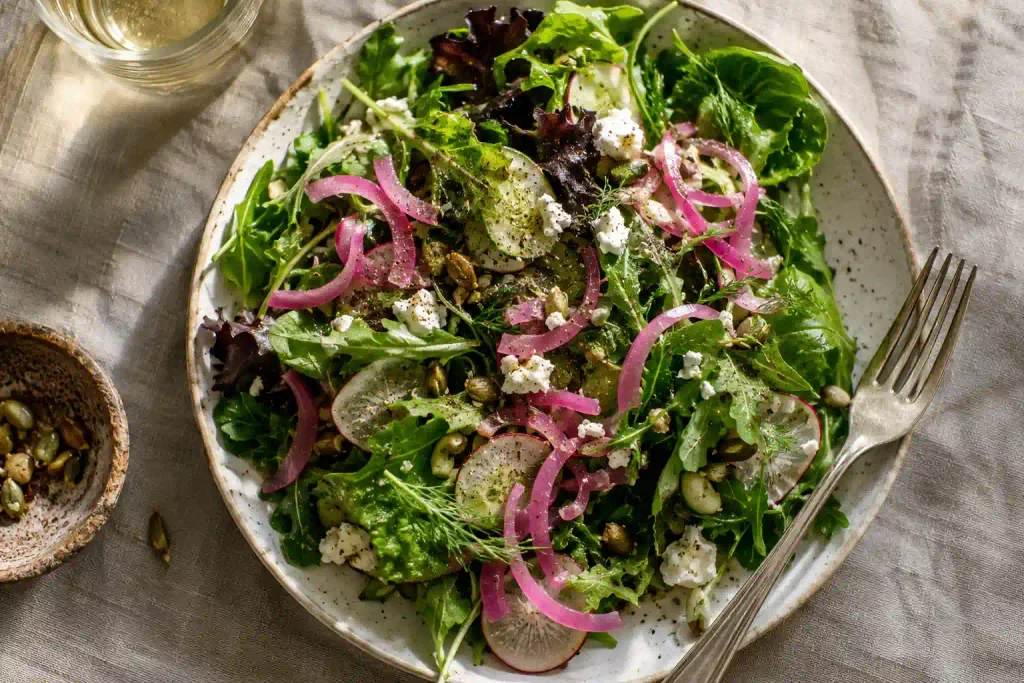
- Salads and grain bowls. Scattered over a grain bowl or a plain green salad, they do the job a vinaigrette usually handles.
- Cheese boards. The sharp brine balances a rich, fatty cheese the way a fruit jam would, minus the added sugar.
Frequently Asked Questions
How long do they last in the fridge?
Sealed and kept fully submerged in their brine, pickled red onions hold their crunch and flavor for about two weeks in the refrigerator. The color keeps deepening over that time, and the flavor is more balanced by day three than at the fifteen minute mark. Once a jar starts smelling off or the liquid turns visibly cloudy beyond its usual light haze, toss it rather than push the timeline further.
Why did mine turn out soft instead of crunchy?
The brine almost always did it, specifically pouring it in while still at a hard boil. That heat partly cooks pickled red onions before they ever reach the jar, the opposite of what a quick pickle is for. Pull the vinegar mixture off the stove the moment small bubbles appear, not after it’s rolling, and slice no thicker than an eighth of an inch so it pickles evenly in the time you give it.
Can I make pickled red onions without sugar?
Sugar here does less sweetening than balancing; it softens the flat, sharp edge of straight vinegar. Skipping it entirely gives a sharper, more one note brine that works well on fatty dishes like carnitas, where you want more cut. If dropping the amount rather than cutting it out feels safer, one tablespoon instead of two keeps most of the balance while trimming the sugar by close to half.
How long before they’re actually ready to eat?
Fifteen minutes on the counter gets a technically finished pickle, pink at the edges and still carrying some raw bite. An hour in the fridge rounds that out into the balanced version most people picture. Left overnight, the color turns a deeper magenta and the onion softens slightly, trading a bit of crunch for a rounder flavor. None of those points is wrong, just different.
Is it normal for the jar to smell strong when it’s first opened?
That sharp hit of vinegar right when the lid comes off is completely normal and fades within seconds once the jar is open to air. What isn’t normal is a smell that lingers sour or sulfurous well after opening, or a liquid gone properly murky rather than just lightly hazy. If either shows up, the batch has gone off and isn’t worth the risk.
The Last Word
Fifteen minutes of actual work and a fridge shelf is all this takes, and the payoff shows up the first time a taco gets built without reaching for a raw onion you’ll taste for the rest of the afternoon. What stood out most while testing different rest times is how much the fifteen minute mark and the overnight mark taste like two different condiments, not just a stronger version of the same thing. If dinner’s only minutes away, a short pickle still beats raw onion by a mile even unfinished. Pin this one so a jar of pickled red onions is always within reach the next time tacos are on the menu.
Pickled Red Onions
Ingredients
Method
- Slice the onion into thin half moons.
- Warm vinegar, water, sugar, and salt together until dissolved, just short of a boil.
- Pack the sliced onion into a pint jar.
- Pour the warm brine over the onion until fully submerged.
- Cool on the counter for fifteen minutes, then refrigerate at least 30 minutes before serving.