Swedish Meatballs Recipe: A Creamy Sauce From Scratch, 45 Minutes
The first time I rushed the panade for Swedish meatballs, they came out tight and bouncy instead of tender. Rushing it costs you. That paste of breadcrumbs and cream needs a few minutes to soak through before it meets the meat, and skipping that step is the biggest reason homemade meatballs turn dense.
This recipe treats that rest as the whole point, not a footnote. Build the panade first, let it sit while you mince the onion and measure the spices, then work it into the beef and turkey blend just until it holds together. The sauce comes straight out of the same skillet the meatballs browned in, so every dark bit stuck to the pan ends up over your mashed potatoes.
Most recipes online lean on canned cream of mushroom soup for the sauce. This one builds it from a roux, beef broth, and a splash of cream instead, for about four extra minutes and a result worth the extra pan to wash. Forty five minutes start to finish, and it holds up for a batch of two dozen or double for a crowd.
Why You’ll Love This
- Holds together without turning dense. The panade rest keeps Swedish meatballs tender instead of springy: five minutes isn’t enough, fifteen is.
- One skillet, start to finish. The meatballs brown, the roux builds, and the sauce reduces in the same pan, so the fond flavors the gravy.
- A sauce built from scratch, not a can. Beef broth, a splash of cream, and a spoon of Dijon replace the usual shortcut.
- Freezes well for six weeks. Cooked meatballs hold their texture better than raw ones once frozen.
- Feeds four with leftovers worth eating. The sauce improves overnight as the flour keeps thickening.
- Twenty four meatballs from one bowl. No need to double a recipe that already feeds a family.
Quick Snapshot
- Prep 20 minutes / Cook 25 minutes / Total 45 minutes
- Servings: 4 (about 24 meatballs)
- Difficulty: Medium
- Calories: 520 per serving
- Decides the outcome: the panade, the paste of soaked breadcrumbs that keeps the meat tender
- Best for: Sunday dinner or a batch you freeze ahead
Nutrition Information
| Nutrient | Amount Per Serving |
| Serving Size | 6 meatballs with sauce (about 280g) |
| Servings Per Recipe | 4 |
| Calories | 520 |
| Protein | 29 g |
| Carbohydrates | 14 g |
| Fat | 36 g |
| Fiber | 1 g |
| Sugar | 3 g |
| Sodium | 780 mg |
Most of the protein in this Swedish meatballs recipe comes from the beef and turkey blend. Cream, butter, and beef carry most of the fat, and the broth and soy sauce push sodium up. Values are estimates that vary with brands.
Ingredients
This covers a full batch of Swedish meatballs, meat and sauce.
For the Meatballs
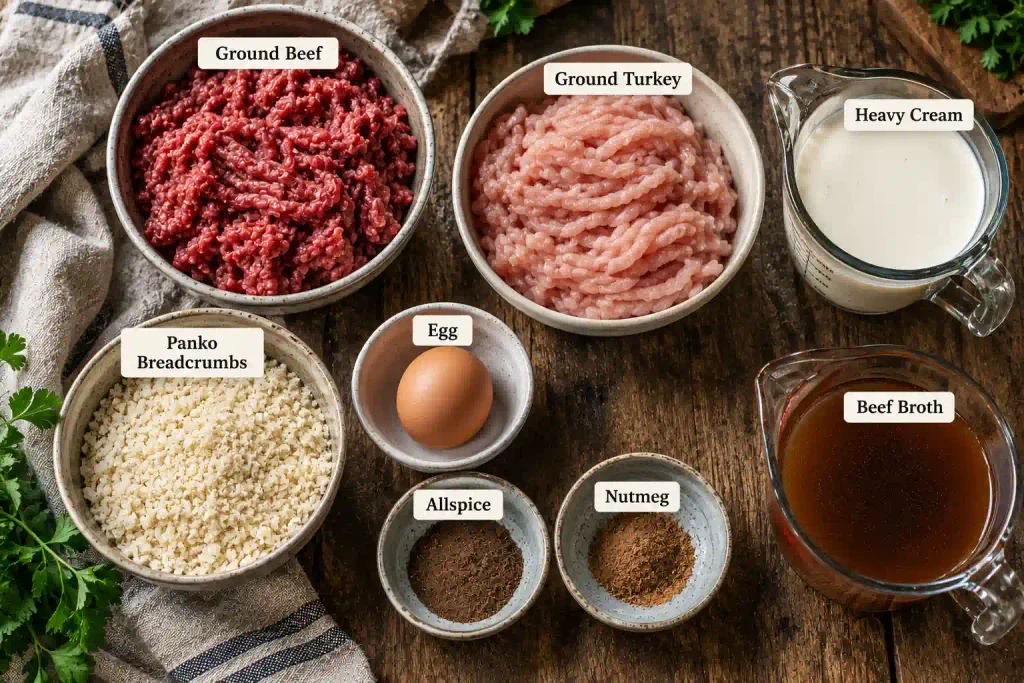
- 1/2 lb (225g) ground beef, 85/15: carries most of the fat
- 1/2 lb (225g) ground turkey, keeps the meatball from turning heavy
- 1/3 cup (35g) plain panko breadcrumbs
- 1/3 cup (80ml) heavy cream, for the panade, the soaked paste that keeps meat tender instead of springy
- 1 large egg: binds the mixture without making it dense
- 1/4 cup (30g) yellow onion, minced fine
- 1/2 tsp ground allspice, the spice that reads distinctly Swedish
- 1/4 tsp ground nutmeg
- 3/4 tsp fine salt
- 1/4 tsp black pepper
- 2 tbsp (28g) unsalted butter, for the pan
For the Sauce
- 3 tbsp (42g) unsalted butter
- 3 tbsp (24g) all-purpose flour, for the roux
- 2 cups (480ml) low-sodium beef broth
- 1/2 cup (120ml) heavy cream
- 1 tbsp low-sodium soy sauce, for savory depth without alcohol
- 1 tsp Dijon mustard
- Salt and black pepper, to taste
For Serving (Optional)
- Mashed potatoes or buttered egg noodles
- Lingonberry jam, or cranberry sauce if lingonberry isn’t available
- Fresh dill, chopped
- Quick pickled cucumber
Allergen and Dietary Disclosure
As written, this dish contains milk from the cream and butter, egg from the meatball binder, and wheat from the panko and the roux flour. Soy shows up in small amounts through the soy sauce.
This Swedish meatballs recipe is halal and nut free as written, though not vegetarian, dairy free, or gluten free. Swap the panko and flour for a gluten free blend and the texture holds up well, though the sauce needs an extra minute to thicken. Watch the soy sauce label, since some brands mill it alongside wheat even when the bottle reads gluten free.
Equipment Needed
A couple of these tools decide whether this Swedish meatballs recipe turns out right.
- 12 inch heavy skillet. Cast iron or stainless holds heat evenly, so the meatballs brown on contact instead of steaming, and it leaves behind the fond the sauce depends on.
- Instant read thermometer. Ground meat needs to hit 165°F (74°C), and color alone won’t tell you that once turkey is mixed in.
- 1.5 tablespoon cookie scoop. Keeps the meatballs close enough in size to finish together.
- Whisk. Works the flour into the butter fast enough that the roux doesn’t clump.
- Rimmed baking sheet. Holds the browned meatballs while the sauce comes together.
Before You Start Cooking
- Mince the onion fine enough that it disappears into the meat, about two tablespoons once done.
- Measure the panko and cream into a bowl and stir once. Let it sit ten to fifteen minutes, the step most recipes skip.
The ten minute panade rest is not optional. Skip it and even perfect technique everywhere else won’t save the texture.
- Bring the egg to room temperature; cold egg tightens the fat before shaping.
- Set the beef and turkey out fifteen minutes ahead so they’re not ice cold.
- Line a baking sheet to hold the browned meatballs; it’s just a landing spot.
How to Make Swedish Meatballs Step by Step
Step 1. Build the panade
If you haven’t already, stir the panko and cream together in a small bowl. By the time the onion is minced and spices measured, close to ten minutes will have passed, the minimum soak time this Swedish meatballs recipe needs.
Step 2. Mix the meat
Combine the beef, turkey, panade, egg, onion, and the spices in a large bowl.
Chef’s Note: Mix with your hands and stop the second it holds together. Every extra ten seconds presses more air out and pushes the meatball toward rubbery instead of tender.
Step 3. Shape the meatballs
About an inch and a half across is right: scoop rounded tablespoons and roll between damp palms. Damp hands stop sticking, and you should land close to twenty four meatballs total.
Step 4. Brown in batches
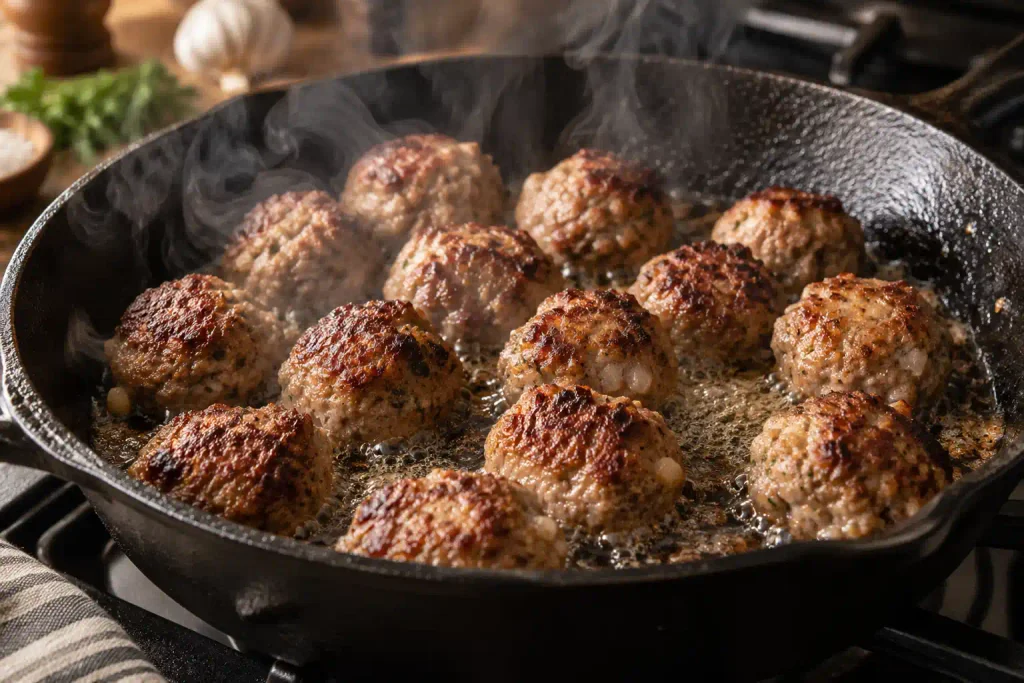
Melt the butter over medium high heat until it stops foaming, then add half the meatballs without crowding. Give them about three minutes a side to build a deep brown crust and leave fond behind, not to cook through. Move to the baking sheet and repeat.
Step 5. Build the roux
Chef’s Note: Don’t wipe out the pan; those browned bits are most of the sauce’s flavor. Lower the heat, melt the butter, then whisk in the flour. Cook about ninety seconds, stirring constantly, until it smells toasted and turns the color of wet sand.
Step 6. Whisk in the broth
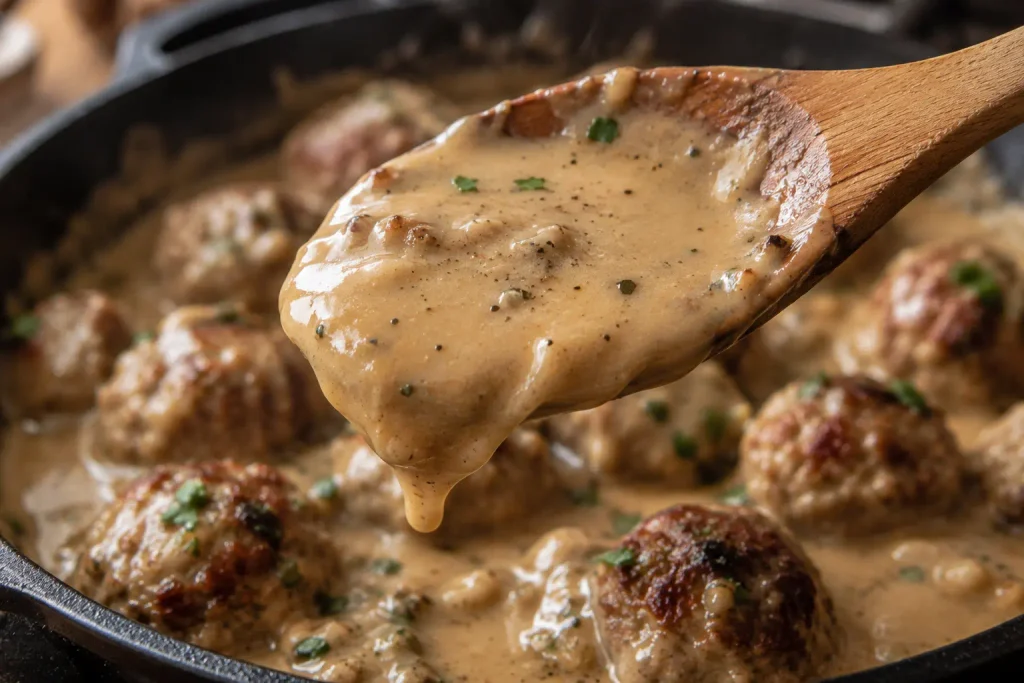
Three additions is the right pace: pour the broth in slowly, whisking out lumps before the next splash. Scrape up the fond as you go; it dissolves into the sauce as it heats. Simmer gently about five minutes, until it coats the back of a spoon.
Step 7. Finish the sauce
Stir in the cream, soy sauce, and Dijon, then slide the meatballs back in with any juice from the baking sheet. Simmer uncovered eight to ten minutes, spooning sauce over the top halfway through, until a thermometer in the largest meatball reads 165°F (74°C).
Step 8. Rest and serve
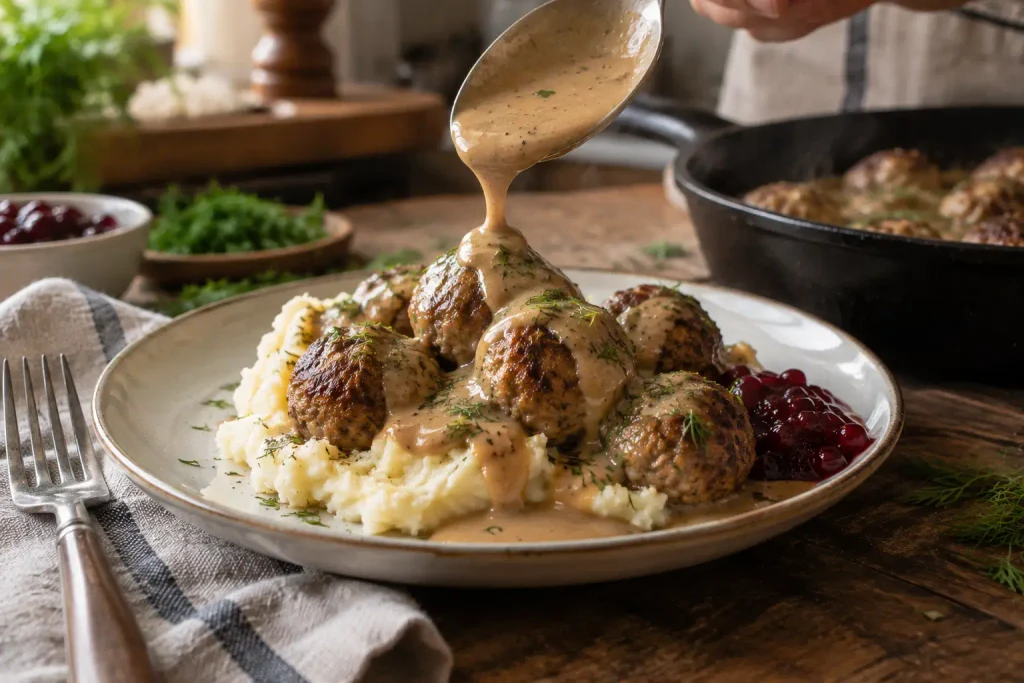
Chef’s Note: Pull the pan off the heat and let it sit two minutes. The sauce thickens as it cools and clings to the meatballs instead of pooling underneath. Spoon over mashed potatoes or noodles, with lingonberry jam on the side.
Expert Tips and Tricks
The mistake: dumping the meatballs into a cold pan. If the butter isn’t fully foaming, they release liquid before browning, and you get grey, simmered meatballs instead of a crust.
Make ahead: shape raw Swedish meatballs a day ahead and keep them on a covered tray in the fridge. The panade firms up overnight, so they hold their shape even better once browned.
Storage: cooked, the meatballs and sauce keep four days in a sealed container. Don’t freeze the sauce separately; cream sauces break slightly when thawed, and reheating together with the meat helps mask it.
Technique: press a fingertip into one raw meatball first. If it springs back fast and feels tight, mix in more cream; the panade needs to feel loose before it goes into the pan.
Texture: use the turkey. An all-beef version works, but the blend keeps the inside from turning dense the way straight beef sometimes does once it cools.
Time saving: double the panade and freeze half flat in a bag. Thawed panade skips the ten minute rest next time.
Common Mistakes and Troubleshooting
| Problem | Cause | Solution |
| Dense and rubbery meatballs | The panade didn’t get its full soak, or the mix got worked too long | Rest the panade ten to fifteen minutes, and stop kneading the second it holds together |
| Sauce breaks into flecks of fat | Cream went into broth still at a hard boil | Pull the pan off heat, then stir in cream. If already broken, whisk in cold cream |
| Sauce stays thin no matter how long it simmers | The roux never fully cooked, so the starch never thickened | Cook butter and flour together the full ninety seconds until it smells toasted |
| Meatballs stick and tear when flipped | They went in before the butter finished foaming | Wait for the foam to subside; that’s when the pan has reached temperature |
| Onion tastes raw in the finished dish | It wasn’t minced fine enough | Mince smaller than a grain of rice, or grate on a box grater |
The dense meatball is almost always a panade problem here. Press a fingertip into one raw meatball: if it springs back like a stress ball, the panade hasn’t soaked long enough or the mixing went too far. Work in another tablespoon of cream by hand until the texture loosens and stays tacky. That loose feeling turns firm and tender once it hits the heat, instead of tight.
How to Store Swedish Meatballs
Skip room temperature storage; the cream sauce and ground meat sit in the danger zone too long to be worth the risk.
Refrigerator
Cooked Swedish meatballs keep in a sealed container up to four days. The sauce thickens further overnight, so add a splash of broth when you reheat.
Freezer
Cool completely, then freeze meatballs and sauce together for up to six weeks. Freezing separately dries out the meat.
Freeze the meatballs and sauce together, never separately. The sauce protects the meat’s surface from freezer burn far better than an airtight bag alone.
Reheating
Warm gently in a covered skillet over low heat with a splash of broth, about eight minutes from the fridge or fifteen from frozen. The microwave works in a pinch, though the sauce tends to separate.
Make Ahead
Shape the raw meatballs a day ahead and keep covered in the fridge. The panade firms up further overnight, which helps the meatballs hold their shape once they hit hot butter.
Variations and Substitutions
- Spicy variation: stir a quarter teaspoon of cayenne into the mix and finish the sauce with hot sauce. The allspice mutes heat, so it takes more cayenne than expected.
- Mild or kid friendly variation: drop the black pepper by half and skip the Dijon. You lose a bit of depth, but the flavor still reads as savory.
- Vegetarian variation: swap the beef and turkey for a plant based ground substitute and use vegetable broth. The texture stays looser, so add an extra tablespoon of panko.
- Gluten free variation: this Swedish meatballs recipe works with gluten free panko and a one to one flour blend, though the sauce takes an extra minute to thicken.
- Swap the heavy cream for whole milk if that’s on hand; the sauce turns out thinner, closer to a broth than a gravy.
- Swap allspice for a pinch each of cinnamon and clove if you’re out; the flavor lands close but sharper.
Serving Suggestions
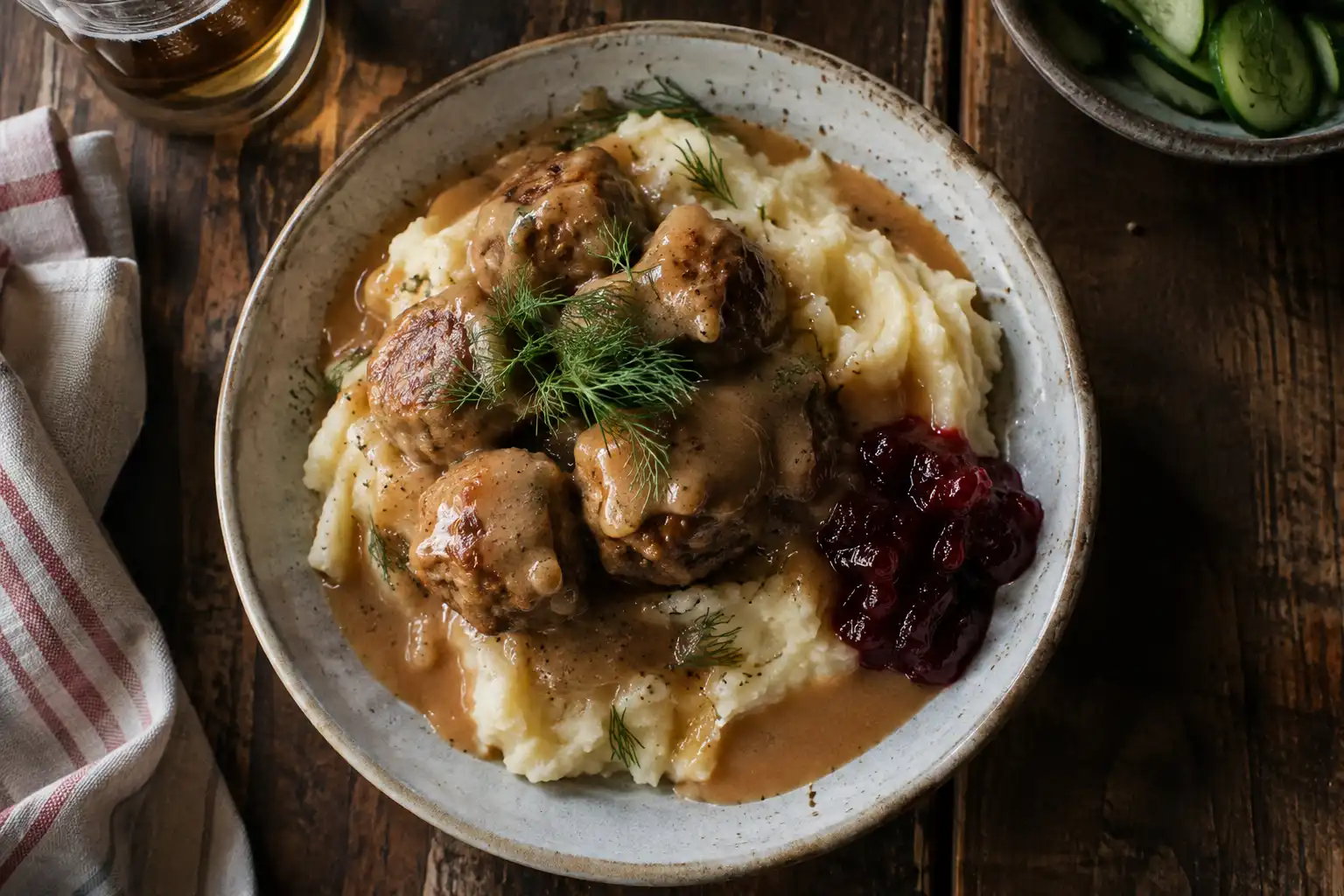
Mashed potatoes are the standard base for Swedish meatballs, and their starch soaks up the sauce instead of letting it pool. Buttered egg noodles work just as well, since they carry the sauce into every bite.
Lingonberry jam is the traditional side, and its tartness cuts through the richness of the cream sauce in a way cranberry sauce only partly matches. Quick pickled cucumber does something similar, adding a sharp, cold contrast.
For a full plate, add steamed green beans or roasted carrots; the crunch keeps the meal from turning into one texture. Warm spiced apple cider makes a fitting drink in colder months.
Frequently Asked Questions
Can I make Swedish meatballs ahead of time?
Shaping the raw meatballs a day ahead works better than cooking the whole dish early, since the panade firms up more overnight and helps them hold together in hot butter. Store covered in the fridge, then brown and sauce them the day you serve. If you cook the full dish ahead instead, thin the sauce with broth when you reheat.
Why do my meatballs fall apart in the pan?
Falling apart in Swedish meatballs usually traces back to two things: a panade that never soaked long enough, or meatballs that hit the pan before the butter finished foaming. Either one weakens the structure holding the meat together. Rest the panade a full ten minutes, wait for the foaming to stop, and don’t flip too early with a thin spatula.
Can I make this without heavy cream?
Whole milk works just fine in both the meatball mix and the sauce, though the sauce turns out thinner without the cream’s fat. Half and half sits somewhere in between and is the closer substitute if you have it. Skip skim or low fat milk, since the sauce won’t thicken properly and tends to separate once it hits a simmer.
How do I know when Swedish meatballs are fully cooked?
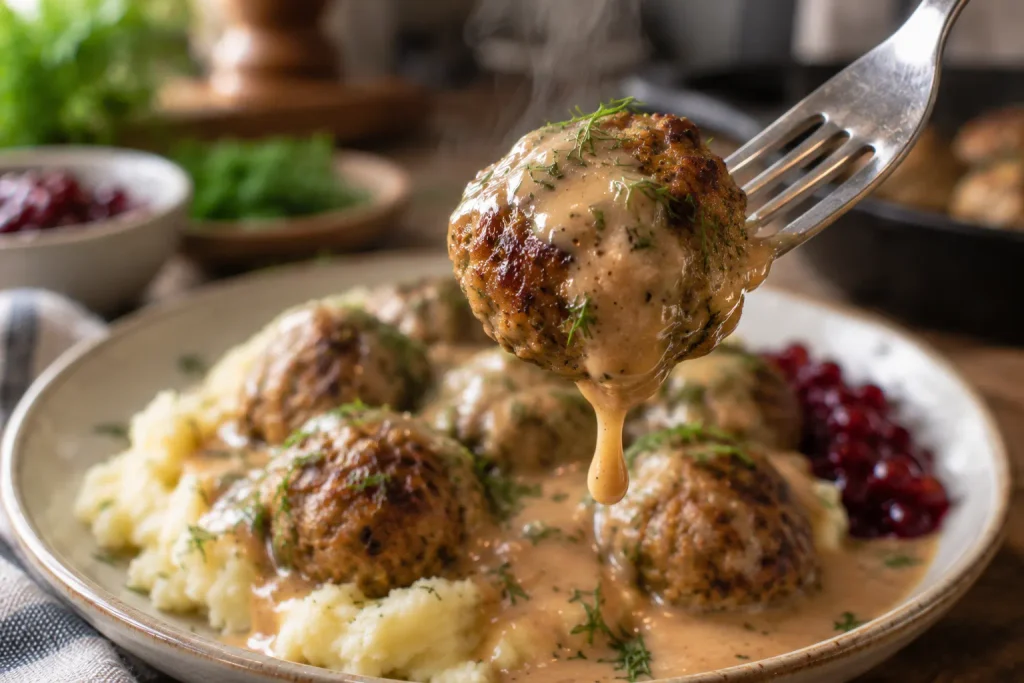
An instant read thermometer inserted into the center of the largest Swedish meatball should read 165°F (74°C); color alone isn’t reliable once turkey is mixed into the beef. At that temperature they should feel firm but still give slightly under a fork. On a larger batch, check two or three from different spots, since the ones near the edge tend to finish first.
Are Swedish meatballs supposed to taste sweet?
A faint sweetness comes from the allspice and nutmeg, not added sugar, so it should read as warm spice rather than dessert sweet. If yours taste distinctly sweet, the lingonberry jam is probably mixing into every bite instead of staying separate. Keep the jam as a garnish you dip into occasionally rather than a topping poured over the whole plate.
Final Thoughts
Ten minutes decides more about this meal than any other step. I’ve shaped meatballs with a rushed panade and with a properly rested one side by side, and the difference shows up the second a fork goes in: one springs back, the other gives.
Swedish meatballs reward patience more than skill. The sauce is forgiving if the roux runs a shade dark, and the meatballs recover from an uneven shape once they’re swimming in gravy. What they don’t recover from is a panade that never got its soak, so protect those ten minutes before anything else.
If this turns into a regular dinner in your kitchen, pin it now so the recipe is easy to find the next time you’re standing in front of the fridge deciding what to make.
Swedish Meatballs
Ingredients
Method
- Stir panko and cream together and let sit 10 to 15 minutes.
- Combine beef, turkey, panade, egg, onion, and seasonings; mix just until it holds together.
- Shape into 1.5 inch meatballs, about 24 total.
- Brown in butter, 3 minutes per side, in batches; hold on a tray.
- Make a roux with butter and flour in the same skillet, about 90 seconds.
- Whisk in beef broth in three additions, scraping up the fond; simmer 5 minutes.
- Stir in cream, soy sauce, and Dijon; return meatballs to the pan.
- Simmer 8 to 10 minutes until meatballs reach 165°F (74°C) internally.
- Rest 2 minutes, then serve over mashed potatoes with lingonberry jam.