Sushi Bake Recipe: Creamy, 8 Ingredients, and No Rolling Required
The first time I made a sushi bake, I skipped patting the imitation crab dry and ended up serving something closer to a warm dip than a bake. It still tasted like a spicy crab roll. It just ran off the nori instead of sitting on it.
That one mistake taught me the whole recipe. A sushi bake is seasoned sushi rice pressed into a dish, covered in a creamy spicy crab topping, and broiled until the top turns golden and starts to bubble at the edges. You scoop it onto crisp nori like a taco instead of rolling anything by hand, which is why it caught on as a party dish in the first place. No sushi mat, no knife skills, no rice that falls apart the second you try to slice it.
What most versions skip is the moisture math. The rice has to hold together on its own before the crab mixture ever touches it, and that mixture needs less liquid than you’d guess. Get the balance right and a spoonful sits on the nori without sliding off. Get it wrong, and you’re eating it with a fork over the sink.
Why You’ll Love This
- Nothing to roll. Every flavor from a spicy crab roll ends up here, minus the bamboo mat and sticky fingers.
- One dish, start to finish. Rice cooks separately, but assembly through broiler happens in one 9×13 dish.
- Feeds a table fast. One batch covers eight as an appetizer, in roughly half the time rolled sushi takes.
- Holds up better than rolled sushi in the fridge. Rolled sushi turns gummy fast; this keeps its texture two full days since no raw fish touches the rice.
- The topping does double duty. Cream cheese and mayo bind the crab and carry the sriracha, so there’s no separate sauce to whisk.
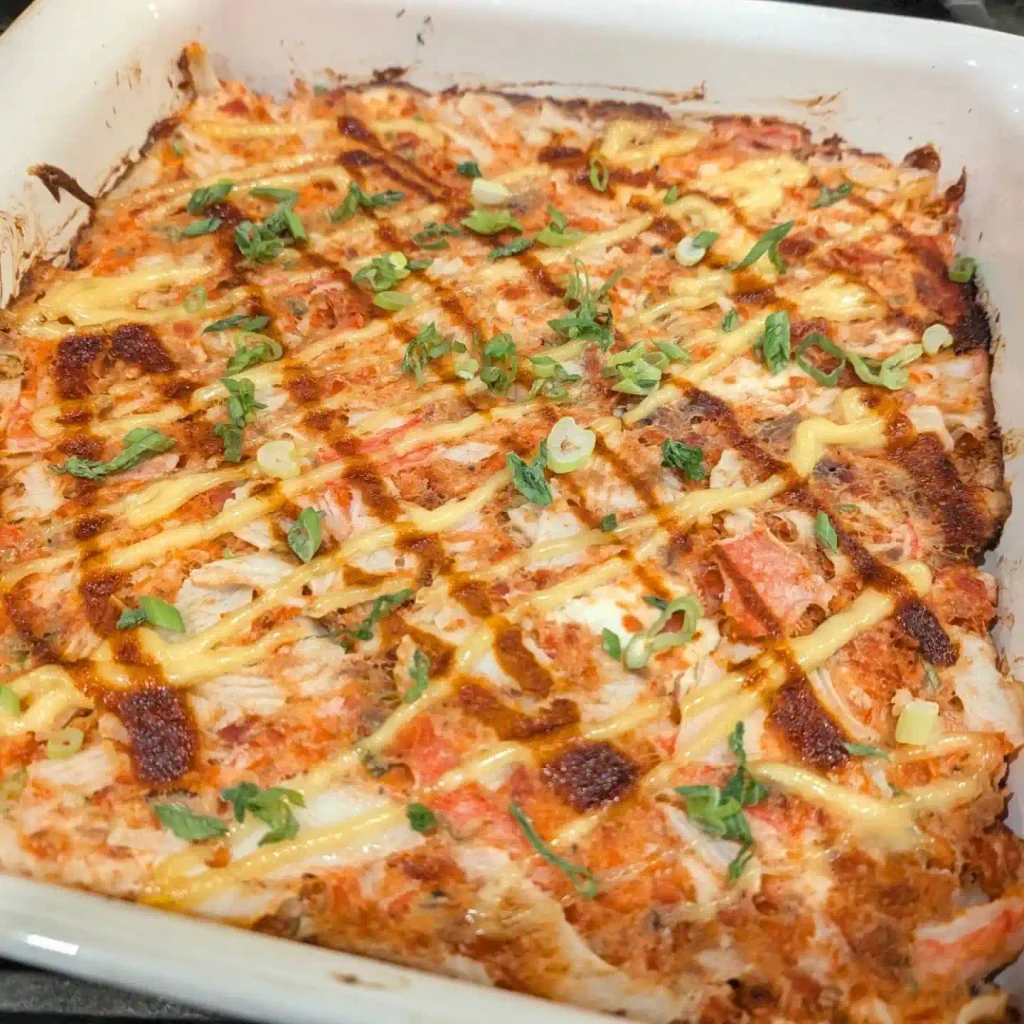
Quick Information
- Prep Time: 30 minutes, including cooking the rice
- Cook Time: 8 minutes under the broiler
- Total Time: 38 minutes
- Servings: 8 as an appetizer, 4 to 6 as a light dinner
- Difficulty: Easy
- Calories: 380 per serving
- The ingredient that decides the outcome: how dry the crab is before it meets the mayo
- Best for: potlucks, game day spreads, or a weeknight dinner without a side dish
Nutrition Information
| Nutrient | Amount Per Serving |
| Serving Size | 1 cup (240 g) |
| Servings Per Recipe | 8 |
| Calories | 380 |
| Protein | 12 g |
| Carbohydrates | 41 g |
| Fat | 19 g |
| Fiber | 1 g |
| Sugar | 4 g |
| Sodium | 640 mg |
Most of a sushi bake’s protein comes from the imitation crab and the mayo’s egg yolks, not a lean cut of anything. Fat is carried almost entirely by the cream cheese and mayo, where the calorie count climbs fastest next to a plate of rolled sushi. Sodium comes from the furikake and the surimi itself, since packaged crab sticks are salted during processing. Values are estimates that vary with brands and substitutions.
Ingredients
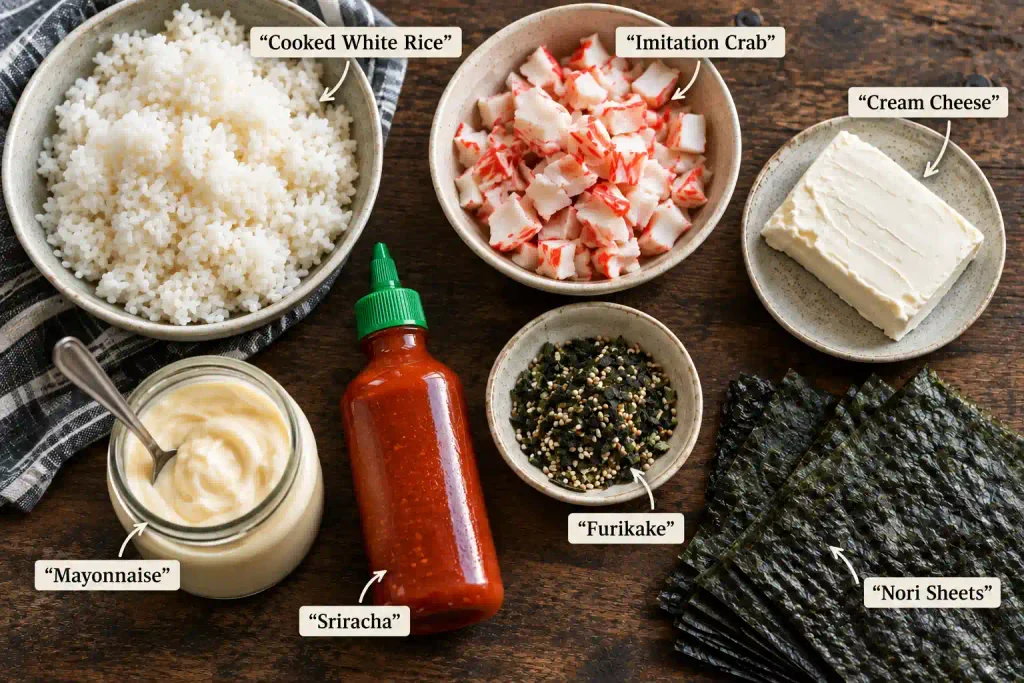
Here’s what goes into this sushi bake, split into the rice base and the topping.
For the Sushi Rice
- Sushi rice (short grain), 2 cups (400 g), uncooked
- Rice vinegar, 1/3 cup (80 ml)
- Sugar, 3 tablespoons (38 g)
- Fine salt, 1 teaspoon (6 g)
For the Crab Topping
- Imitation crab (surimi), 1 pound (450 g), roughly chopped
- Cream cheese, 8 ounces (225 g), softened to room temperature
- Kewpie mayonnaise, 3/4 cup (180 g)
- Sriracha, 2 to 3 tablespoons (30 to 45 ml), to taste
- Furikake seasoning, 2 tablespoons (10 g)
For Serving
- Roasted nori (seaweed) sheets, 8 to 10 full sheets, quartered
- Green onion, thinly sliced
- Sesame seeds
- Masago or extra furikake, optional, for garnish
Kewpie mayonnaise carries more egg yolk than the American kind, which is why a sushi bake topping turns glossy instead of flat white. Regular mayo works, just a shade less rich. Furikake, a dry blend of sesame, seaweed flakes, and dried fish, supplies a savory note plain mayo can’t. If a store doesn’t carry imitation crab, look for pollock sticks near the seafood counter instead, the same product under a different name.
Surimi sits in a lot of packing liquid. Pat it dry with paper towels before you chop it, or the topping will carry that extra water straight into the bake.
Allergen and Dietary Disclosure
This recipe contains milk (cream cheese), eggs (mayonnaise), fish (the pollock in imitation crab and dried fish flakes in furikake), soy (furikake and most mayo brands), and sesame (furikake and the garnish seeds). Labels as written: halal, egg containing, fish containing, not vegetarian, and not gluten free unless you check packaging.
The swap worth knowing before you shop: a dairy free cream cheese and an egg free mayo pull out most milk and egg, though the topping loses gloss and holds together a little less firmly. The hidden risk isn’t the rice or nori, it’s the surimi, frequently bound with wheat starch rather than rice starch, so check that label before assuming this is gluten free.
Equipment Needed
- 9×13 inch glass or ceramic baking dish, broiler safe. Not every casserole dish handles sitting six inches under a hot element, so check the rating first.
- Rice cooker or a heavy bottomed pot with a tight lid. Sushi rice scorches fast in anything thin.
- Fine mesh strainer. Sushi rice needs a real rinse, until the runoff goes from cloudy to clear.
- Wide wooden spoon or a rice paddle. A metal spoon bruises the grains while folding in the vinegar, and bruised rice turns gummy.
- Offset spatula. Spreading a thick, sticky topping over rice is awkward with anything narrower.
Preparation
Cook the rice first. It needs time to steam and cool, and nothing else here takes more than fifteen minutes.
Chop the imitation crab into pea sized pieces and press it between paper towels to pull out packing liquid. Let the cream cheese sit out while the rice cooks, since cold cream cheese leaves lumps stirring won’t fix.
Turn the broiler to high and set a rack about six inches from the element. Grease the baking dish with a thin layer of oil so the rice releases cleanly once baked and cooled.
How to Make Sushi Bake, Step by Step
Step 1. Rinse and cook the rice
Rinse the rice in a strainer under cold water until it runs mostly clear. Cook it in a rice cooker, or simmer covered about 18 minutes over low heat, until every grain looks translucent and the water is gone.
Step 2. Season the rice while it’s hot
Warm the vinegar, sugar, and salt until the sugar dissolves, then pour it over the rice within two minutes of it leaving the heat. Fold, don’t stir, using a cutting motion so the grains separate instead of mashing. The rice should look glossy and taste faintly sweet, not sour.
Chef’s Note: Rice tasting flat means the vinegar went in too late. Warm rice absorbs seasoning; cooled rice just gets coated.
Step 3. Press the rice into the dish
Press the seasoned rice firmly into the greased dish, all the way to the corners, with the back of a spoon or a sheet of plastic wrap. Let it sit five minutes before topping, so it firms up enough that the topping won’t sink in.
Step 4. Mix the crab topping
Stir the softened cream cheese, mayonnaise, and sriracha until smooth, then fold in the dried, chopped crab and the furikake. It should look thick enough to hold a ridge when a spoon drags through it.
Chef’s Note: A loose, shiny mixture means the crab wasn’t dried enough. Stir in extra furikake to soak up liquid rather than draining it after.
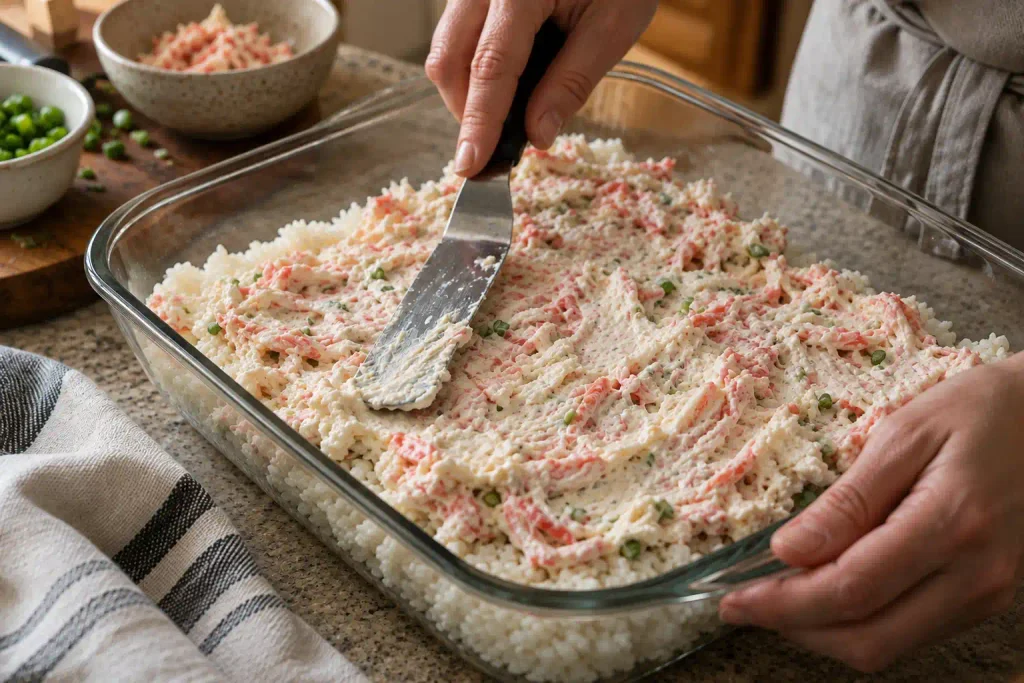
Step 5. Spread the topping over the rice
Dollop the crab mixture across the rice, then spread it to the edges with an offset spatula until no bare rice shows through. Leave the surface a little textured rather than smoothed flat. Those ridges are what catch color under the broiler.
Step 6. Broil until golden and bubbling
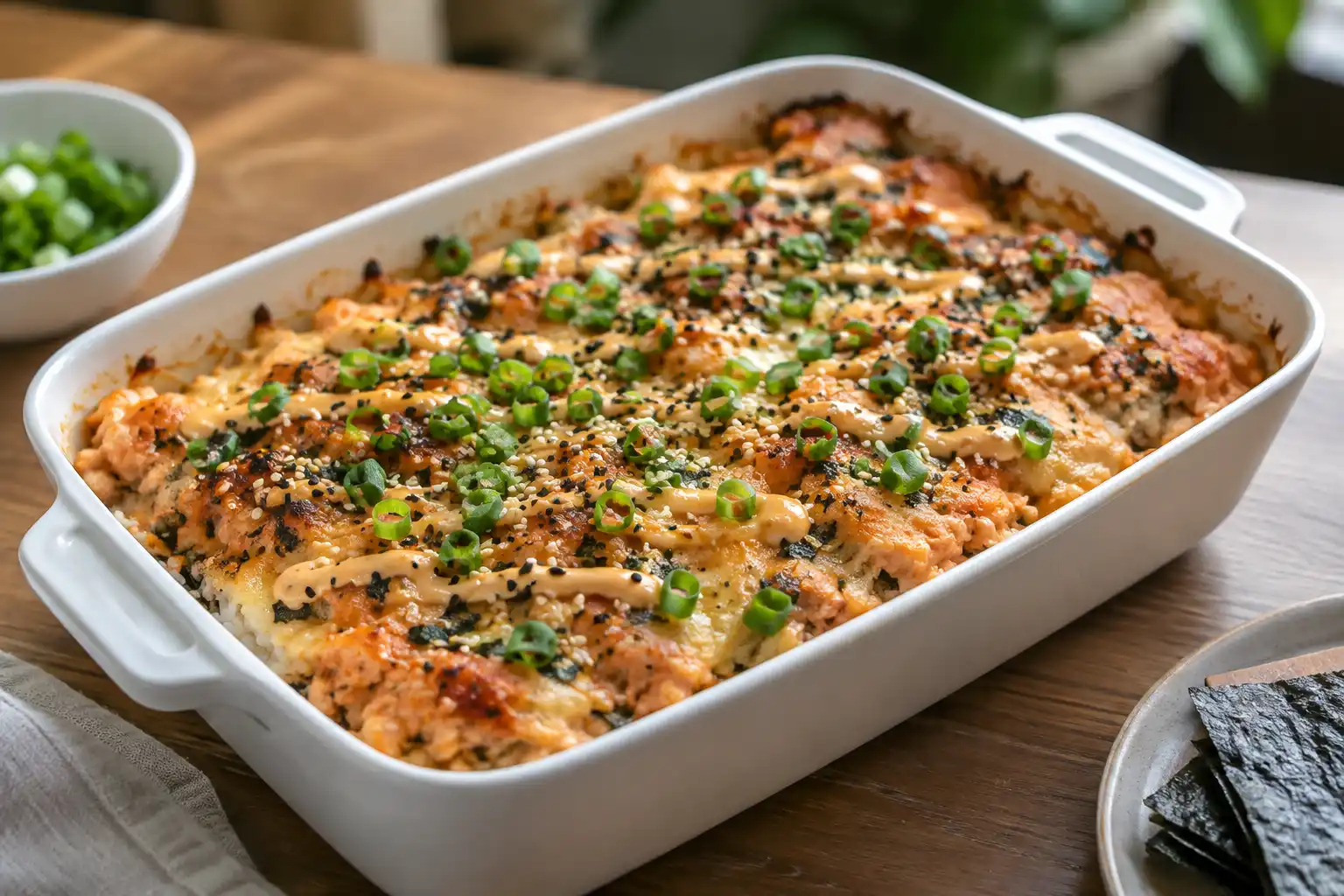
Slide the sushi bake under the broiler and stay with it; broilers work in seconds, not minutes. It’s ready in 5 to 8 minutes, once the peaks have turned golden brown and the surface bubbles gently at the edges.
Chef’s Note: One corner browning faster means uneven broiler heat. Rotate the dish 180 degrees rather than pulling it early, or the far side stays pale.
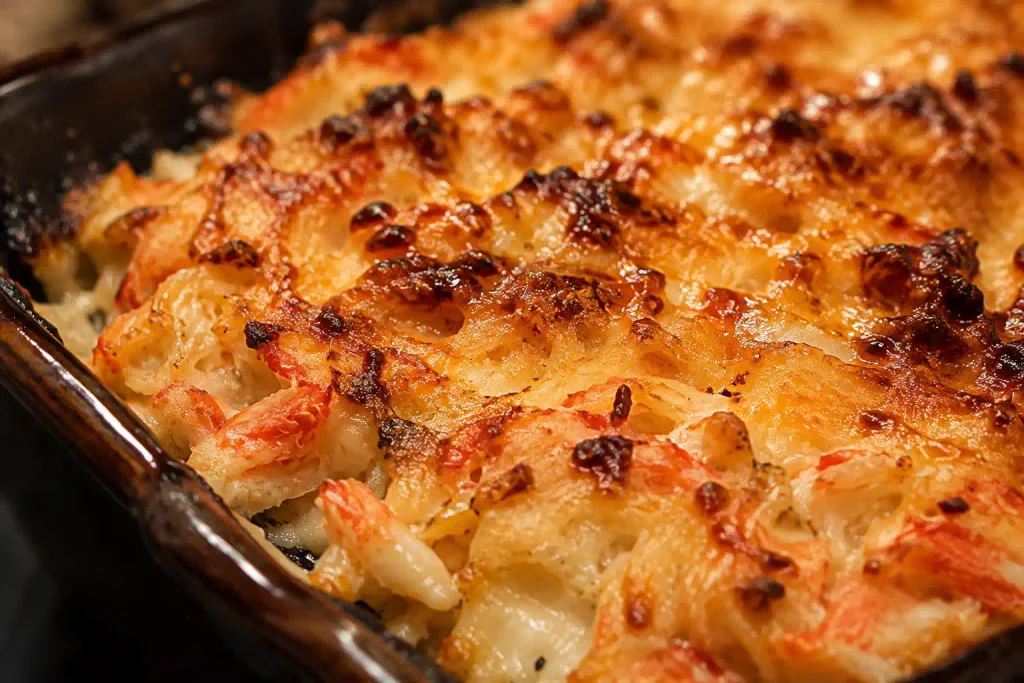
Step 7. Rest, garnish, and scoop
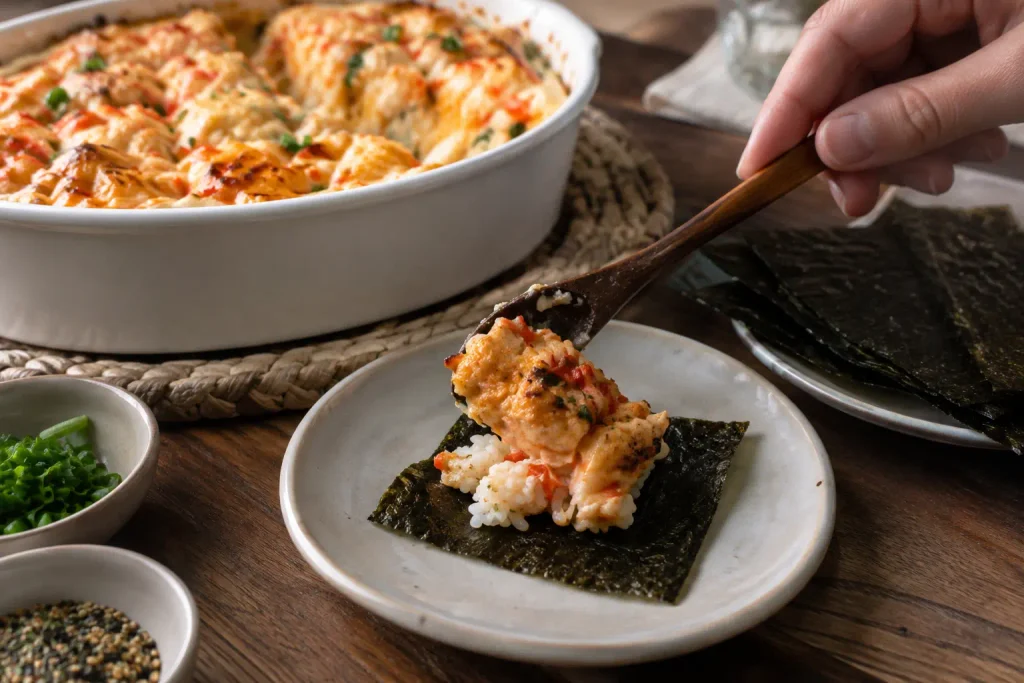
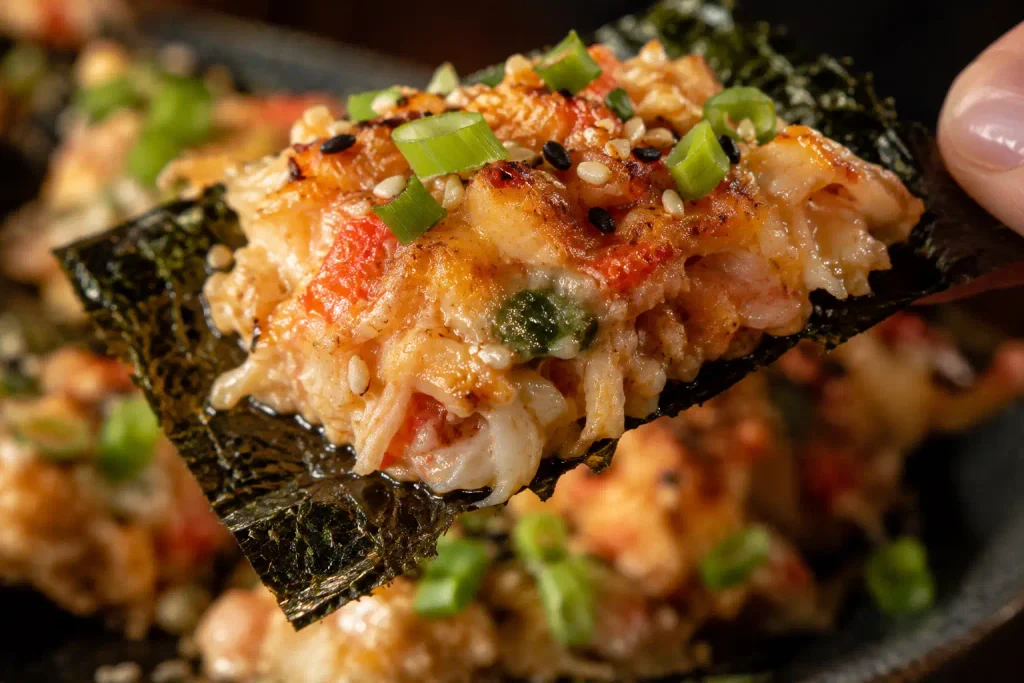
Let the sushi bake sit five minutes once it’s out from under the broiler. It’s too loose to scoop straight from the heat, and firms up fast as it cools. Scatter green onion, sesame seeds, and extra furikake on top, then serve with quartered nori on the side.
Expert Tips and Tricks
Dry the crab before you touch the mayo. This is the single most common reason a sushi bake turns watery, and it happens at the cutting board, not the oven.
Make the components a day ahead. Cook the rice and mix the crab topping up to 24 hours ahead, stored separately, then assemble and broil right before serving.
Store leftovers without the nori. The bake keeps three days refrigerated, but nori turns soft near moisture, so add fresh sheets at serving time.
Fold the rice, don’t stir it. Stirring crushes the grains and pushes out starch, which is what makes rice turn gummy.
Room temperature cream cheese matters for a smooth topping. Cold cream cheese leaves small lumps no amount of mixing fixes.
A rice cooker frees up the stovetop for warming the vinegar mixture at the same time, shaving a few minutes off total prep.
Common Mistakes and Troubleshooting
| Problem | Cause | Solution |
| The bake turns watery once you start scooping | Crab wasn’t patted dry, or there’s too much mayo for the crab | Press surimi dry before chopping; stir extra furikake into a loose mix |
| The rice tastes bland under a flavorful topping | Vinegar went onto cooled rice, not hot rice, so it never absorbed | Season within two minutes of the rice leaving the heat, folding it in |
| Topping burns in spots before the center bubbles | Broiler heat runs uneven, or the rack sits too close | Rotate the dish halfway through, and drop the rack a notch if it keeps happening |
| Rice sticks hard to the baking dish | The dish wasn’t greased, and starch bonded to the glass | Grease or line with parchment first; soak a stuck dish in hot water before scraping |
| Nori tears and goes limp when scooped | Sheets sat out too long and pulled moisture from the air | Keep nori sealed until serving, and cut sheets fresh instead of prepping ahead |
The watery version trips up most first attempts, and it’s about timing at the cutting board, not the oven. Surimi carries surprising packing brine, and once that liquid rides into the mixing bowl, the mayo and cream cheese can’t hold onto it under heat. Stir extra furikake into a loose mix to pull moisture back out, then rest the sushi bake the full five minutes before anyone digs in.
How to Store Sushi Bake
Refrigerator
Cover tightly or move leftovers to an airtight container and refrigerate up to 3 days. Rice firms up on day two, which makes it easier to portion.
Freezer
Freeze the assembled but unbaked dish up to one month, wrapped in plastic and foil. Thaw overnight in the fridge, then broil as directed, adding a minute since it starts out colder.
Reheating
Warm portions in a 350°F (175°C) oven for about 10 minutes, or in short microwave bursts. Skip the broiler; the topping is already cooked and will just scorch.
Make Ahead
Cook the rice and mix the topping up to a day ahead, in separate containers. Combine and broil right before serving, since assembled raw rice loses texture overnight.
Never store the nori sheets in the same container as the bake. Ambient moisture from the rice turns crisp nori chewy within a couple of hours, even sealed.
Variations and Substitutions
For heat, double the sriracha and stir in chili crisp before broiling. It pushes the sushi bake toward genuinely spicy, which can overpower the crab if you’re not already a heat seeker.
For a milder, kid friendly version, drop the sriracha and use plain Kewpie mayo. You lose the pink color and the kick, but the topping stays just as creamy.
For vegetarian, swap the crab for shredded hearts of palm or diced avocado. Skip the drying step since neither carries the same liquid, and cut the mayo by two tablespoons.
For gluten free, use a certified gluten free furikake and a surimi brand listing rice starch rather than wheat, since traditional soy sauce is brewed with wheat too.
A few more swaps: Greek yogurt in place of half the mayo adds tang but thins texture. Flaked salmon gives a richer bite for twice the cost. Brown sushi rice adds fiber but holds together less firmly.
Serving Suggestions
Pair this sushi bake with a cucumber salad dressed in rice vinegar. The cold crunch cuts through the richness of the topping.
A bowl of miso soup adds warmth and a savory contrast to the sweeter rice, especially in cooler weather.
Extra spicy mayo drizzled over each scoop stretches the topping’s flavor without needing more crab, useful for a bigger crowd.
Pickled ginger resets the palate between bites, the same way it does with rolled sushi, and costs nothing extra since jars sit unused in most fridge doors.
For a full meal, add edamame with flaky sea salt. The plain boiled texture keeps the plate from feeling one note next to something this rich.
Frequently Asked Questions
Can I assemble sushi bake ahead of time?
The rice and crab topping both hold well made separately up to a day ahead, stored in their own airtight containers in the fridge. What doesn’t hold well is the fully assembled, unbaked dish sitting overnight, since the rice pulls moisture from the topping and turns gummy well before it ever sees the broiler. Combine the two components right before broiling for the best texture and the cleanest scoop.
Why is my sushi bake watery?
Excess liquid almost always comes from the imitation crab, packed in brine and needing a press with paper towels before it’s chopped and mixed. A second, smaller cause is skimping on furikake, which normally helps absorb moisture. If a batch already turned out loose, stirring in extra furikake or crushed sesame seeds after baking pulls some liquid back into the topping.
Can I use real crab instead of imitation crab?
Lump crab meat or flaked cooked salmon both work in place of surimi, giving a more distinct seafood flavor and softer bite. Real seafood carries less inherent saltiness than processed surimi, so taste the topping before broiling and adjust with a pinch more furikake or salt if it tastes flat. Real crab also costs noticeably more per pound, which is why surimi became the standard in the first place.
How long does sushi bake need under the broiler?
Most ovens need 5 to 8 minutes on high broil, but watch the sushi bake rather than the clock, since broiler intensity varies a lot between ovens. It’s done once the highest points have turned golden brown and the surface bubbles gently at the edges rather than sitting flat and pale. Stepping away for more than a minute is the easiest way to end up with a burnt top.
Is sushi bake supposed to have raw fish in it?
No raw fish goes into a standard sushi bake. The name borrows the flavors of a sushi roll, sweetened rice, seaweed, and a mayo based topping, not any raw ingredient, since imitation crab or real seafood swapped in is already cooked before or during the bake. If you think of sushi as strictly raw, this is closer to a warm casserole that borrows sushi’s seasoning than to nigiri or sashimi.
Sushi Bake Wrap Up
Get the rice firm before the topping goes on, and dry the crab before it meets the mayo. Those two habits fix almost every complaint people have about a sushi bake turning out soupy or bland, and neither takes more than an extra minute at the cutting board. I’ve made this often enough to trust the five minute rest more than any visual cue, since a rushed dish looks fine under the broiler and falls apart the moment a spoon hits it.
This sushi bake earns its spot in a rotation because it scales for a crowd without asking for rolling skills nobody has time to practice. Save this one for the next time you’re feeding more than four people, and pin it now so it’s easy to find before that next potluck.
Creamy Spicy Crab Sushi Bake
Ingredients
Method
- Rinse sushi rice until water runs clear, then cook until translucent and fully absorbed.
- Warm rice vinegar, sugar, and salt, and fold into hot rice.
- Press seasoned rice into a greased 9×13 dish and rest 5 minutes.
- Mix cream cheese, mayonnaise, and sriracha until smooth, then fold in chopped crab and furikake.
- Spread crab mixture evenly over the rice.
- Broil 5 to 8 minutes until golden and bubbling at the edges.
- Rest 5 minutes, garnish, and serve with nori for scooping.



2 Comments
Comments are closed.